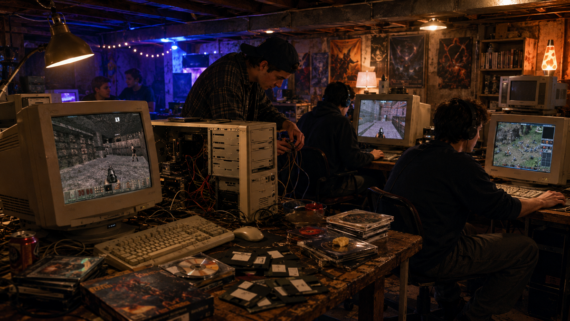
By the late 1990s, PC gaming was no longer just a technically fussy alternative to consoles. It had its own habits, arguments, heroes, rituals, and strange little forms of status. Console players were swapping cartridges or discs in living rooms, while PC players were swapping drivers, downloading patches, and trying to make a multiplayer session work over a connection that barely seemed qualified for the job. Out of that mess came a culture that felt less packaged and more self-made, sometimes frustrating, often brilliant, and very different from what was happening around the TV.
Hardware Became Part of the Hobby
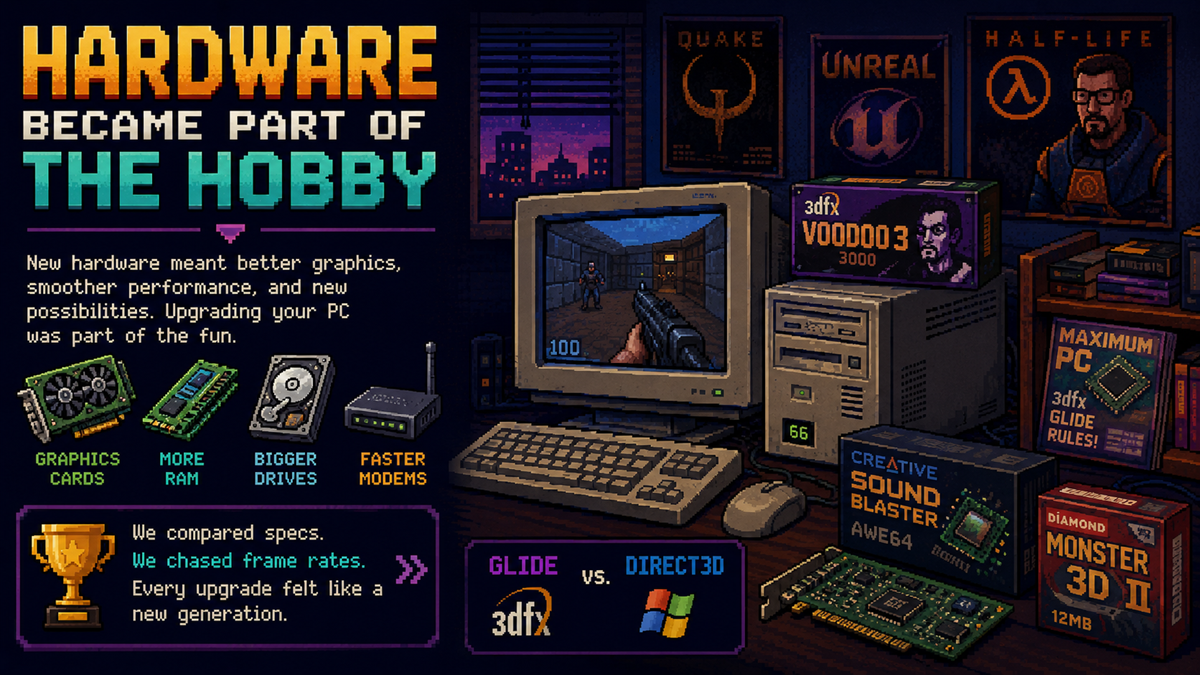
For console players, the machine was mostly settled the day it came out of the box. PC players had a moving target. A new graphics card, more RAM, a bigger hard drive, or a faster modem could change what a game looked like and how it played, which meant the hobby extended beyond the games themselves. The arrival of 3D accelerators, including 3dfx Voodoo cards in the second half of the decade, turned upgrades into a kind of cultural language. People compared frame rates, argued over Glide versus Direct3D, and treated a new component almost like a new console generation, except it happened one part at a time.
The Desk Replaced the Couch
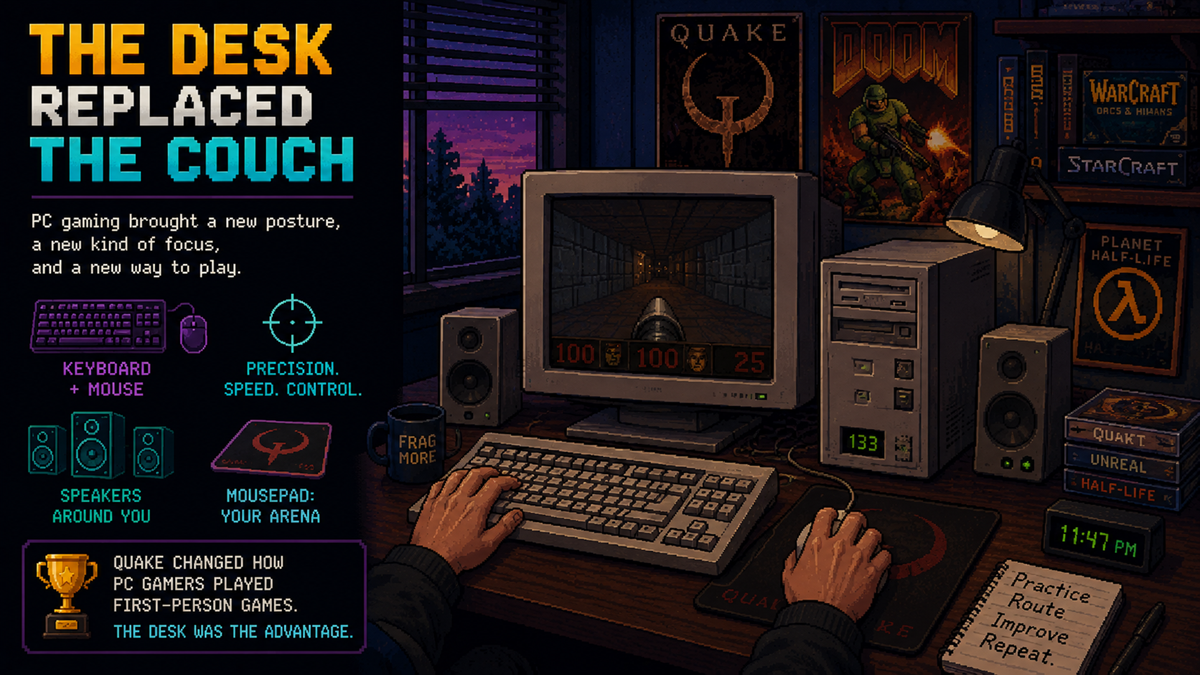
PC gaming had a different posture. It usually meant sitting close to a monitor, one hand on the keyboard, the other on the mouse, with speakers tucked somewhere around the desk. That physical setup changed the feel of play. First-person shooters such as Quake made the mouse-and-keyboard arrangement feel precise, fast, and personal in a way that console controllers of the period rarely matched. It was not just about better aim, either. The whole space around the computer, mousepad, tower, CRT, cables, became part of the identity.
Online Multiplayer Arrived Before It Felt Normal
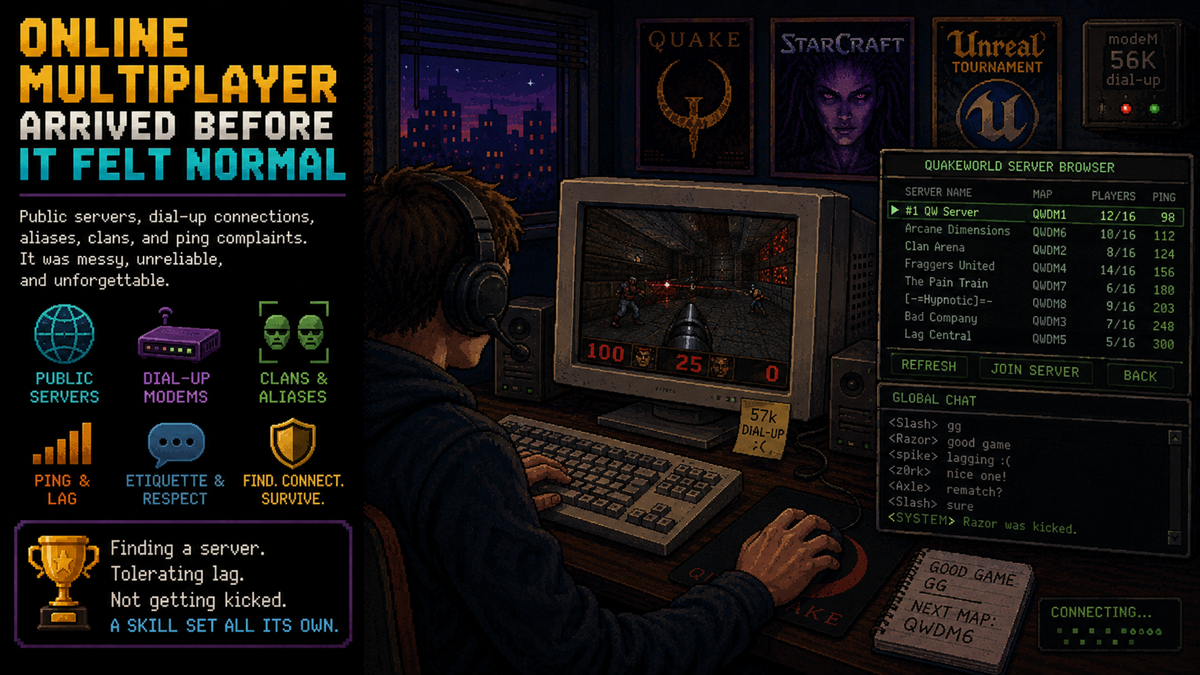
A lot of console multiplayer in the late ’90s still meant four people in the same room. PC players were already stumbling into stranger territory, public servers, dial-up matches, clans, aliases, ping complaints, and the early etiquette of playing with people they might never meet. QuakeWorld, released in 1996, helped make internet play more practical for Quake, and games like StarCraft and Unreal Tournament widened the habit of looking beyond the local room. It was unreliable by modern standards, but that was part of the culture. Knowing how to find a server, tolerate lag, and not get kicked became a skill set of its own.
LAN Parties Turned Technical Hassle Into Social Ritual
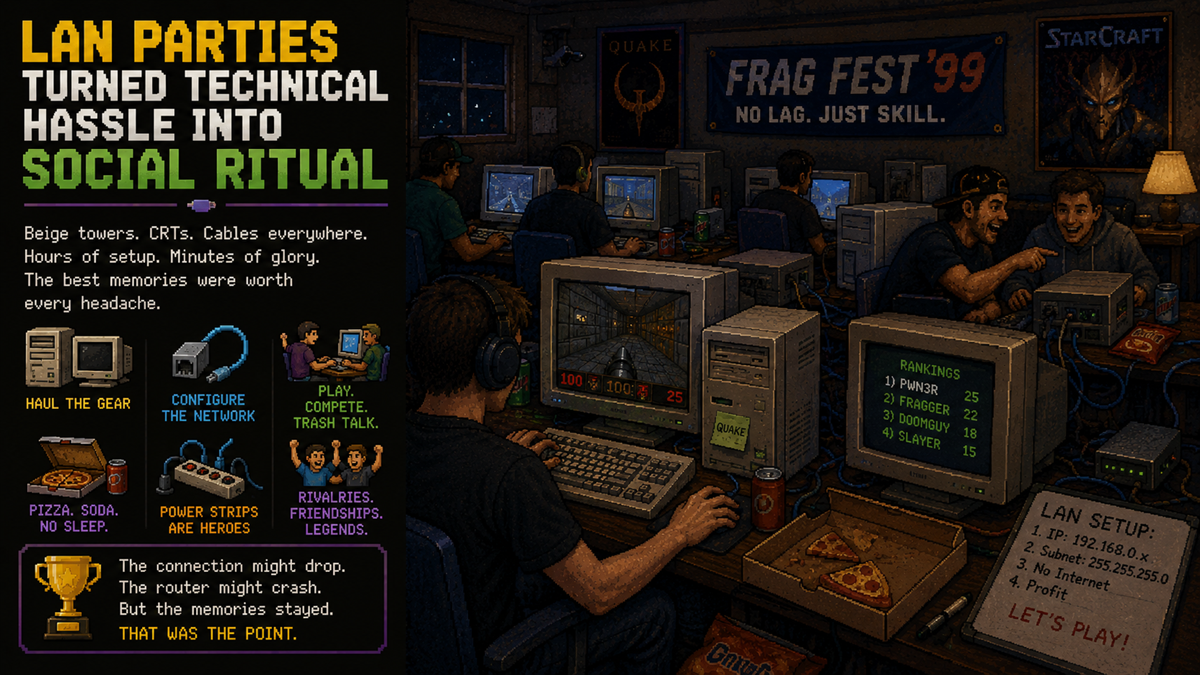
There was something absurd about hauling a beige tower, a heavy CRT monitor, cables, discs, and sometimes an entire power strip to someone else’s house just to play games. But that absurdity was exactly what made LAN parties feel special. They were social events built around inconvenience, with hours lost to network settings before anyone got properly started. Once everything worked, though, the payoff was immediate, fast multiplayer without dial-up lag. For many PC players, the sound of a room full of fans, keyboards, and shouted accusations was as memorable as the games themselves.
Mods Made Players Feel Like Participants
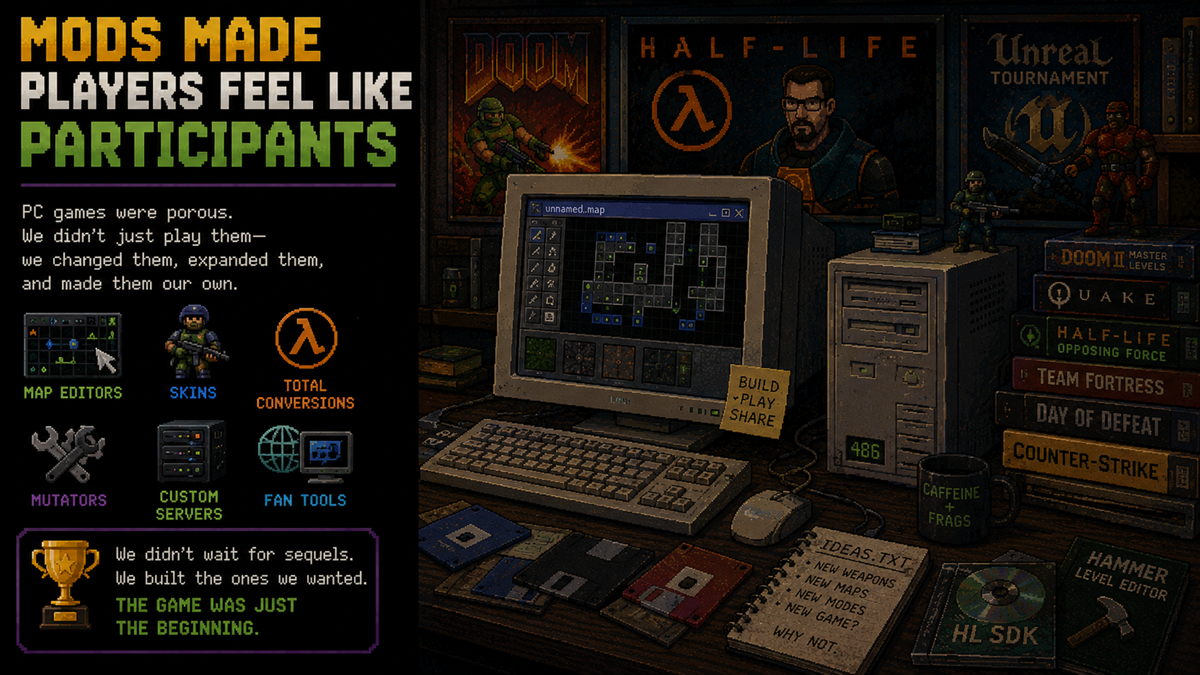
Console games were usually finished objects. PC games felt more porous. Doom had already helped normalize player-made levels earlier in the decade, and by the late ’90s that mindset was everywhere, map editors, skins, total conversions, mutators, custom servers, and fan tools passed around online. Half-Life, released in 1998, became one of the clearest examples of this shift because its community did not simply play the game and move on. Counter-Strike began as a Half-Life mod in 1999, and that alone says a lot about the difference between PC and console culture at the time. On PC, a game could become a platform before publishers had a clean marketing term for it.
Trending on realmoneygamer.com
Patching Was Annoying, but It Created a Different Relationship With Games
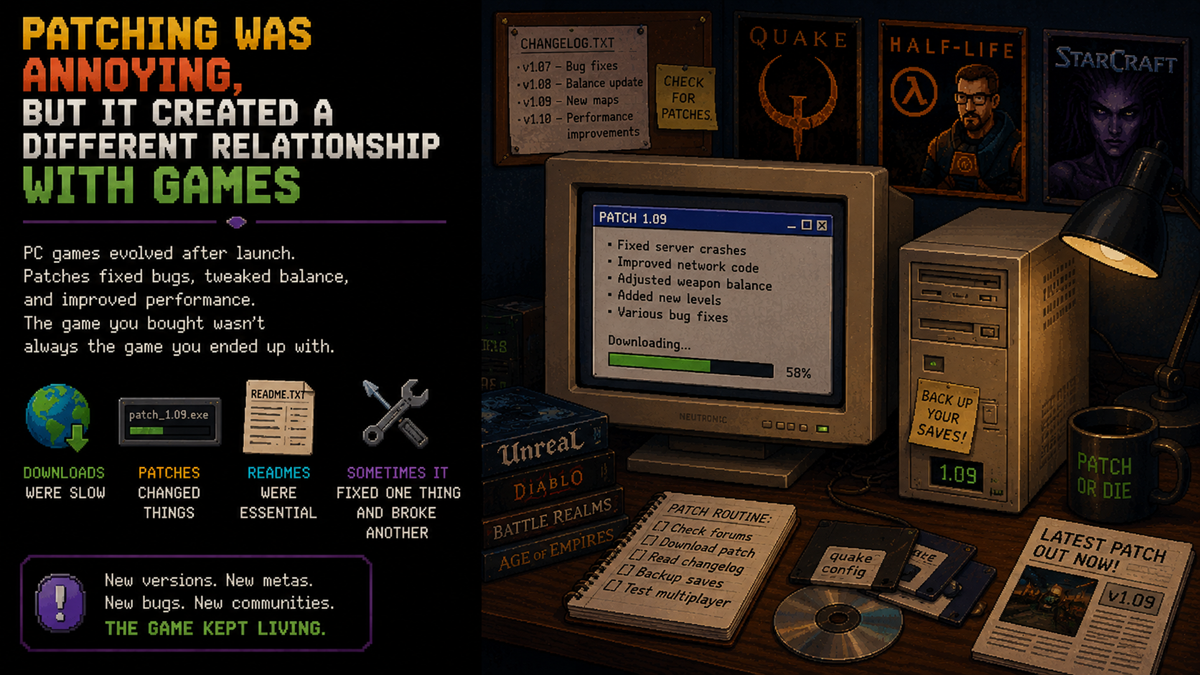
Buying a PC game in the late ’90s did not always mean getting the final version of anything. Patches fixed bugs, changed balance, improved compatibility, or occasionally broke something else. That could be irritating, especially when downloads crawled, but it also made games feel alive in a way most console releases did not. PC players got used to reading version numbers, checking readme files, and knowing that a game might be meaningfully different six months after launch. The finished product was not always fixed in place.
Strategy Games Built Their Own Kind of Celebrity
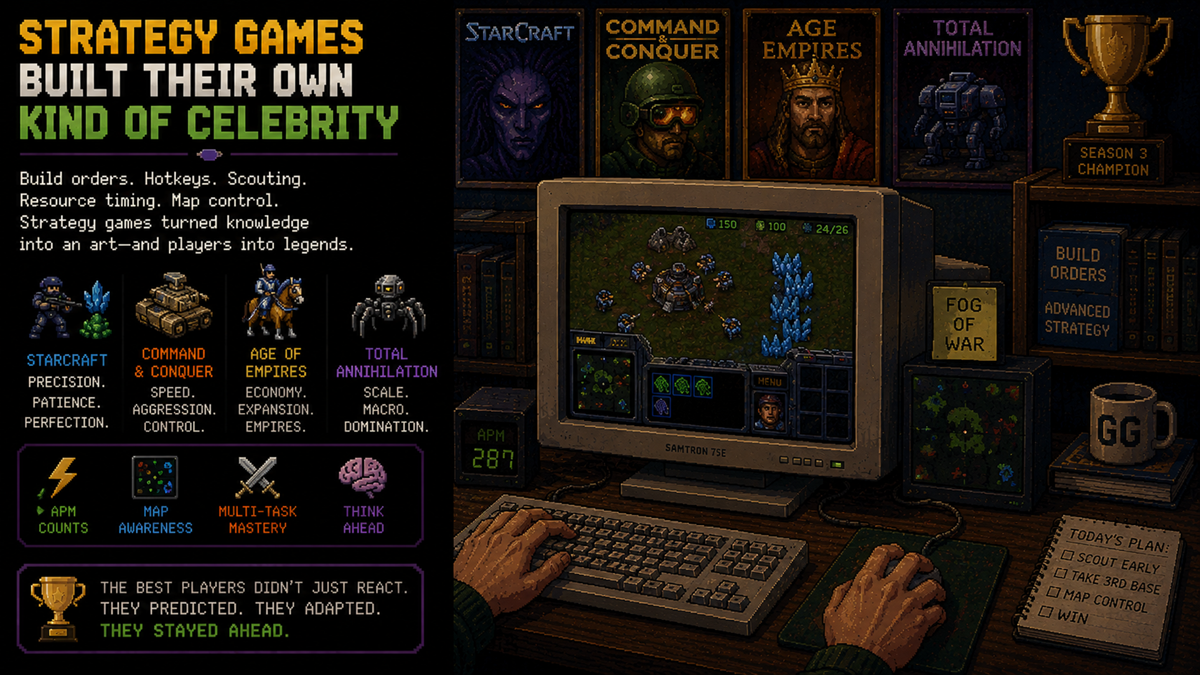
The console world had fighting game specialists, speedrunners, and local legends, but PC strategy created a different kind of reputation. StarCraft, released in 1998, turned build orders, hotkeys, scouting, and resource timing into things people studied rather than merely enjoyed. Command & Conquer, Age of Empires, Total Annihilation, and others fed the same appetite for mastery. The culture around these games was quieter than the shooter scene in some ways, but it could be just as intense. A good player did not only react quickly. They seemed to think several minutes ahead, and that made skill look almost academic.
Shareware and Demos Changed How Games Spread
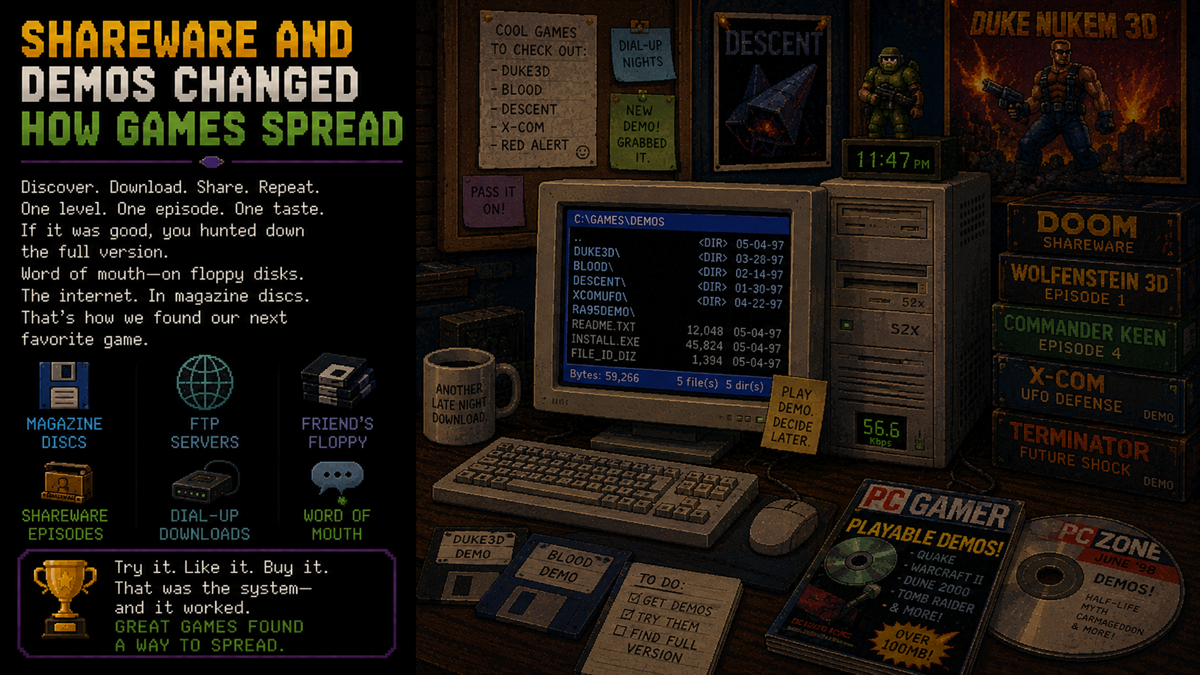
Before every storefront had trailers, wishlists, and user reviews, PC players often met games through demos, magazine discs, FTP servers, or shareware episodes passed from one person to another. That gave PC gaming a slightly scavenged feeling. You might install one level of something, play it repeatedly, and only later decide whether the full game was worth chasing down. It also made discovery feel communal. A friend did not just recommend a game, he handed you a disc, pointed to a folder, or told you which download was worth the wait.
PC Gaming Had Its Own Language of Problems
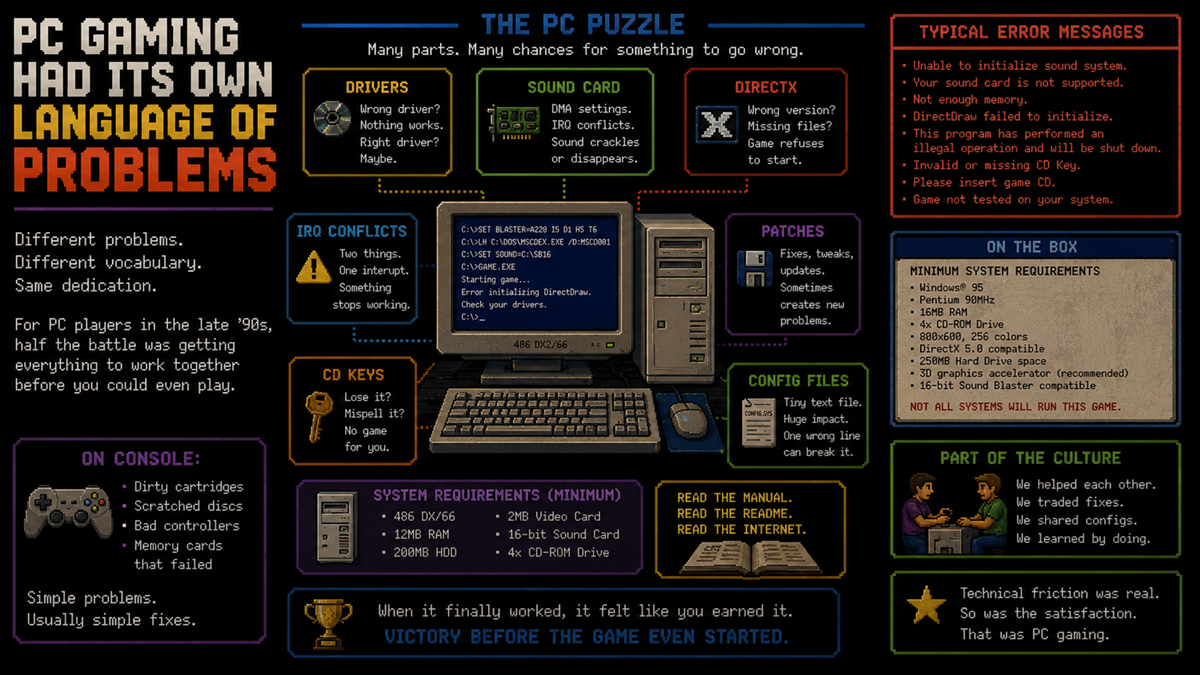
Console players had problems too, of course, dirty cartridges, scratched discs, bad controllers, memory cards that failed at the worst possible moment. PC players had a different vocabulary: IRQ conflicts, sound card settings, drivers, DirectX, patches, CD keys, config files, and system requirements printed like warnings on the side of the box. This technical friction became a filter. It could be exclusionary, but it also made competence part of the culture. Getting a difficult game to run felt like a small victory before the actual game had even begun.
Clans Made Identity Portable
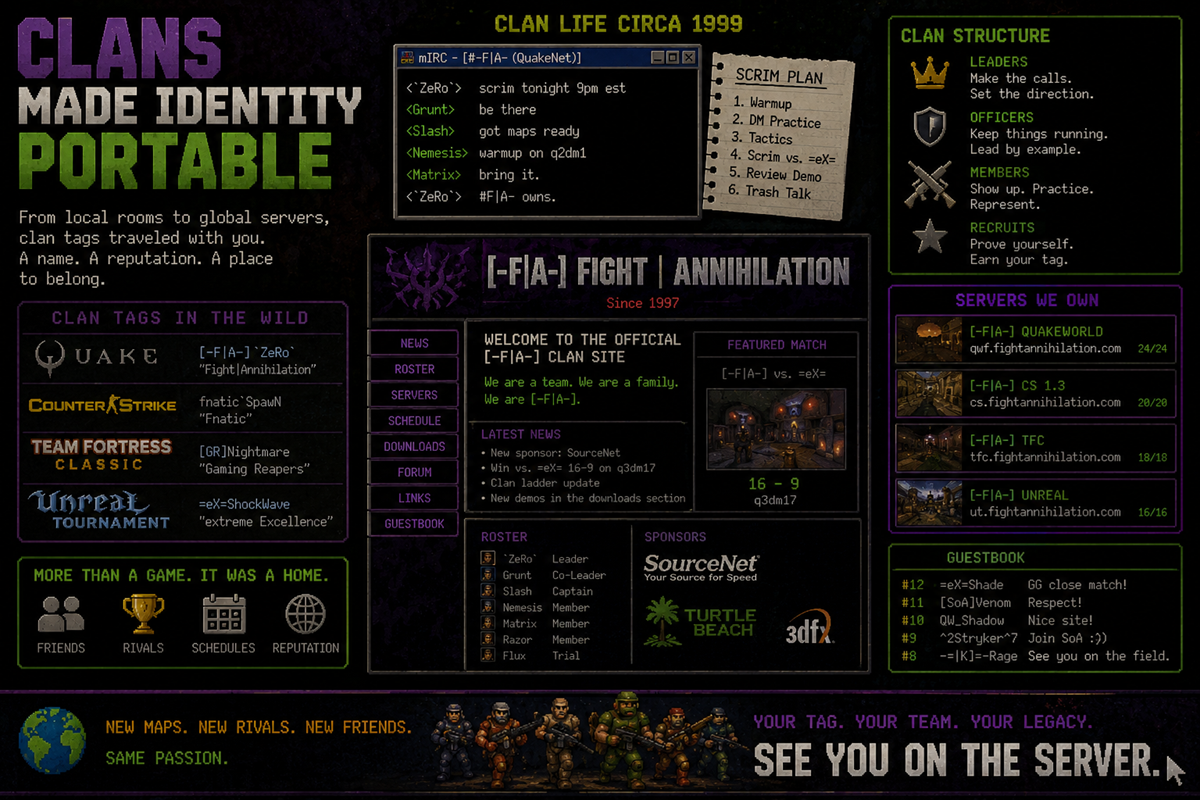
A console multiplayer group was often tied to a room, a school, or a neighborhood. PC clans were tied to names, tags, servers, forums, and reputations that traveled. A clan tag in Quake, Counter-Strike, Team Fortress Classic, or Unreal Tournament could say where you belonged before anyone saw how you played. These groups were competitive, but they were also social structures. They had leaders, rivalries, private jokes, practice schedules, and sometimes websites that looked exactly as late-’90s websites looked, which is to say busy, loud, and strangely charming.
The Internet Made Taste More Fragmented
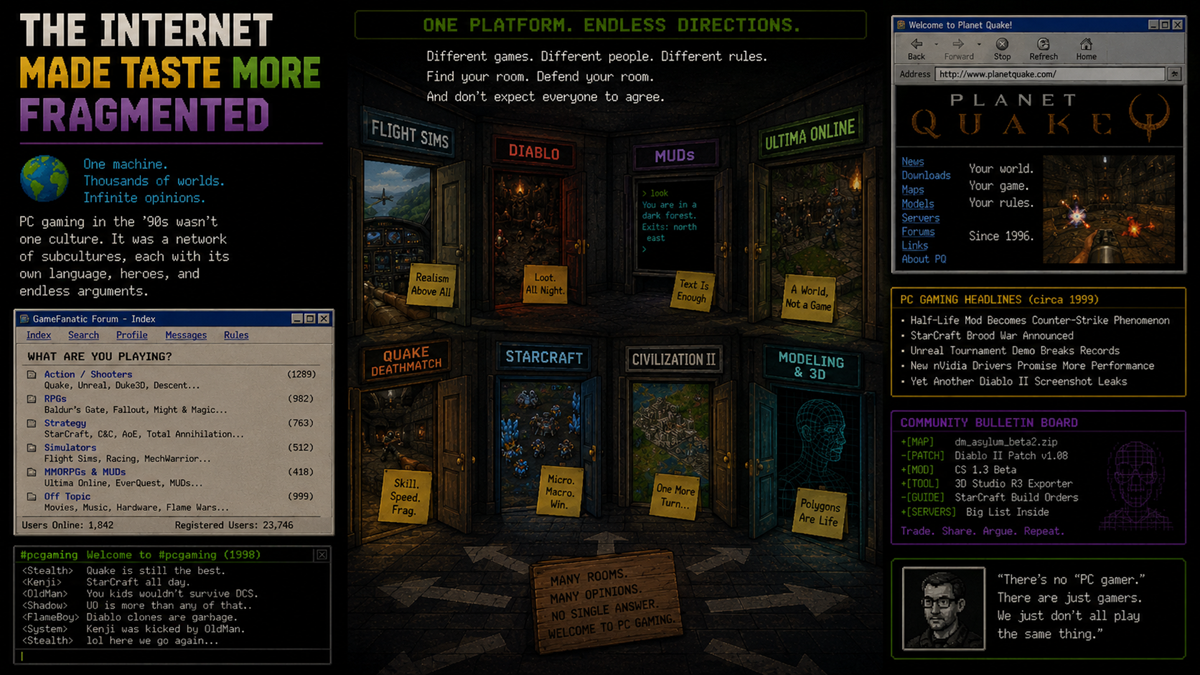
Console culture in the ’90s was heavily shaped by platform identity: Nintendo, Sega, PlayStation. PC gaming fractured in other directions. One player might live inside flight simulators, another inside Diablo, another inside MUDs or Ultima Online, another inside Quake deathmatch. Because so much of the conversation happened on forums, IRC, fansites, and server communities, taste became less dependent on a single machine and more dependent on where you spent your online time. PC gaming culture was not one room. It was a hallway full of rooms, most of them arguing.
Boxed PC Games Felt Like Little Technical Artifacts
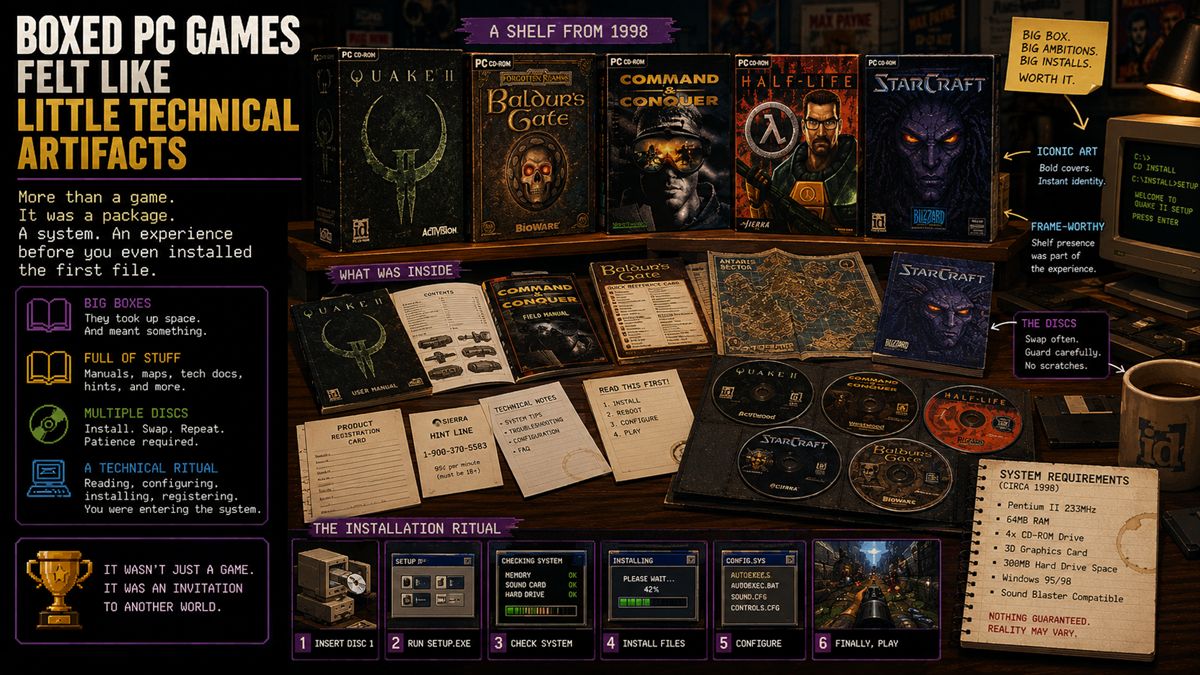
Late-’90s PC boxes had a presence. They were often large, shelf-hogging things with manuals, reference cards, registration forms, maps, tech notes, and discs that felt like they belonged to a serious purchase. Installing the game could feel almost ceremonial, especially when multiple CDs were involved. Console games had their own pleasures as physical objects, but PC releases often came with the implication that you were entering a system, not just starting a game.
MMOs Made the PC Feel Like a Place You Visited
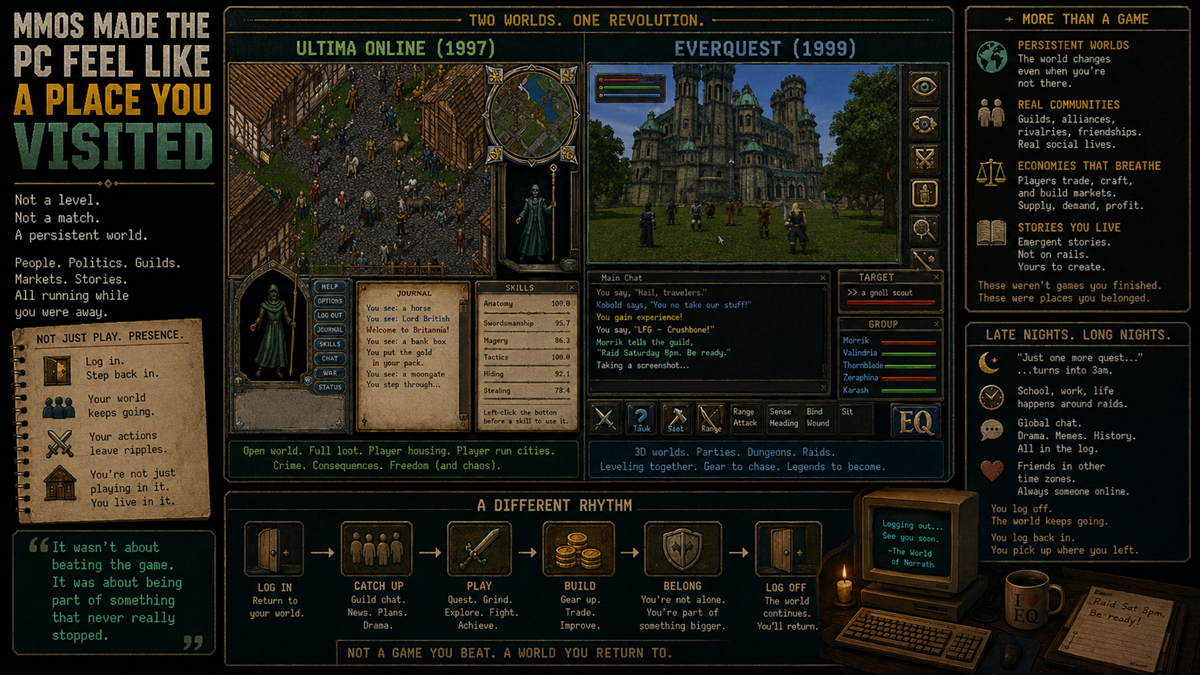
Ultima Online in 1997 and EverQuest in 1999 gave PC players a version of gaming that consoles were not really built to handle yet. These games were not just matches or campaigns. They were persistent worlds, with economies, guilds, social habits, arguments, and long nights that did not fit neatly into the older idea of finishing a game. The PC became a doorway into places that kept going after you logged off, which changed the emotional rhythm of play. You were not only saving progress. You were leaving and returning.
The Difference Was Not Just Technical
The late-’90s PC gaming boom created a culture around tinkering, connecting, modifying, and arguing over details that console players often never had to think about. That did not make it better in every way. It made it more complicated, more fragile, and sometimes less welcoming. But it also gave PC gaming a scrappy personality that still lingers, especially whenever players mod a game, build a rig, join a Discord server, or complain that the newest patch broke something that was working fine yesterday.
Continue Reading: 11 Vanished Game Store Chains That Defined a Generation