Video game history has a habit of shrinking itself down to a few companies, a few consoles, and the same handful of names. That makes for a tidy story, but not a very honest one. A lot of the medium was built by people working in classrooms, research labs, tiny software teams, and strange corners of companies that did not yet know what games were going to become. Some of the women in that history are remembered now, but often in a narrow way. Others still have to be dug out of the footnotes.
Mabel Addis
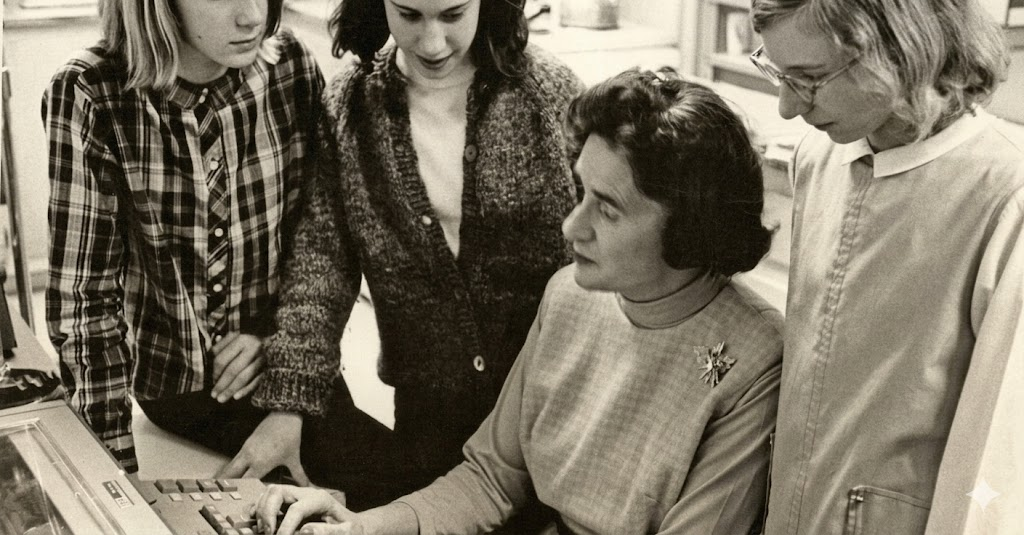
Mabel Addis was not working in the video game industry, because there was no real industry yet. She was a teacher and writer in New York when she helped create The Sumerian Game in 1964, a mainframe educational simulation about managing the ancient city-state of Lagash. Students made decisions about grain, land, population, and resources, an unusually early use of interactive storytelling and systems design. Addis is often credited as the first known female video game designer, but her work belongs closer to the center of the story than that bit of trivia suggests.
Joyce Weisbecker
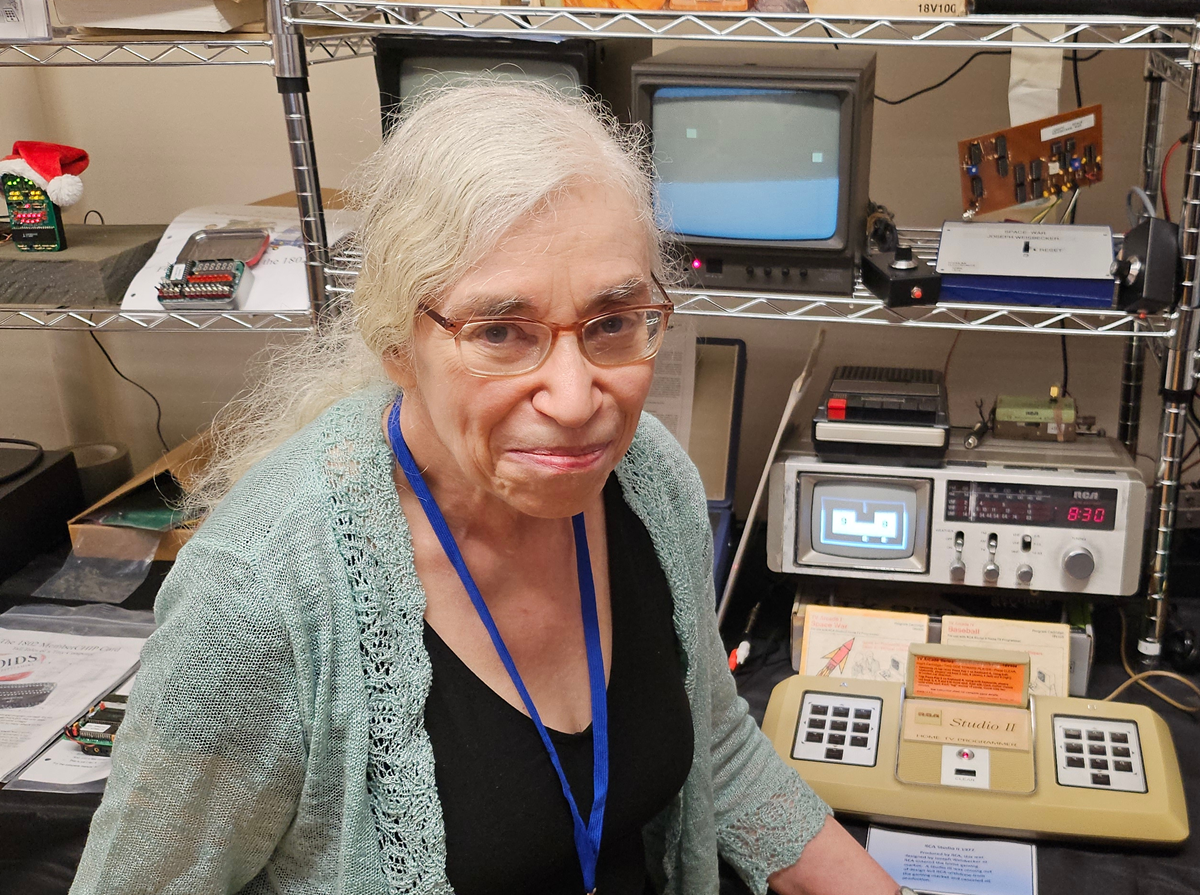
Joyce Weisbecker’s career in games was brief, but the timing makes it remarkable. In the mid-1970s, she programmed games for RCA’s Studio II and COSMAC VIP systems, including Speedway and TV Schoolhouse I. The machines were primitive even by early home-console standards, with tiny displays and very little memory. Still, she wrote commercial games as an independent contractor before “indie developer” was a label anyone used.
Carol Shaw
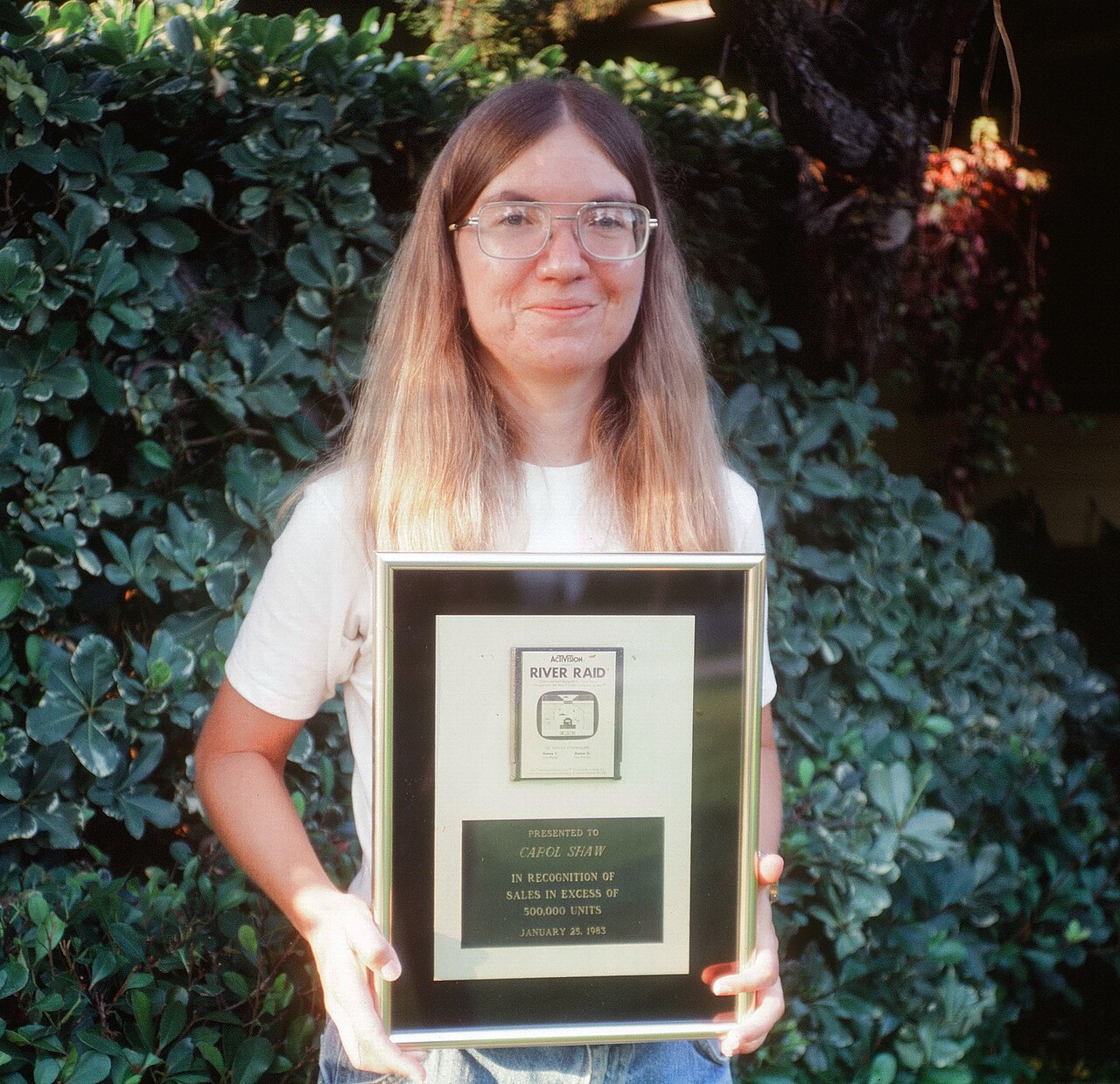
Carol Shaw tends to appear in game history as “the first female game programmer,” which is useful, but also a little flattening. She was not just present in the room, she was very good at the work. At Atari, she made 3-D Tic-Tac-Toe and Video Checkers for the Atari 2600. At Activision, she designed River Raid, released in 1982, a shooter that still feels unusually clean and readable for such limited hardware. Its river, fuel system, enemy patterns, and scrolling all seem simple on the surface. Underneath, it was careful engineering disguised as easy play.
Dona Bailey
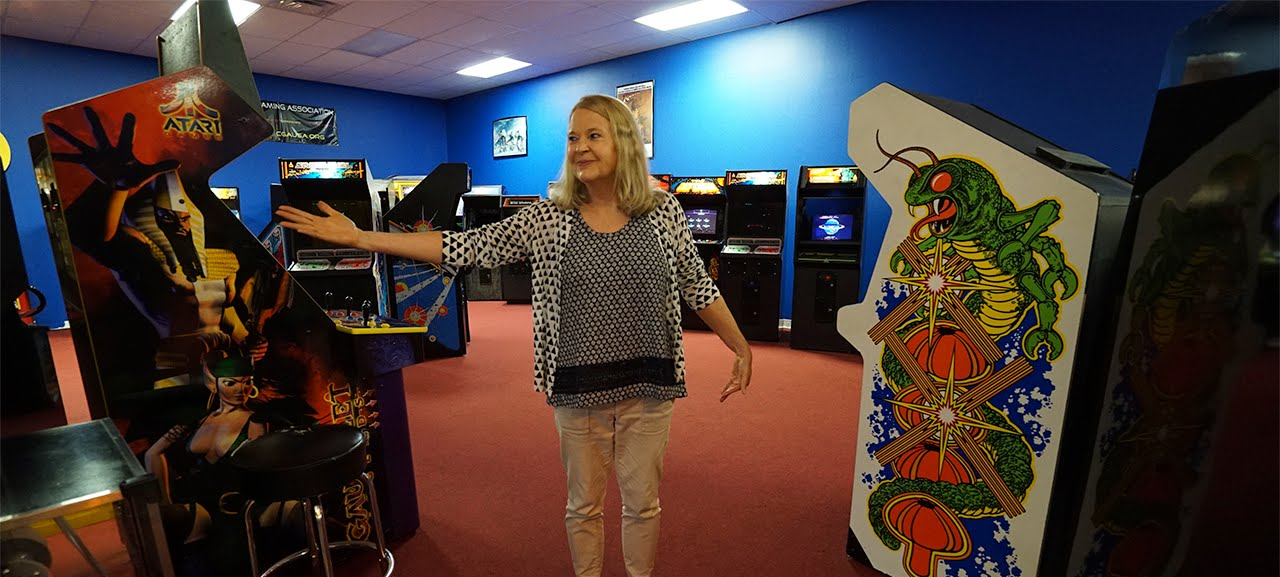
Centipede never looked quite like the rest of the arcade. It had mushrooms, insects, bright colors, and a trackball, and it was tense without leaning on the usual space-war mood of the period. Dona Bailey co-created and programmed it at Atari with Ed Logg, and the game became one of the company’s major arcade hits after its 1981 release. Her time in the industry was short. That part is hard to ignore, because Bailey later spoke about how isolating and hostile the environment could be for a woman programmer in that scene.
Roberta Williams

Roberta Williams helped give computer games a sense of place. Mystery House, released in 1980, was rough by later standards, but pairing text input with on-screen graphics changed what a home computer adventure could feel like. With Sierra On-Line, Williams kept pushing toward bigger, stranger, more visually guided adventures, especially through King’s Quest. She is famous, at least compared with some names here, yet she is still too often folded into the story of Sierra as a company instead of discussed as one of the designers who shaped how adventure games spoke to players.
Trending on realmoneygamer.com
Anne Westfall

Archon: The Light and the Dark is not easy to summarize neatly, which is part of its charm. It looks a little like chess, then suddenly becomes an action game, then turns back into strategy. Anne Westfall programmed it for Atari 8-bit computers while working with Free Fall Associates. In the early 1980s, when genres were still soft around the edges, that kind of hybrid thinking mattered. Westfall helped make a game that did not behave as if categories were fixed.
Dani Bunten Berry

Danielle Bunten Berry was thinking about multiplayer before the industry had fully learned how to sell it. M.U.L.E., published in 1983, was about economics, negotiation, sabotage, luck, and the awkward comedy of sharing a screen with other people. It was not merely a strategy game with multiple players added on. The social friction was the point. Later, The Seven Cities of Gold moved in a different direction, but the same curiosity was there, a fascination with systems that felt alive once a player started pushing against them.
Brenda Laurel

Brenda Laurel does not fit cleanly into a “made this one famous game” version of history, which may be one reason her influence is easier to understate. She worked at Atari and Activision, wrote seriously about computers as a medium for human experience, and later co-founded Purple Moon, a company that tried to reach girls when the games business was becoming more and more convinced it mostly needed to sell to boys. Some of Purple Moon’s work was debated even at the time. Still, Laurel was asking questions the industry often avoided, who is being imagined as the player, and what gets designed out when that imagined player is too narrow?
Amy Briggs

Amy Briggs came into Infocom through testing, then learned the company’s development language and became an implementor. Her best-known game, Plundered Hearts, came out in 1987. It was a romance adventure, complete with pirates, danger, and a female protagonist, which made it unusual inside a catalog better known for fantasy, science fiction, mystery, and dry absurdity. Plundered Hearts is sometimes treated like a curiosity. It is better read as proof that interactive fiction had more range than even Infocom usually allowed itself to show.
Muriel Tramis
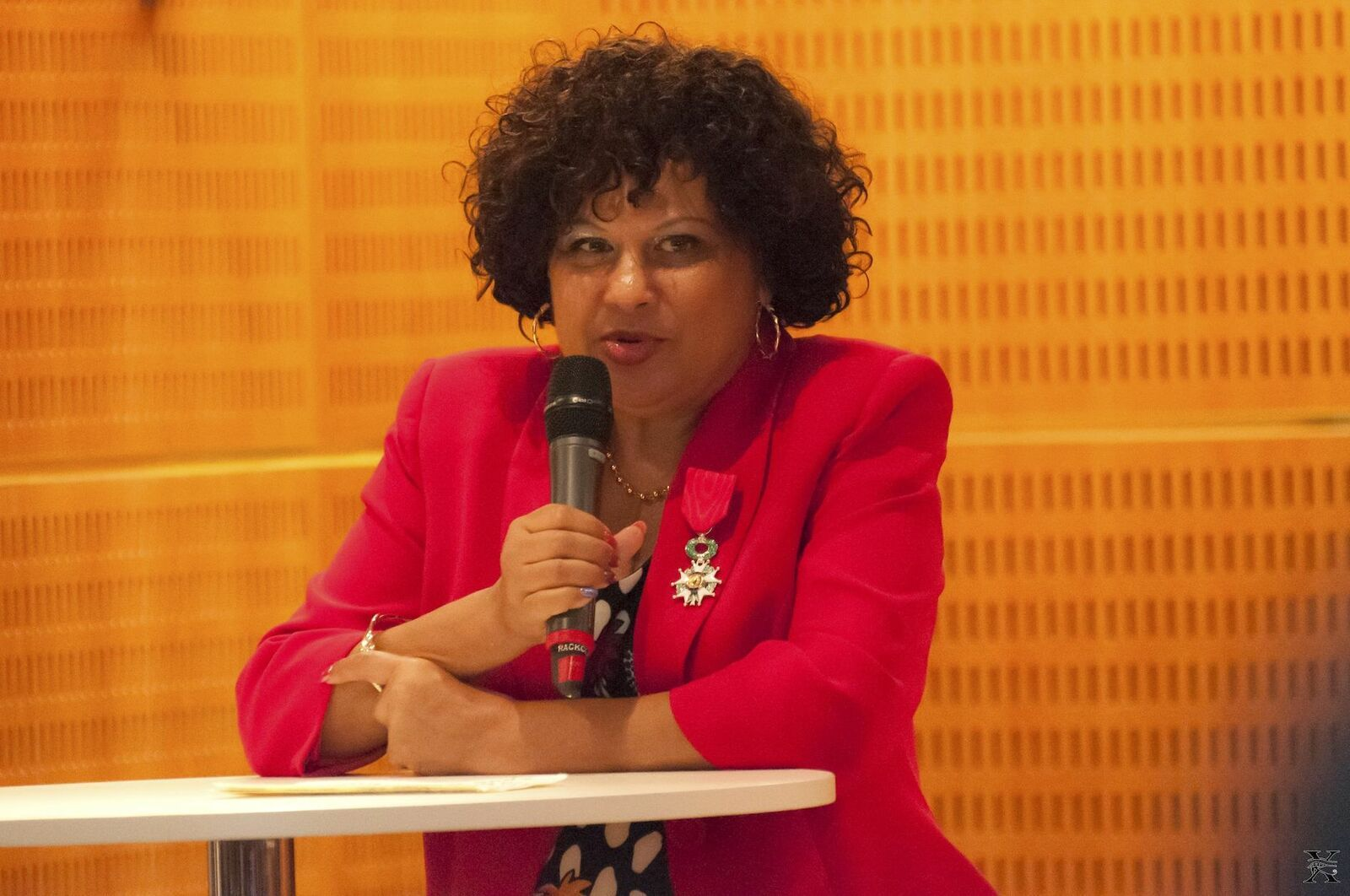
Muriel Tramis brought Caribbean history into games at a time when European adventures were not exactly overflowing with that kind of perspective. Born in Martinique and trained as an engineer, she worked at Coktel Vision and designed Méwilo and Freedom: Rebels in the Darkness in the late 1980s. Those games dealt with memory, slavery, colonial history, and resistance, not as background flavor but as the material of play. Tramis later worked on other projects, including entries tied to Coktel’s adventure-game identity, but her early work still feels especially striking because it came from a place the industry rarely bothered to look.
The early video game industry was messy, experimental, and much less uniform than the usual highlight reel suggests. These women were not all doing the same kind of work, and that is the point. Some were programmers, some were writers, some were designers, some moved between all three because early games often required that. The record gets more interesting when they are treated as part of the main story, not as a separate chapter brought out for special occasions.
Continue Reading: 12 Predictions About the Future of Video Games