Gaming friendships are often underestimated by people who still picture online play as something casual, disposable, or less real than meeting someone through school, work, or a local social circle. Anyone who has spent enough time in Discord calls, ranked queues, raid nights, scrim servers, or co-op campaigns knows it is not that simple. Games create habits, pressure, shared jokes, and long stretches of ordinary time together. That mix can make certain friendships last far longer than relationships built in more traditional settings.
They Are Built Through Repetition, Not Big Social Moments
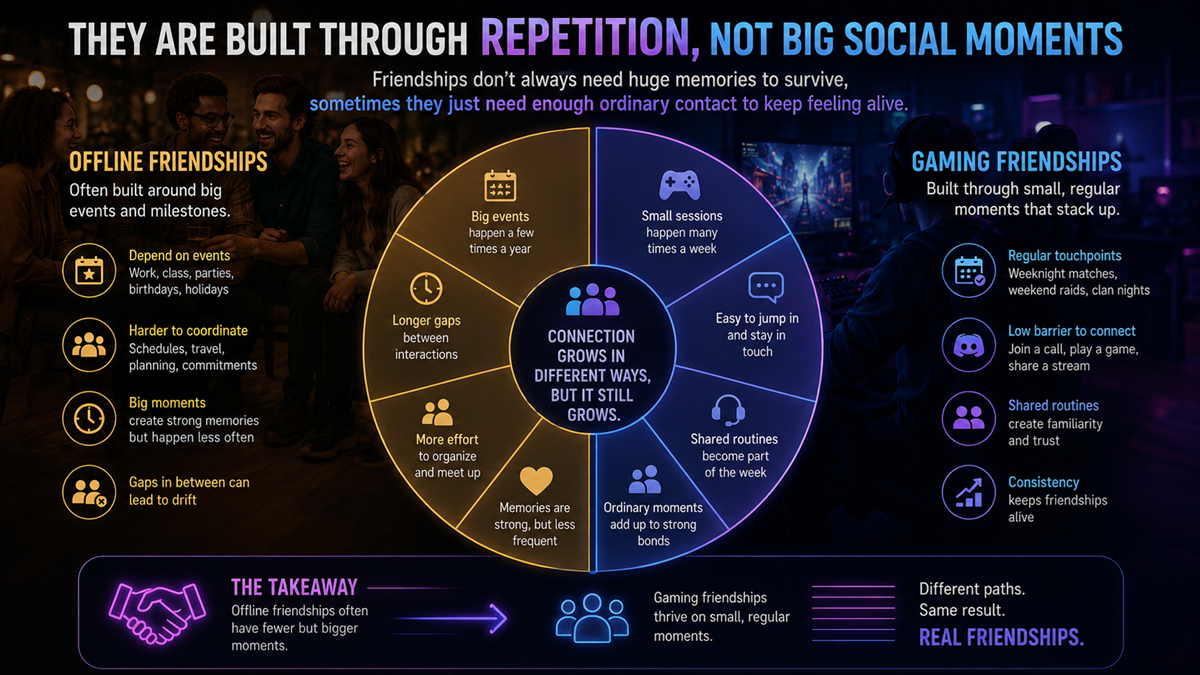
A lot of offline friendships depend on events. You see someone at work, at class, at a party, at a birthday, or when a group chat somehow manages to pick a restaurant without falling apart. Gaming friendships tend to grow in smaller, more regular increments. A few matches after dinner, a Sunday raid, a late-night Discord call, or a weekly ranked session can become part of the week without anyone making a production out of it. That rhythm matters. Friendships do not always need huge memories to survive, sometimes they just need enough ordinary contact to keep feeling alive.
Pressure Shows People Quickly
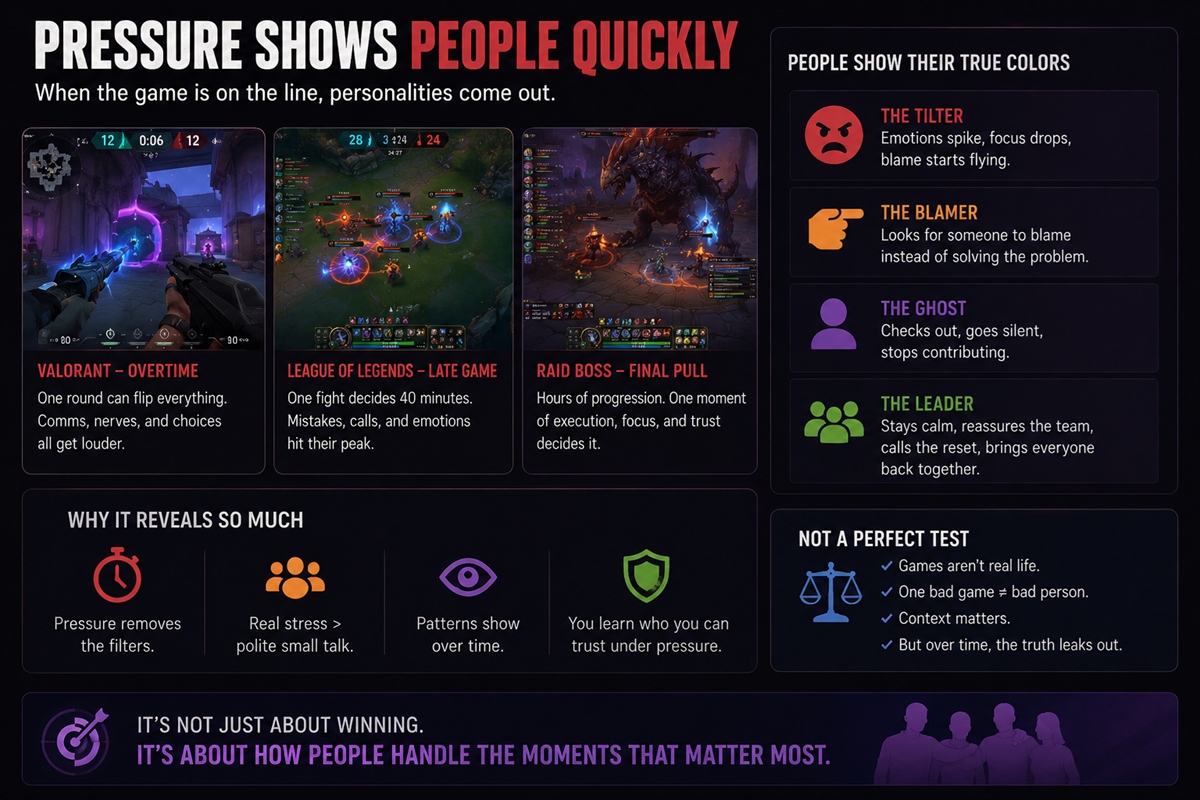
There is something revealing about a close overtime round in Valorant, a messy late-game fight in League of Legends, or the final pull of a raid boss after hours of mistakes. People show you who they are when the plan breaks. Some players tilt, some blame the nearest teammate, some go quiet, and some calmly reset the group for another try. That does not mean games are some perfect test of character, because they are not. But repeated pressure does give friendships a different kind of information, the kind that polite small talk often avoids.
Distance Is Already Part of the Setup
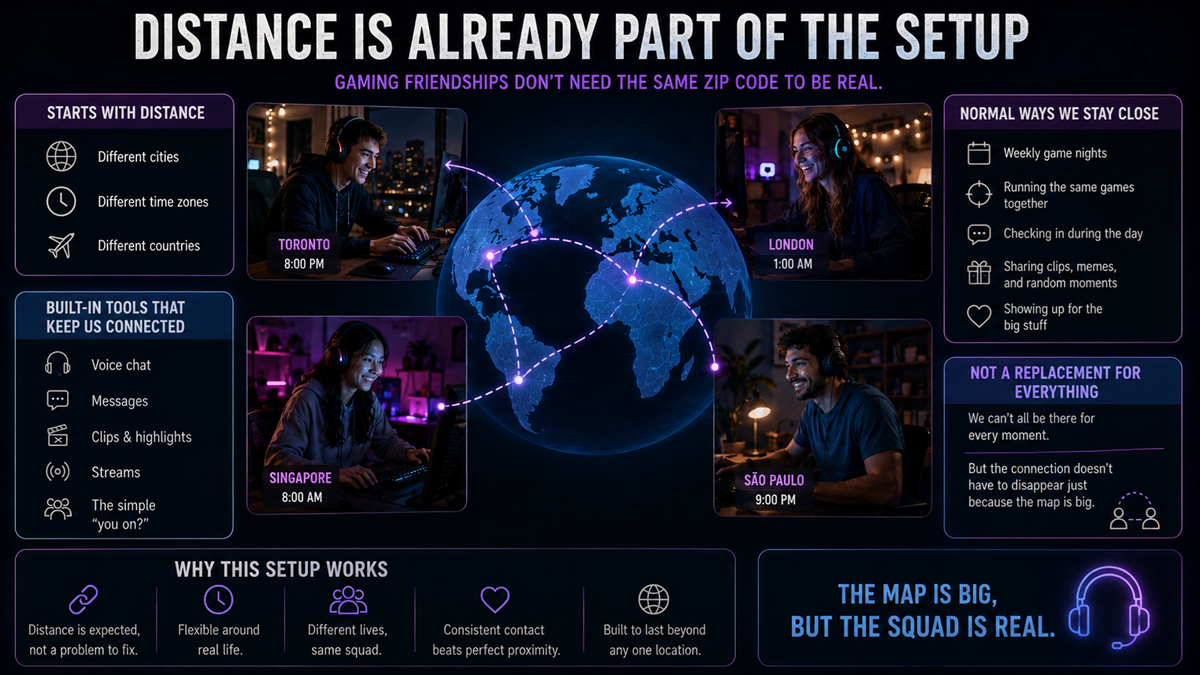
Traditional friendships can depend heavily on being in the same place at the same time. Once someone moves, graduates, changes jobs, or gets pulled into a different routine, the friendship can start to fade without anyone really deciding that it should. Gaming friendships often start with distance already built in. One person might be in another city, another country, or another time zone, and the friendship still has a normal way to function. Voice chat, messages, clips, streams, and the usual “you on?” are not replacements for every kind of closeness, but they do keep the connection from relying entirely on geography.
Quiet People Get More Room To Be Known
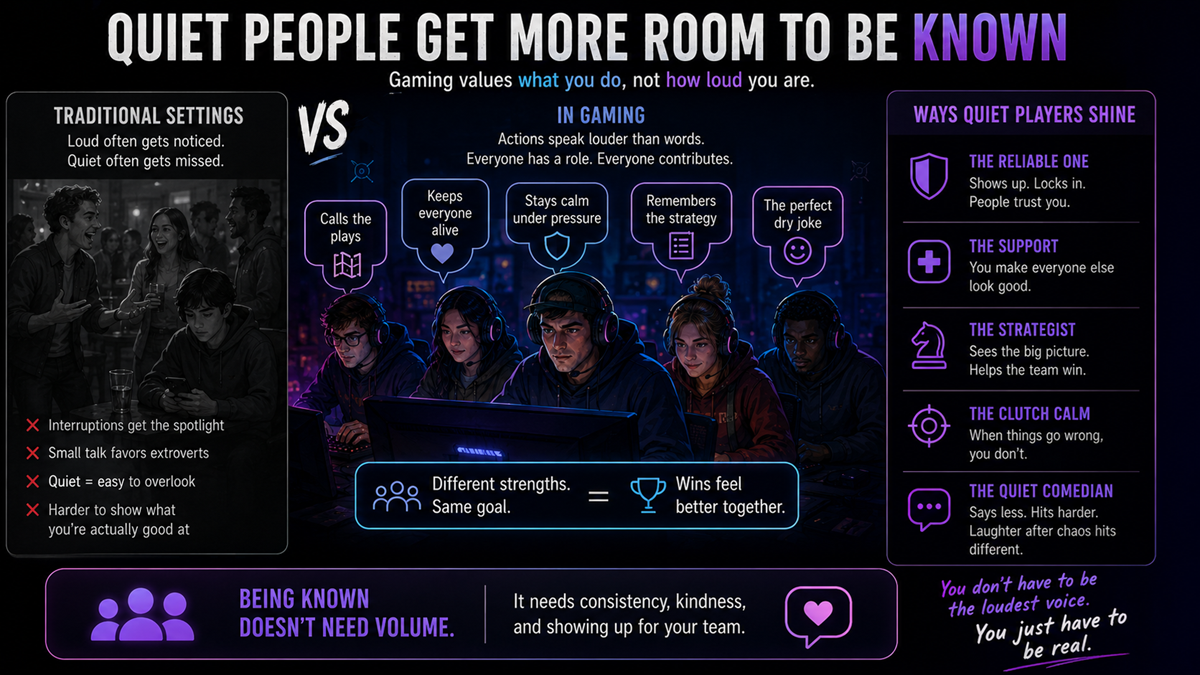
Not everyone is good at being interesting in a crowded room. Some people do not naturally jump into conversations at bars, work events, classrooms, or parties. Gaming gives them other ways to become visible. A quiet player can be the reliable support, the patient tank, the person who remembers the strategy, the teammate who never panics, or the one who says very little until the perfect dry joke lands after a bad wipe. In that environment, being socially valuable is not always about being the loudest voice.
The Friendship Has a Built-In Reason To Continue
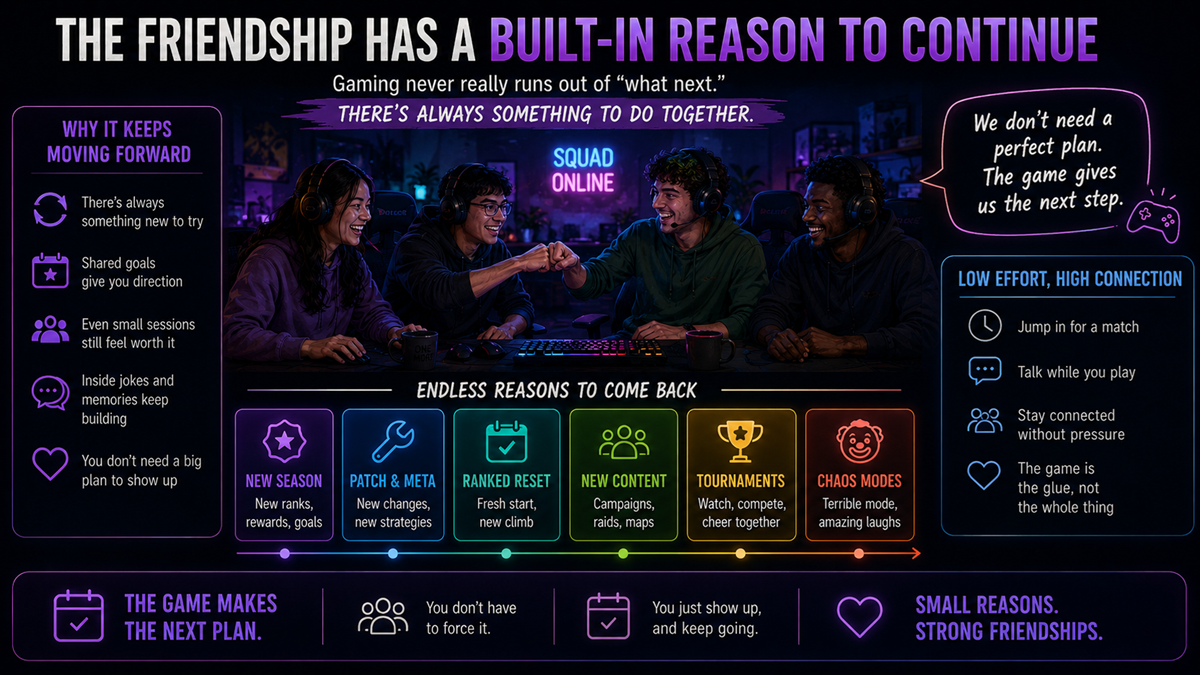
One underrated reason gaming friendships last is that they rarely need a formal excuse to exist. There is always something to do. A new season drops, a patch changes the meta, a ranked reset happens, a co-op campaign gets added, a tournament is on, or someone finds a terrible new mode that everyone complains about while playing for three hours. Traditional friendships can stall when nobody knows what the next plan should be. Gaming keeps offering small reasons to return, even when nobody has the energy for a big catch-up.
Trending on realmoneygamer.com

Inside Jokes Have Time To Mature
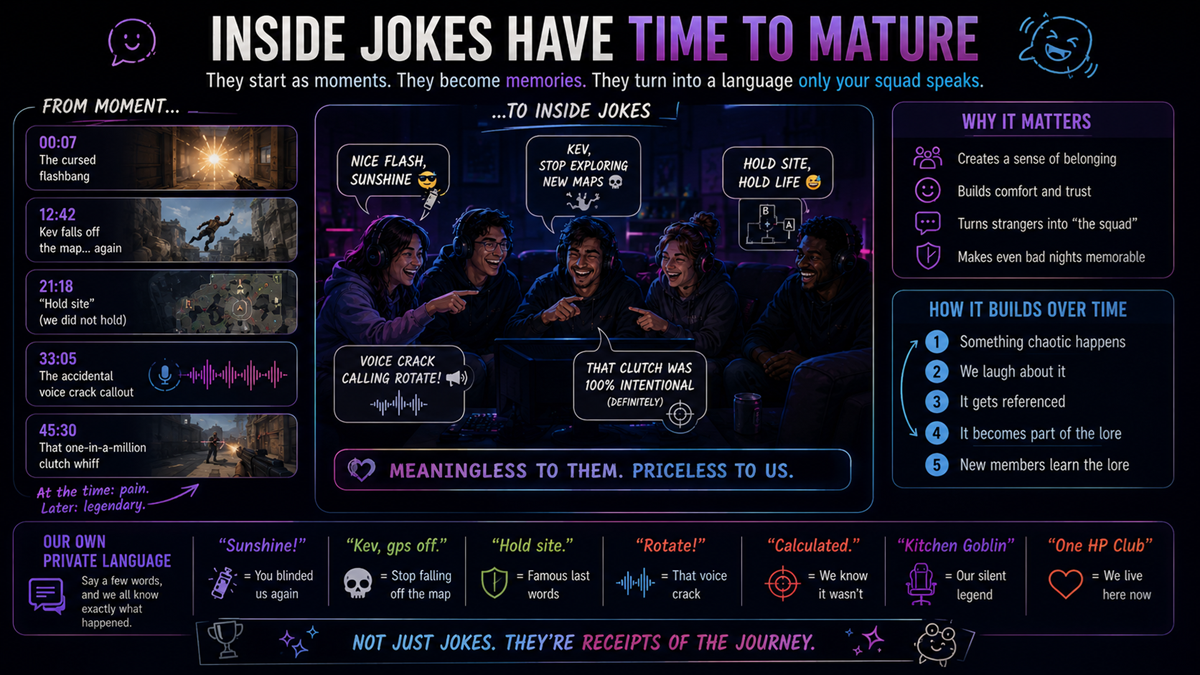
Gaming groups collect ridiculous little pieces of shared history. A failed flashbang, a cursed loadout, a player falling off the map at the worst possible moment, a bad callout that somehow becomes permanent. These jokes usually sound meaningless to anyone outside the group. That is part of why they work. Over time, they turn into a private language, and that language can make a server feel familiar the second someone joins voice.
Status Matters Less Than Chemistry

Traditional social settings often sort people by age, job, school, income, neighborhood, or mutual connections, sometimes without anyone saying it out loud. Gaming can scramble that in a useful way. A student, a parent, a night-shift worker, a designer, and someone living halfway across the world can end up in the same group because the comms are good and the mood feels right. Skill helps, of course, especially in competitive games. But plenty of long-running squads are not built around the best player in the lobby, they are built around the people everyone still wants to talk to after losing.
Late-Night Voice Chat Changes the Conversation
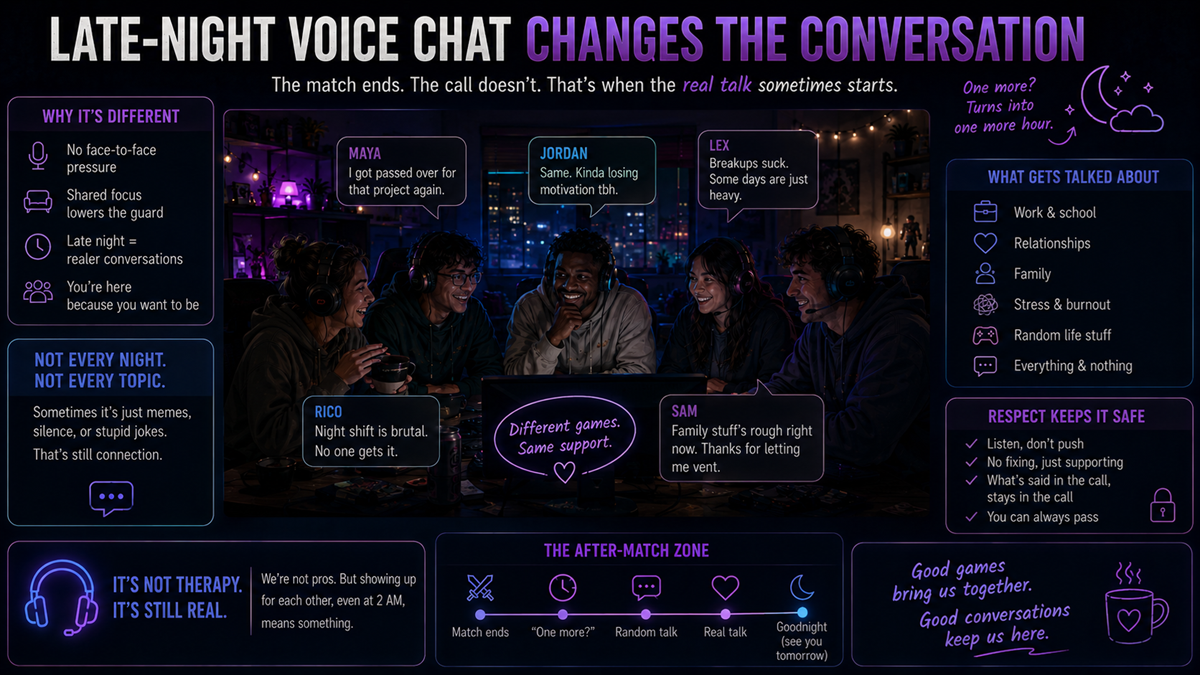
Some conversations are easier when nobody is sitting across a table trying to look composed. Gaming creates strange little pockets of honesty, especially late at night, when the last match supposedly ended twenty minutes ago and nobody has left the call. People talk about work, breakups, burnout, family problems, or just the weird texture of their day. It does not always become deep, and it does not need to. The point is that the door is open in a way that can feel less forced than a formal sit-down conversation.
Shared Wins Feel Personal, Even When the Stakes Are Small
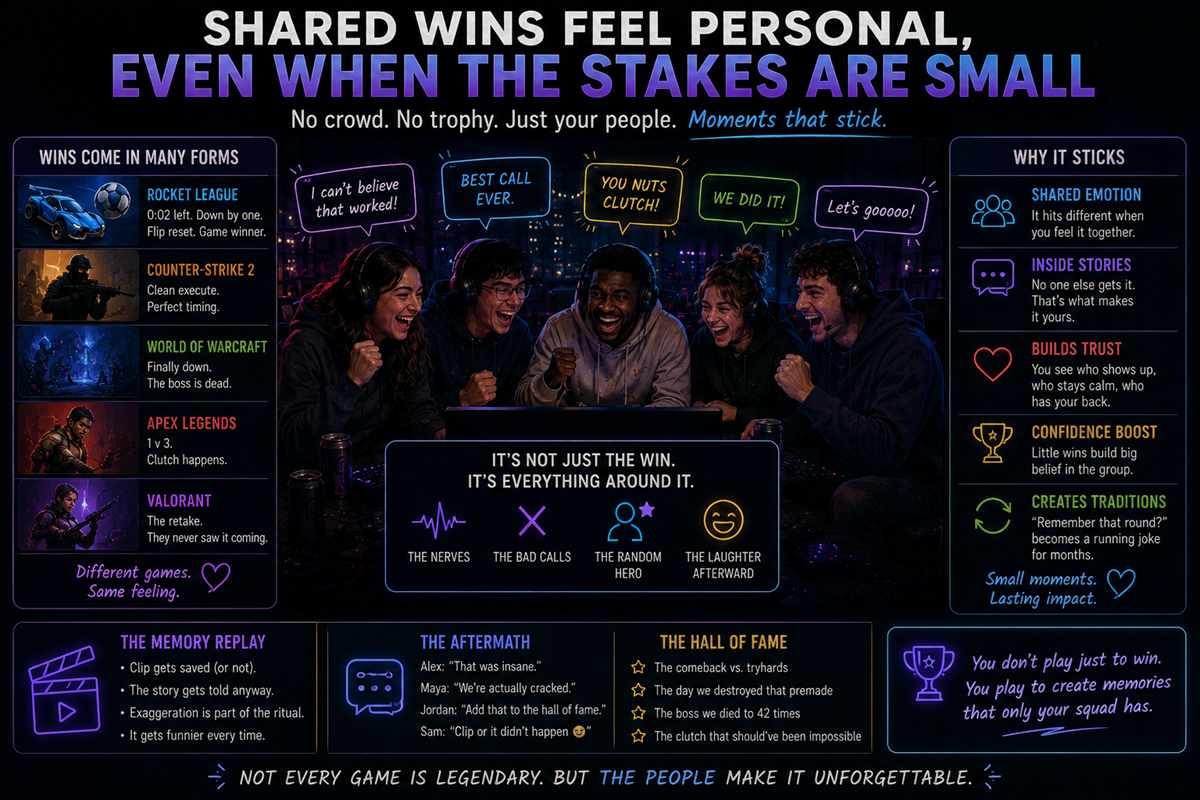
A comeback in Rocket League, a clean execute in Counter-Strike 2, a dungeon clear in World of Warcraft, a clutch in Apex Legends, these moments can stick around longer than they probably should. Most of them will not matter to anyone outside the group. There is no crowd, no trophy, no prize pool, no headline. Still, winning together has a different texture than winning alone. The memory includes the nerves, the bad calls, the person who suddenly overperformed, and the laughter afterward when everyone starts exaggerating what happened.
The Friendship Can Shrink Without Disappearing
Life eventually gets in the way. People change jobs, move apartments, get married, have kids, lose free time, switch sleep schedules, or just stop caring about the game that brought everyone together. In a traditional friendship, that kind of change can make the whole relationship feel like it has quietly ended. Gaming friendships often have more flexible forms. The nightly grind becomes one session a month, the ranked stack turns into watching esports together, or the old Discord server becomes a place where people drop memes, clips, and occasional life updates. It is not always dramatic. Sometimes the friendship lasts because nobody ever fully closes the tab.
Continue Reading: 12 Gaming Partnerships That Made Classics, Then Imploded