Most players know the basic deal: buy the game, maybe buy the expansion, maybe pick up a few cosmetics if the hooks are strong enough. But studios rarely live on that simple version of the business anymore. A lot of the money comes from quieter places, some boring, some surprisingly clever, and some invisible unless you have worked near publishing, platform deals, or live operations. The game on your hard drive is often only the most visible part of a much larger commercial machine.
Subscription Catalog Payments
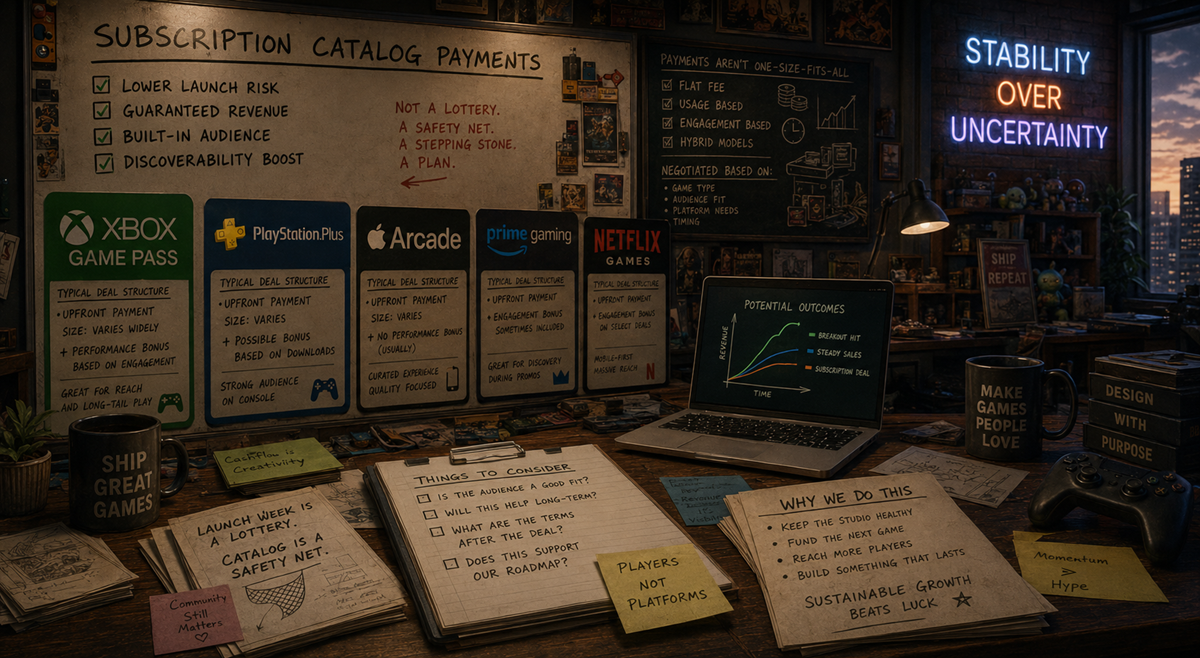
Game Pass, PlayStation Plus, Apple Arcade, and similar services changed the way some studios think about launch risk. A game that might struggle to stand out on a crowded release week can suddenly have a guaranteed payment, a large built-in audience, or both. The terms are not all the same. Some deals are flat fees, some are tied to performance, and some seem to be shaped around whatever the platform needs that month. For a smaller studio, that check can be less exciting than a huge breakout hit, but much more useful than hoping wishlists turn into sales at exactly the right time.
Free Game Giveaways That Are Not Really Free
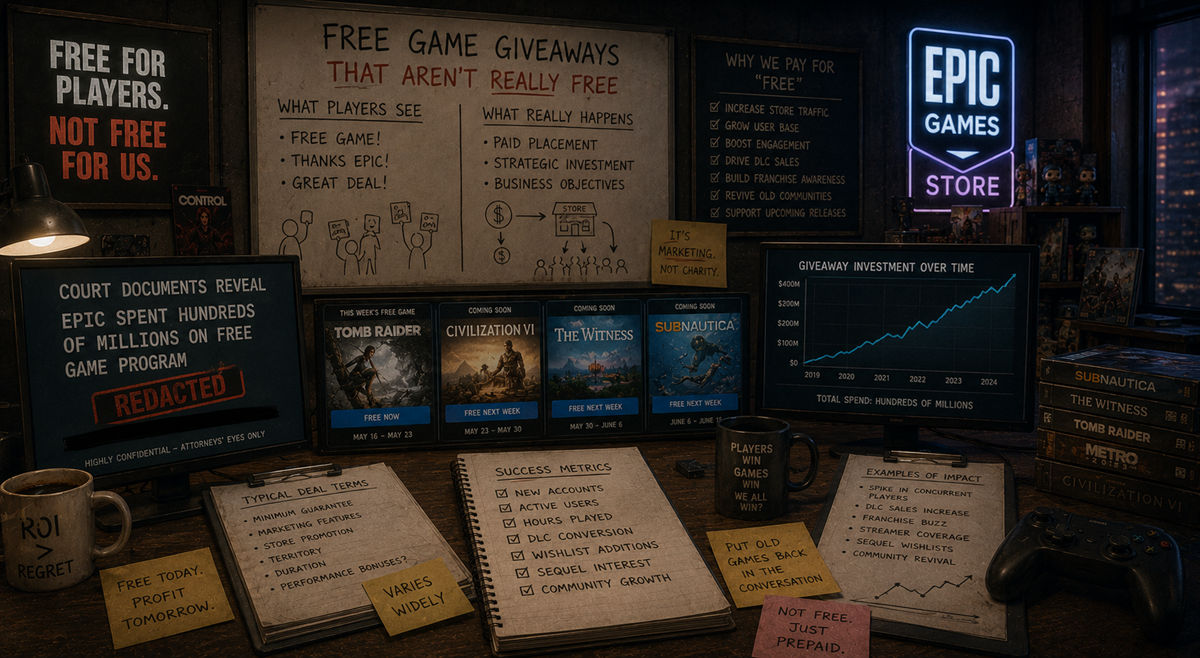
When a storefront gives away a game, players often treat it like a gift from the platform. For the developer or publisher, it can be a paid placement. Epic’s free game program made this more visible after court documents showed how much money had been spent securing those giveaways. The point is not just generosity or user growth for the store. A giveaway can put an older game back into public conversation, bring people into the DLC funnel, boost sequel awareness, or revive a multiplayer community that had gone quiet.
Tax Credits and Local Incentives
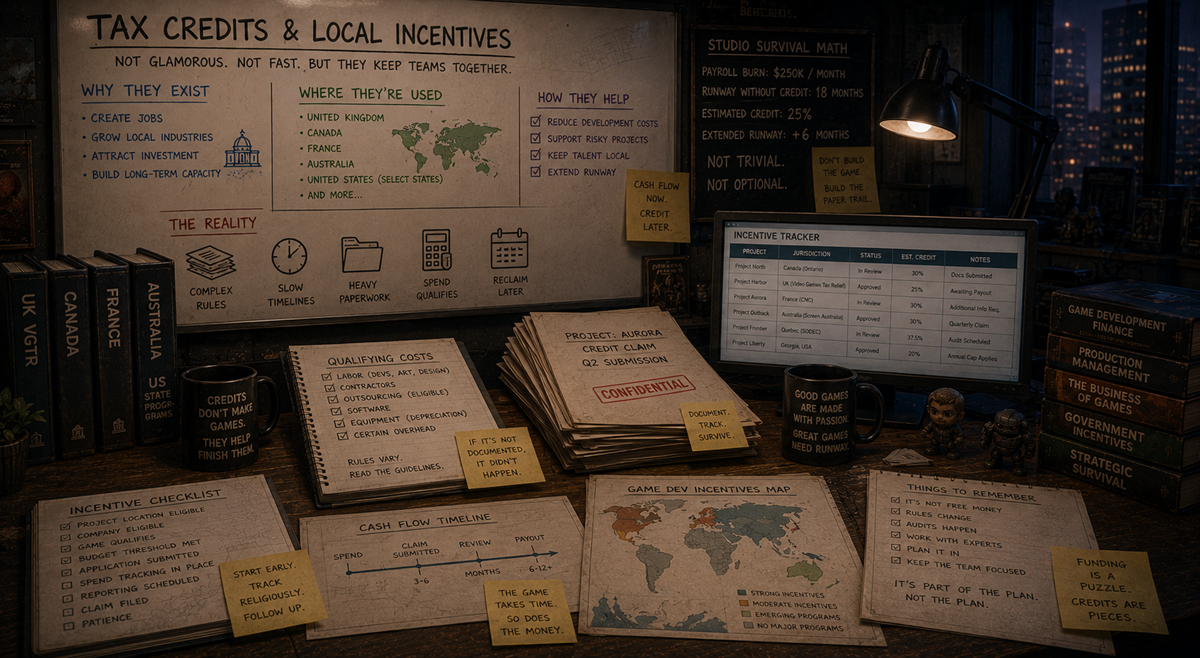
This is one of the least glamorous sources of money in games, which is probably why players almost never talk about it. In places like the UK, Canada, France, Australia, and several U.S. states, governments offer credits or incentives to attract game development work. Studios still have to qualify, document spending, and deal with slow administrative timelines. But when payroll is burning every month, a tax credit can matter as much as a publishing milestone. It is not the kind of money that appears in a trailer, but it can keep a team intact.
Rewarded Ads in Mobile Games
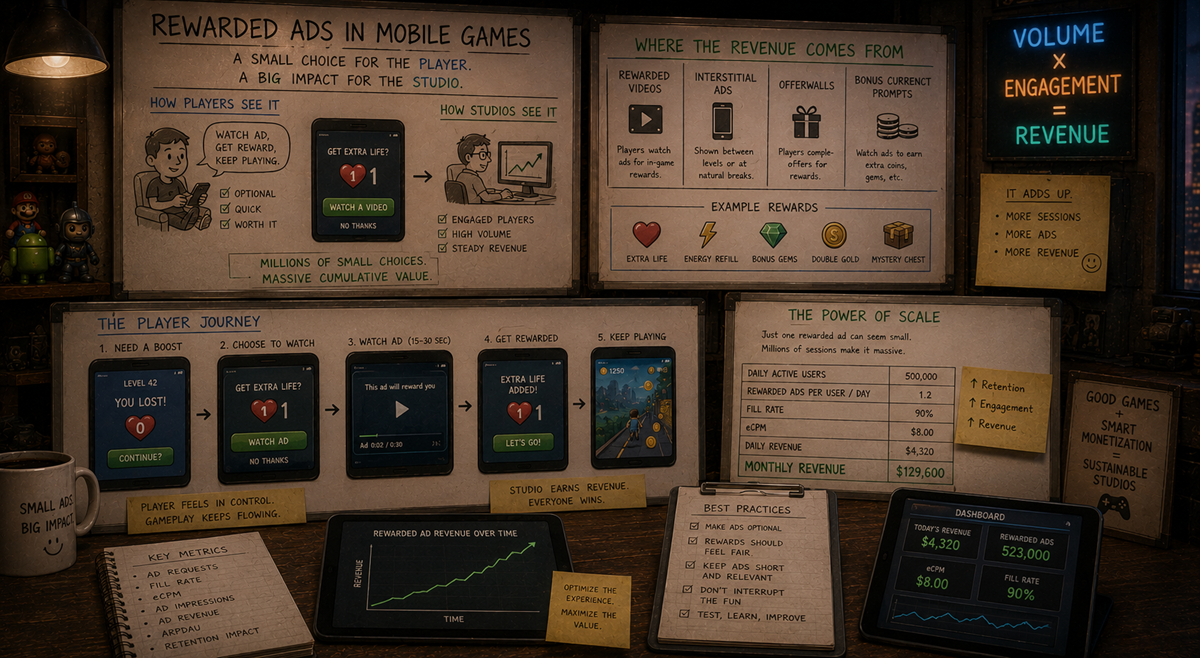
A thirty-second ad for one more life does not feel like a major business model while you are tapping through it. Multiply that by millions of sessions and it becomes something else entirely. Mobile studios can earn from rewarded videos, interstitials, offerwalls, and bonus currency prompts without asking every player to spend directly. The player thinks, fine, I will watch this and keep playing. The studio sees another small piece of revenue added to a very large pile.
Marketplace Fees on Player Trading
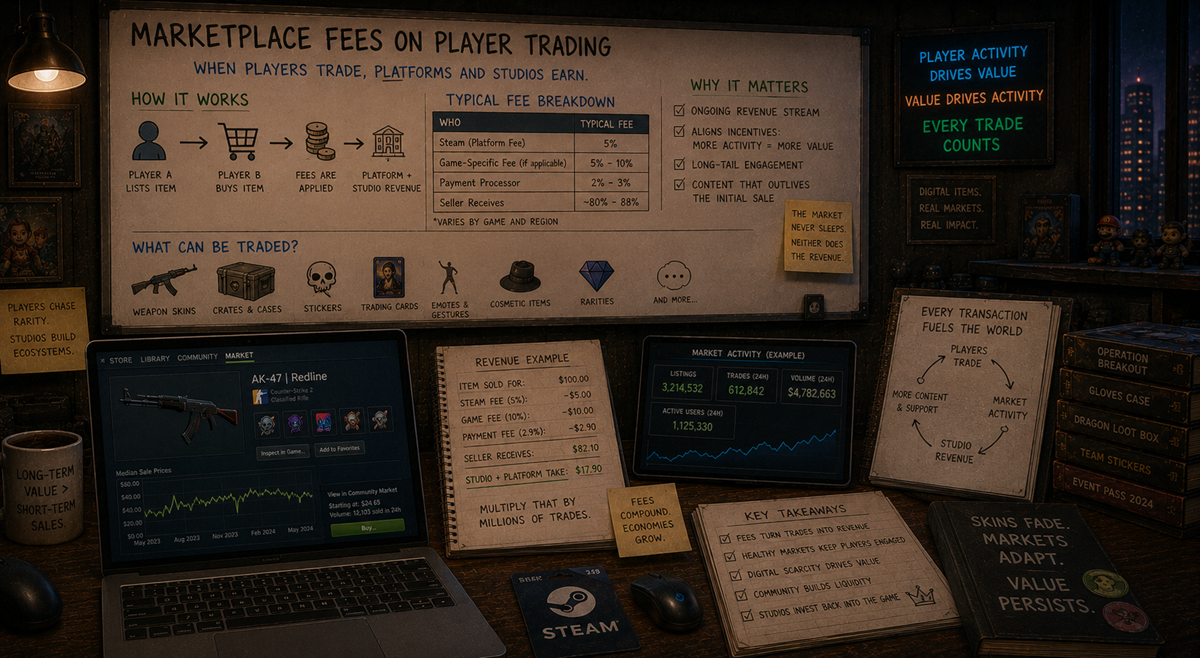
Some games keep earning money every time players trade items with each other. Steam’s Community Market is the obvious example, since transactions include platform fees and, for certain games, additional game-specific fees. That turns skins, crates, stickers, cards, and other digital items into more than cosmetics. They become moving assets inside a market. Players may be chasing rarity or resale value, while the studio benefits from activity that continues long after the first sale.
Trending on realmoneygamer.com

Licensing the Tech Behind the Game
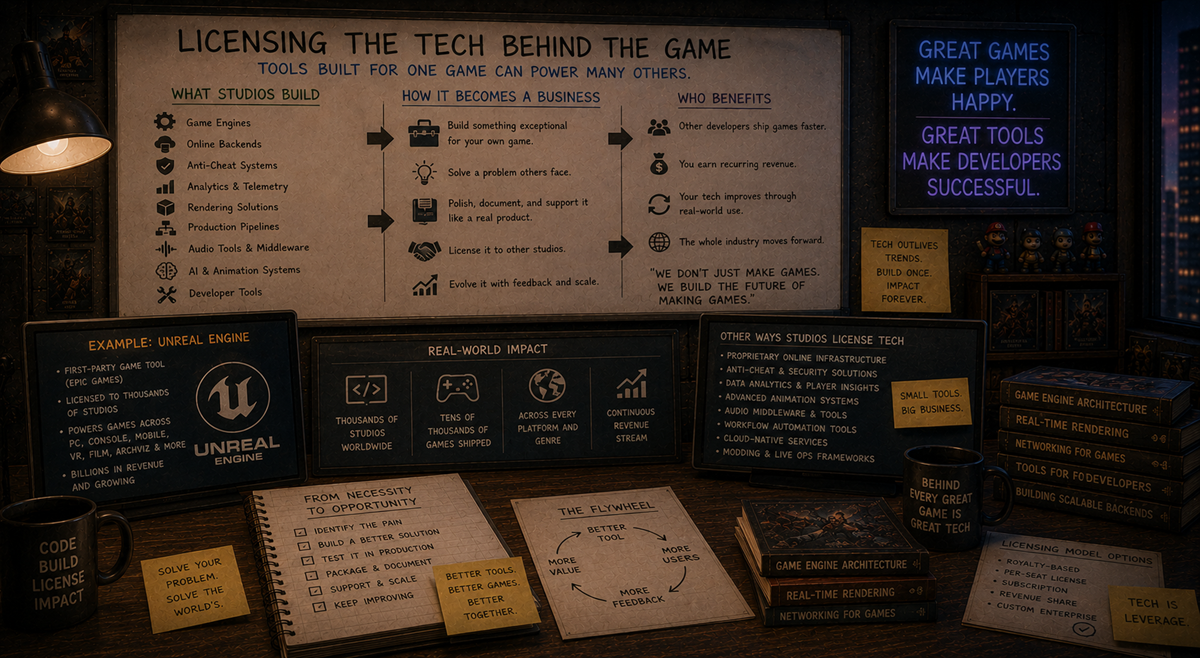
The game itself may be the headline, but the tools behind it can become their own business. Engines, backend systems, anti-cheat technology, analytics tools, rendering solutions, and production pipelines can all be licensed, spun out, or used to support outside projects. Epic is the cleanest example because Unreal Engine is now far bigger than any single game made with it. Smaller studios usually do this in quieter ways. They build something useful out of necessity, then discover another team would rather pay for it than build it from scratch.
Regional Publishing Deals
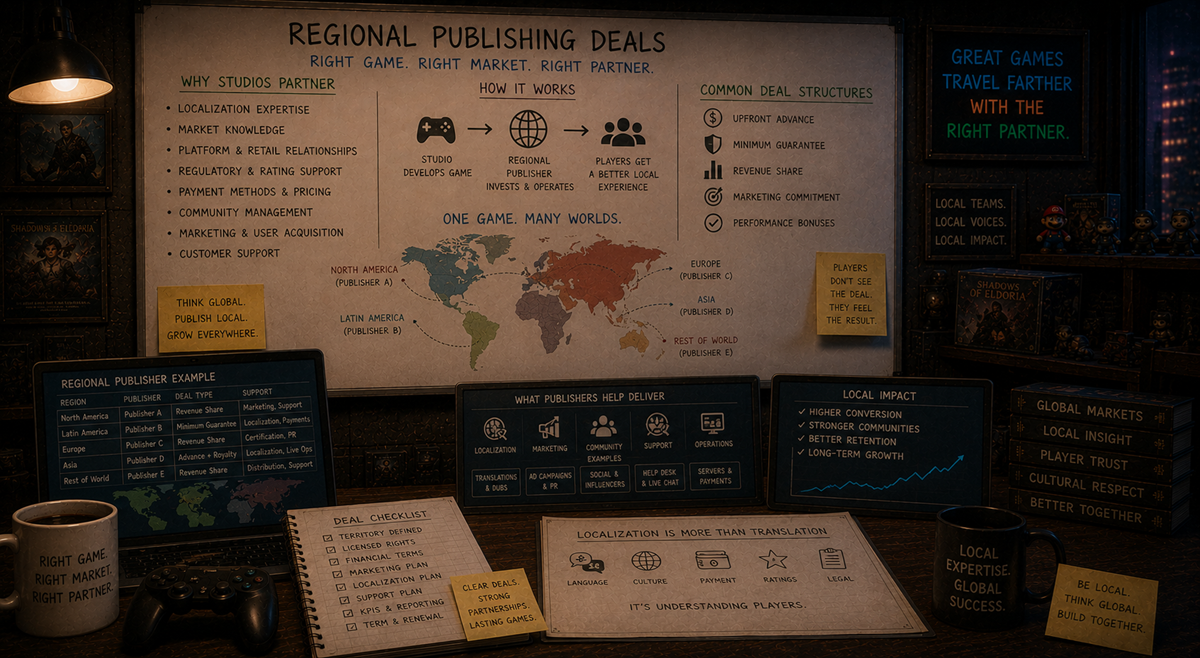
A studio can have a finished game and still need help selling it properly in another market. Regional publishers may pay advances or guarantees for rights in specific territories, especially where localization, community management, platform relationships, regulations, or payment systems are complicated. The player might only notice a translated store page or a local social media account. Behind that, there may be a separate business deal that helped fund marketing, servers, certification, or support.
Merchandise That Starts as Fan Service
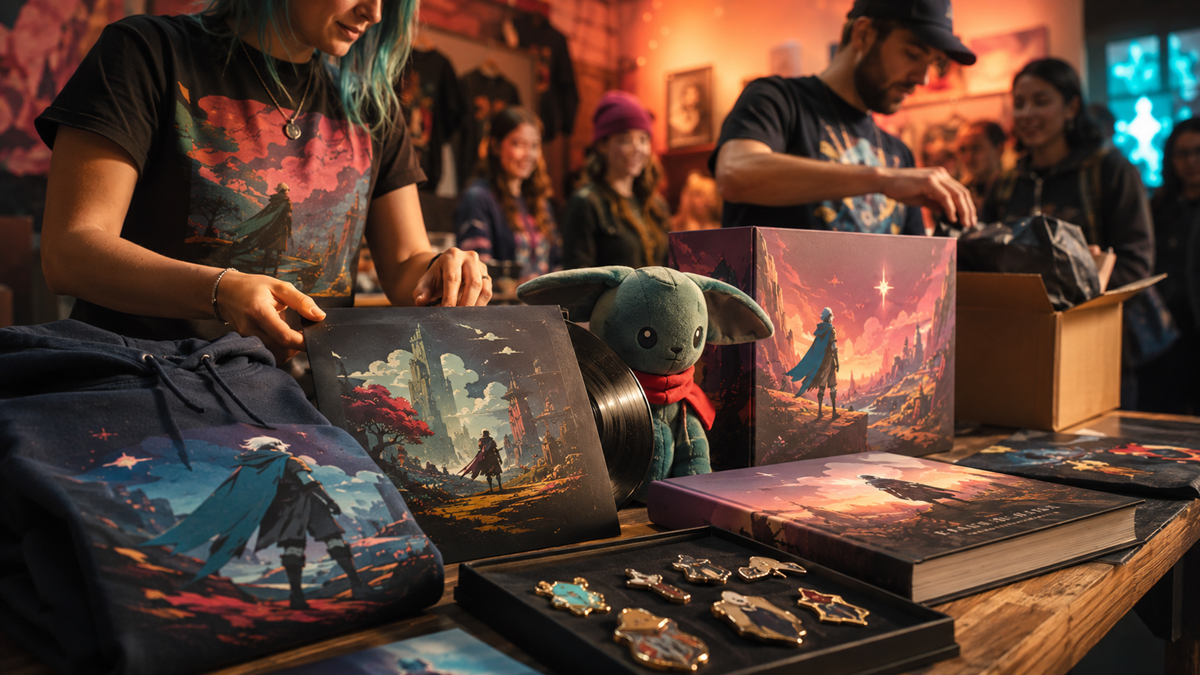
A hoodie, vinyl soundtrack, plush toy, art book, enamel pin, or collector’s box can look like a small extra for fans. Sometimes it is exactly that. Still, for games with a strong visual identity, merchandise can become a meaningful side business. It does not need to reach Pokémon scale to be worth doing. A limited run tied to the right community can sell through quickly, build loyalty, and keep the game visible between updates.
Storefront Featuring and Marketing Support
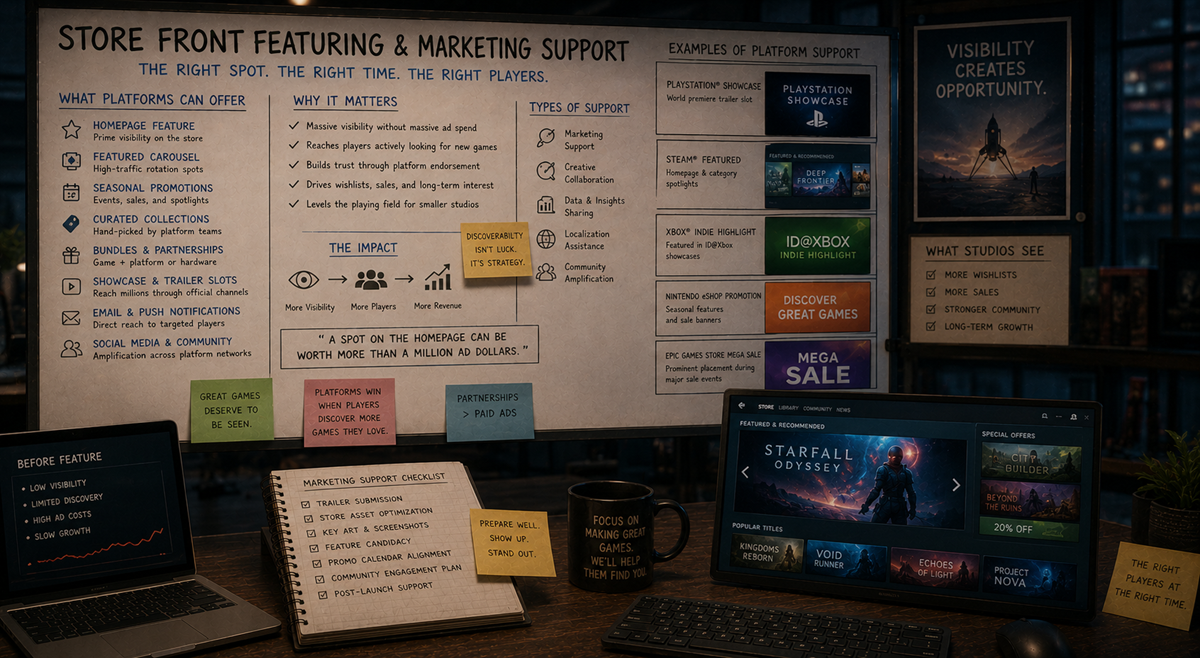
Not every valuable deal arrives as cash. Sometimes the money is in the marketing a studio no longer has to buy. A trailer slot in a platform showcase, a featured placement on a digital store, a seasonal promotion, or a bundle tied to hardware can give a game visibility that would be brutally expensive through ads. This matters a lot for smaller releases, where discoverability is often the real enemy. Players see a nice placement on the homepage. The studio sees a chance to reach people without paying for every click.
User Acquisition Data

This part of the business is dry, but it shapes a huge amount of what gets made, especially in mobile and free-to-play games. Studios test icons, screenshots, trailers, store descriptions, tutorials, prices, and ad placements before they commit serious money to scaling a game. The question is not just whether people like it. The question is whether the game can acquire users for less than those users are likely to generate over time. If that math works, the studio can spend aggressively. If it does not, even a polished game may quietly disappear.
Creator Marketplaces Inside Games
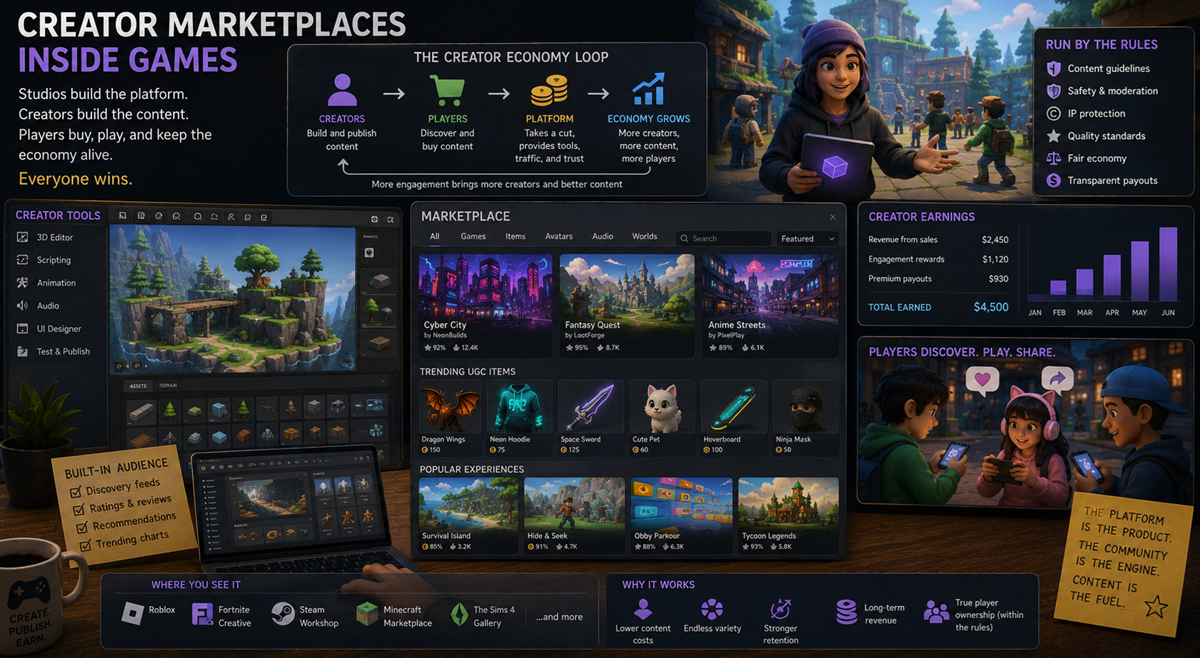
Some studios do not create every piece of sellable content themselves. They build the system that lets players create, sell, remix, and promote their own work. Roblox is the clearest case, but the broader idea appears in mod marketplaces, user-generated cosmetics, custom maps, and creator programs. The studio earns by running the platform, setting the rules, taking a cut, and keeping the economy active. It is a strange arrangement when you step back from it. The audience becomes part of the content supply chain.
Soundtracks and Music Rights
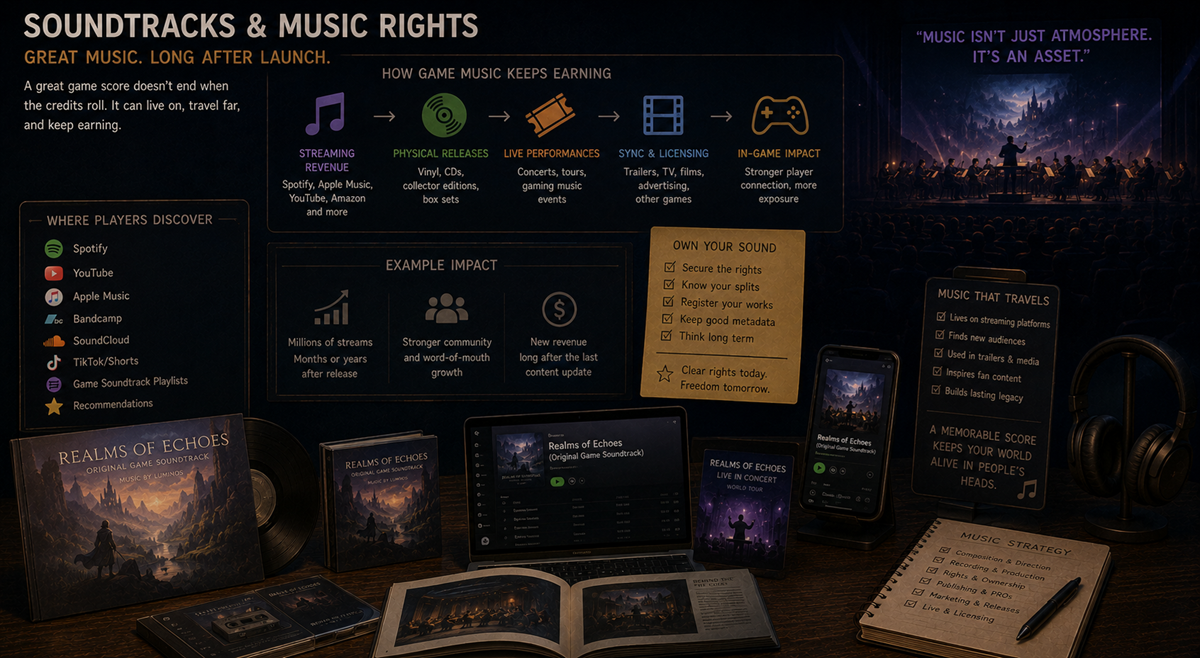
Game soundtracks used to feel like bonus material. Now they can have their own life on streaming platforms, vinyl releases, concerts, trailers, short-form video, and licensing deals. A memorable score can keep earning after the launch window has closed. It can also keep the game in people’s heads in a way a normal ad campaign cannot. For a smaller studio, owning the rights cleanly can matter later, especially if the music travels farther than expected.
DLC Sales After Heavy Discounts
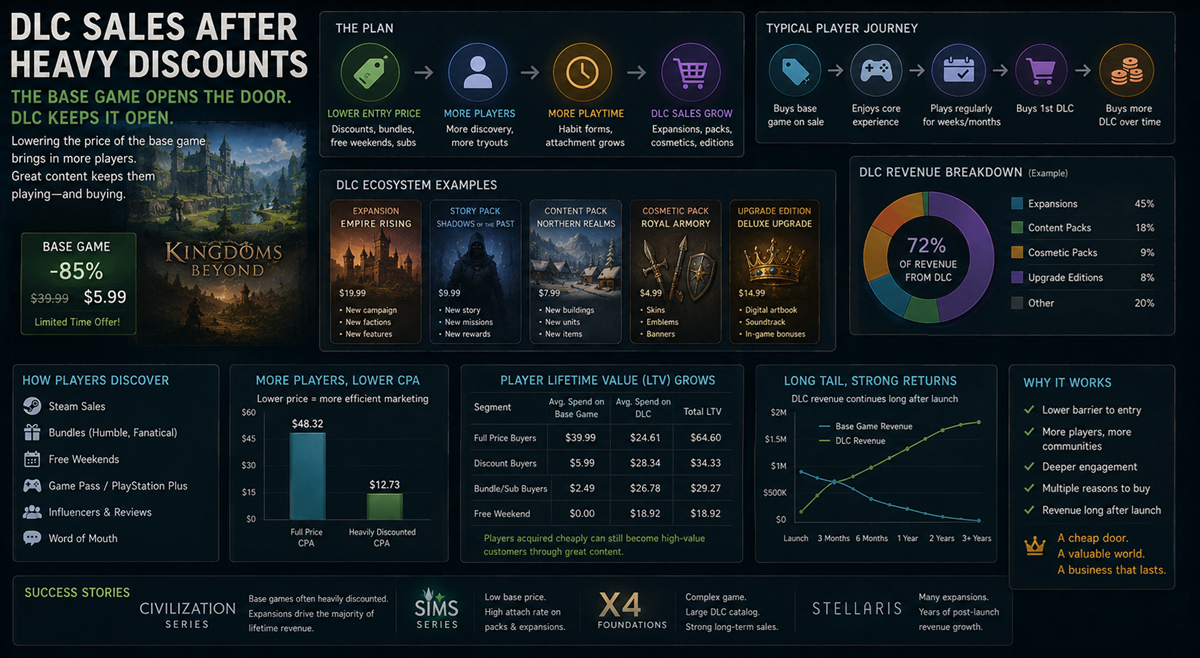
A very cheap base game is not always a desperate move. Sometimes it is the front door. Strategy games, sims, RPGs, survival games, and management titles often make serious money from expansions, packs, cosmetic bundles, and upgrade editions. So the studio drops the base price, joins a bundle, runs a free weekend, or accepts a subscription deal. A player who would never have paid full price might still buy two expansions once the game becomes part of their routine.
Work-for-Hire Between Original Projects
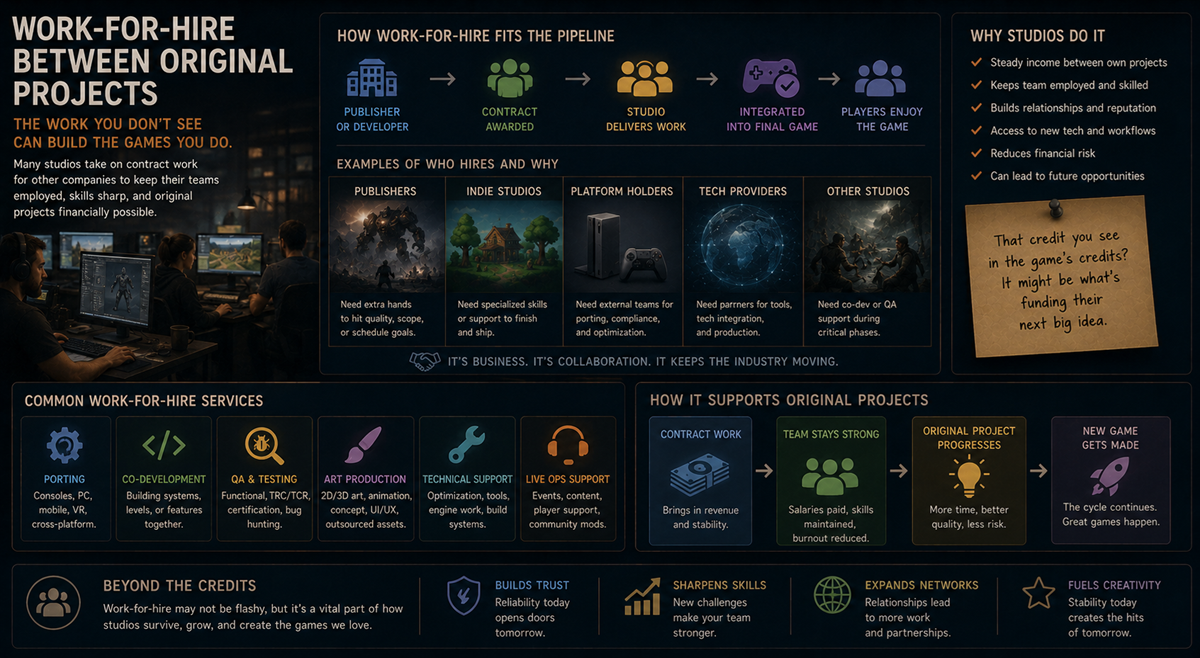
Plenty of studios survive by doing invisible work for other companies. Porting, co-development, QA support, art production, technical cleanup, live-ops support, and platform certification work can fill the gaps between original releases. It is not the romantic version of game development, but it is real. A studio credited near the end of one game may be using that contract money to keep its own next project alive. Players usually only see the finished title, not the financial juggling that got the team there.
Server Hosting, Backend Services, and White-Label Support
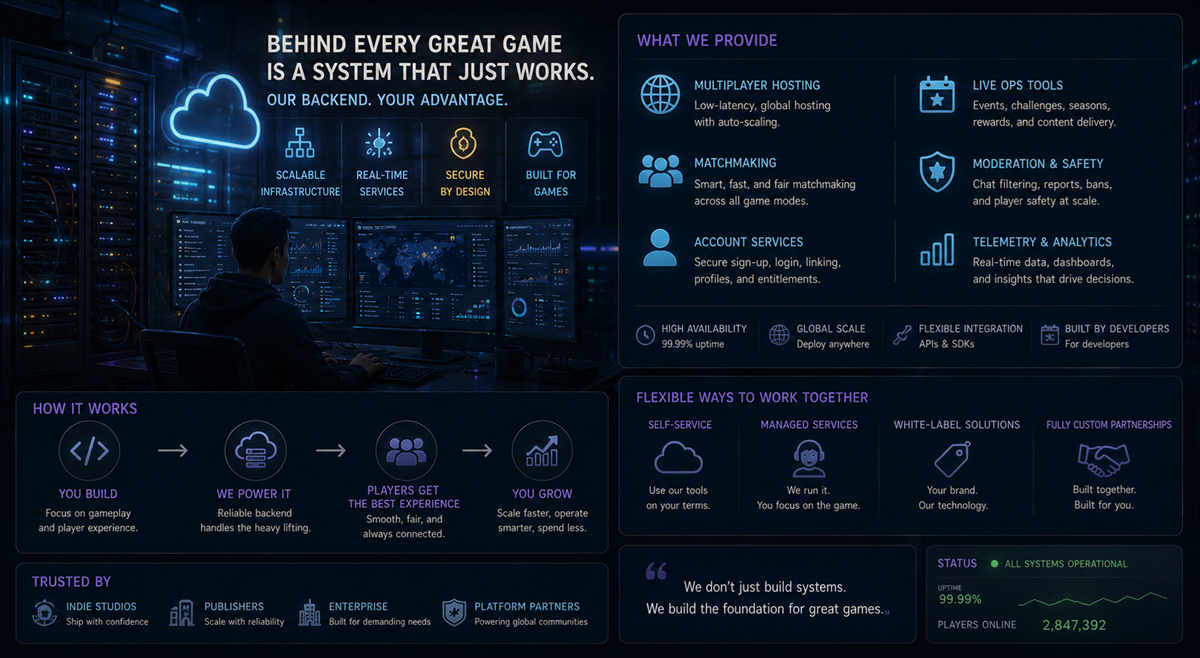
Once a studio solves a hard infrastructure problem, that solution can sometimes be reused. Multiplayer hosting tools, matchmaking systems, account services, moderation tech, telemetry dashboards, and live event tools are expensive to build well. A larger company may turn that into a formal service. A smaller one might use it to win support contracts or partnerships. This is not always advertised, because backend work rarely sells a dream. Still, a reliable system can become more valuable than a flashy feature.
Brand Collaborations and Sponsored Content
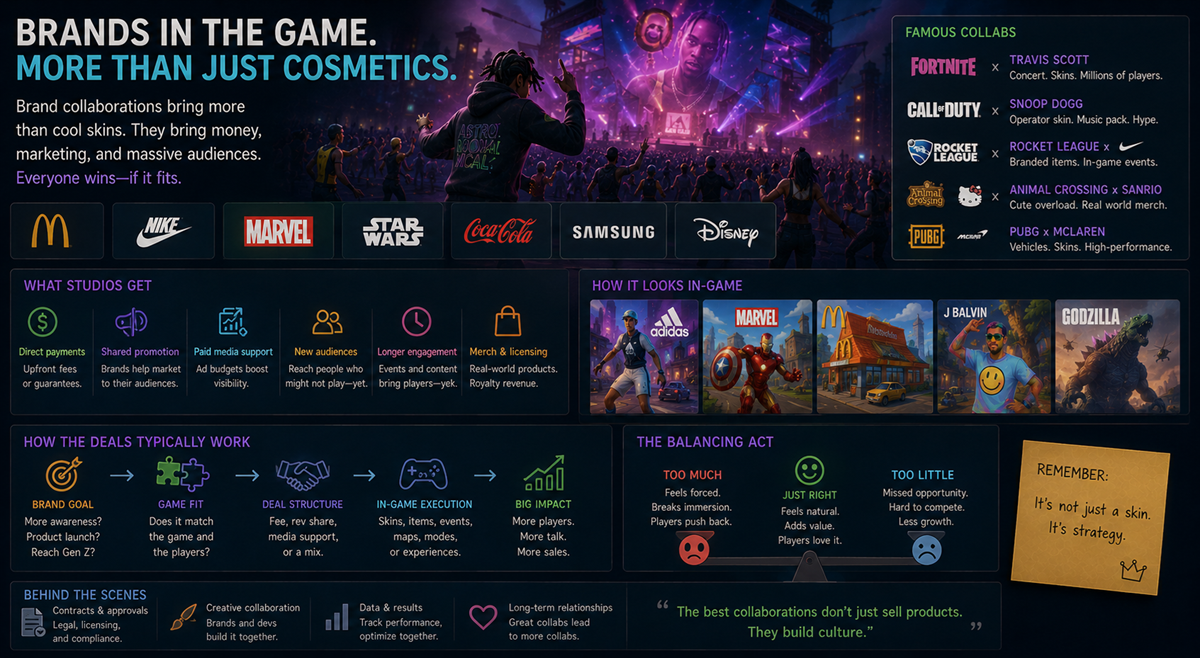
Players notice the obvious crossovers, the movie skins, the sneaker drops, the fast-food cosmetics, the musician events. What they may not see is the brand money or marketing value attached to those deals. A collaboration can bring a direct fee, shared promotion, paid media support, or access to an audience the game would not easily reach on its own. Sometimes the result feels natural. Sometimes it feels like a billboard wandered into the wrong lobby. Either way, studios and publishers keep doing it because the economics can work.
Educational, Training, and Simulation Uses
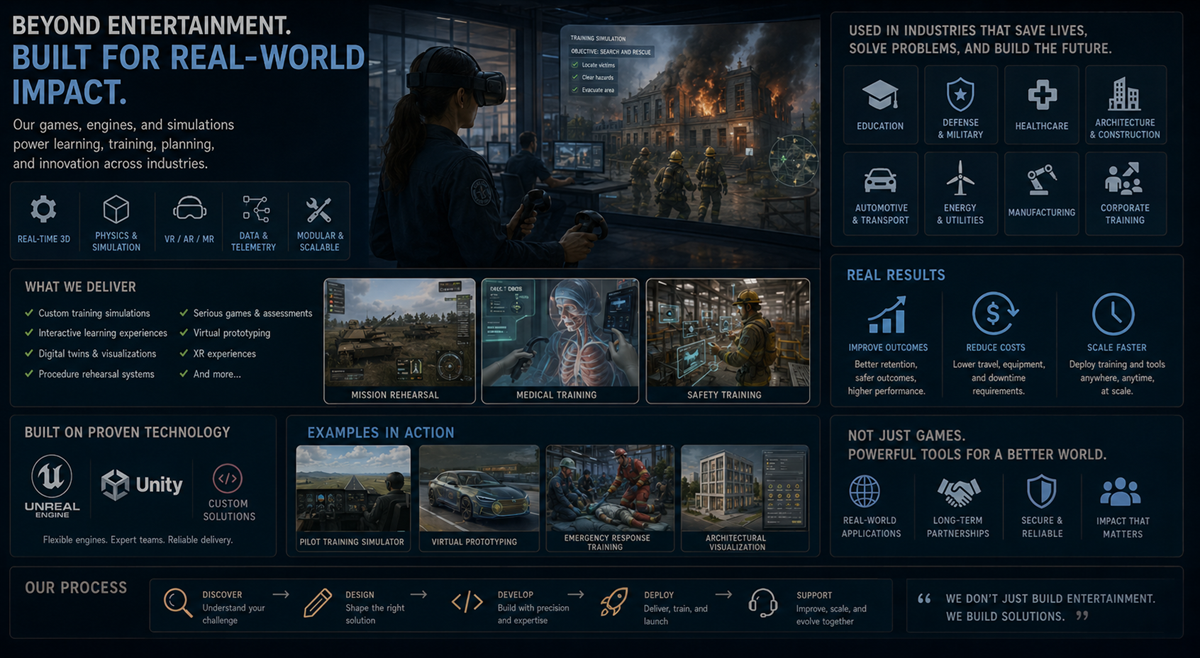
A game engine or game-like system can be sold far outside entertainment. Studios with expertise in simulation, VR, physics, real-time 3D, or interactive training may find customers in education, defense, healthcare, architecture, automotive, or corporate training. The final product might not even look like a commercial game. It may be a training module, a visualization tool, or a controlled simulation for a client. That work can be dull compared with launching a consumer title, but dull money is still money.
Physical Editions and Limited Collector Runs
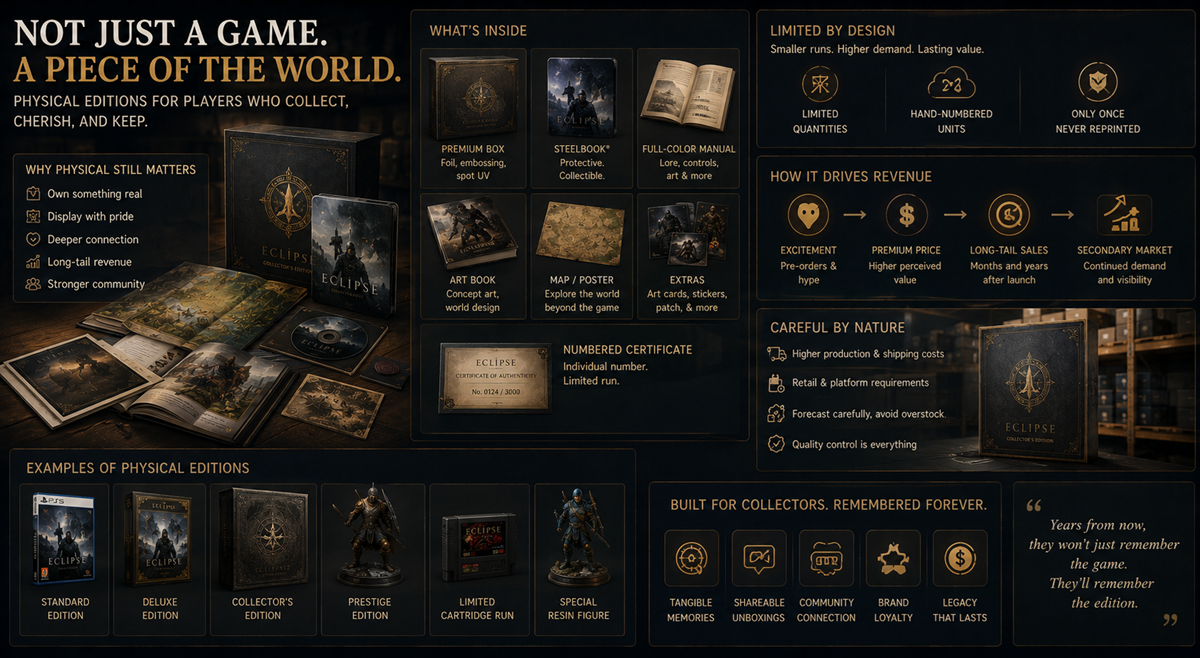
The digital store may be the default, but physical editions still have a niche that studios can use carefully. Limited-run boxes, steelbooks, manuals, maps, art cards, cartridges, and numbered editions appeal to collectors who want an object, not just a license in a library. The margins depend on manufacturing, shipping, and platform rules, so it is not free money. But for the right game, a physical edition can create revenue long after the normal retail window has passed.
The Long Tail of Old Games
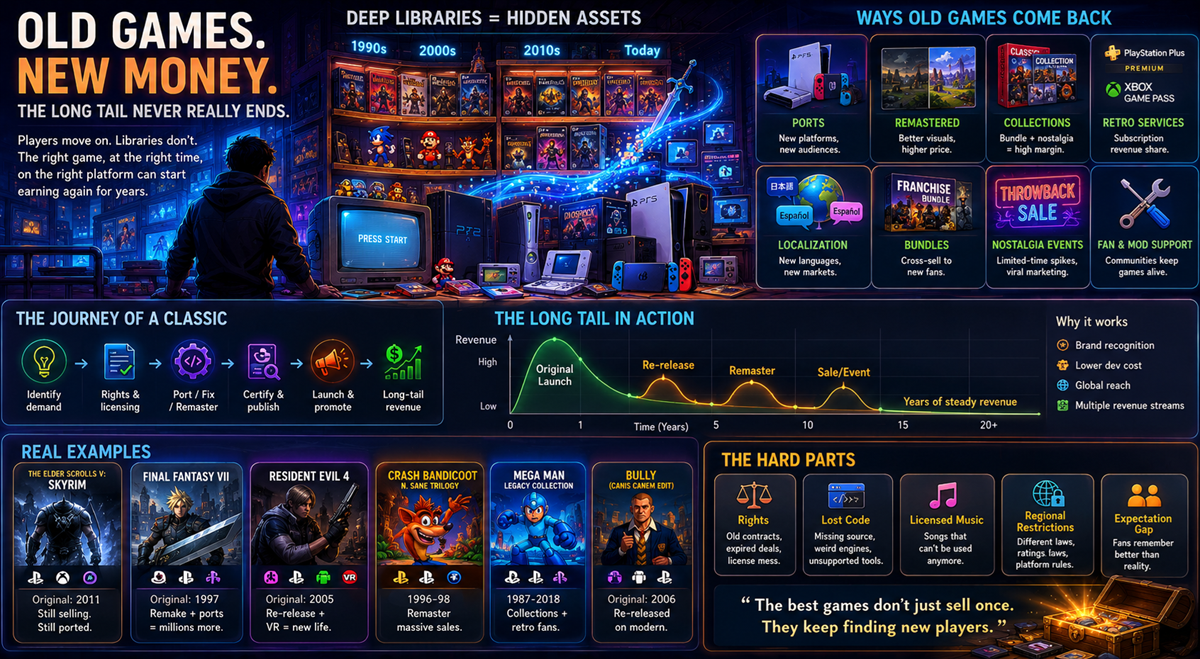
Old games do not always die. They get ported to new consoles, re-released on PC, bundled into collections, added to retro services, remastered, localized again, or sold through nostalgia-driven promotions. Sometimes the work is minimal. Sometimes rights issues, old code, licensed music, and missing assets turn it into a mess. But back catalogs matter because they are already known, already made, and often cheaper to revive than a brand-new project. A studio with a deep library may be sitting on money that only becomes obvious years later.
The visible games business is still built around launches, reviews, trailers, wishlists, and sales charts. Underneath that, studios are balancing catalog checks, tax relief, ad revenue, licensing, old IP, regional deals, and the occasional piece of merchandise that sells better than anyone expected. None of this replaces the game itself. It just explains why the real business is usually wider, stranger, and less obvious than the price tag on the store page.
Continue Reading: 10 Real Costs Behind Developing a AAA Game From Pitch to Launch That Studios Rarely Disclose