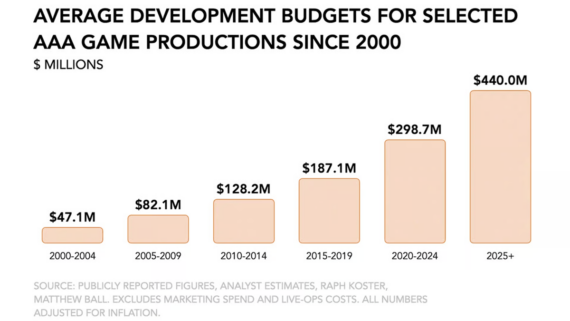
A big game budget is never just one number sitting in a spreadsheet. By the time a AAA release reaches players, the money has moved through prototypes, payroll, rewrites, vendor contracts, platform checks, marketing plans, and months of fixes nobody outside the studio will ever see. Public conversations usually focus on the headline figure, if one leaks at all. Inside development, the cost is more scattered, and often harder to explain cleanly.
The version made just to convince executives
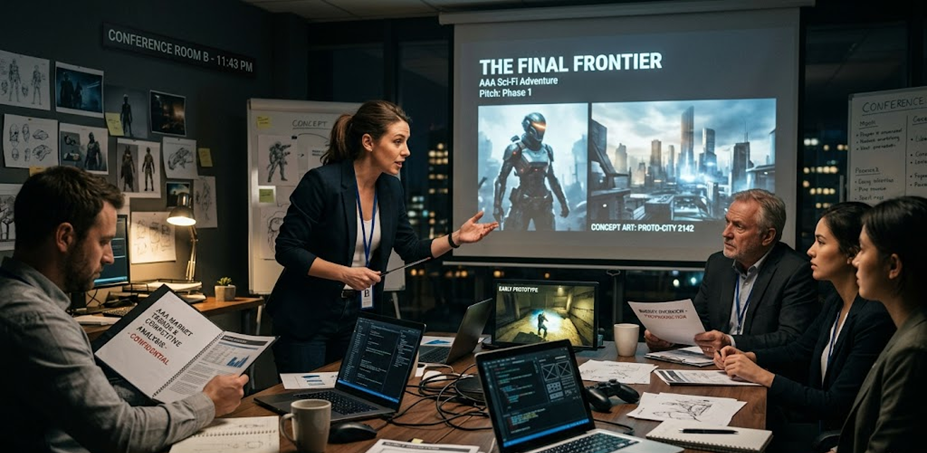
Before a AAA game is approved, somebody has to sell the idea as if it is more certain than it really is. That can mean a polished pitch deck, market research, early concept art, a rough playable prototype, and sometimes a vertical slice built to show what the finished game might feel like. None of that is free, and much of it happens before the project has a real production budget. If the pitch dies, the work disappears into a folder. If it succeeds, that early cost is quietly folded into the long road ahead.
Years of salaries before there is a product
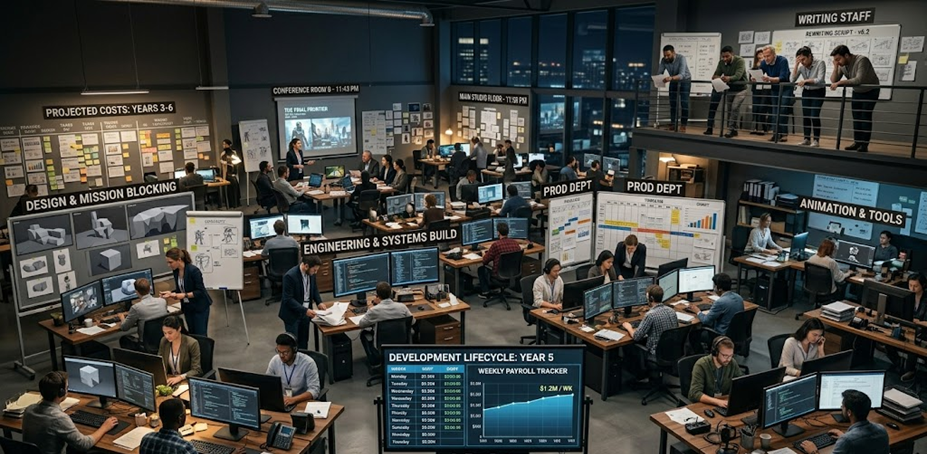
A large game team can be expensive even on the quietest week of production. Designers are blocking out missions, engineers are building systems, producers are chasing schedules, animators are waiting on tools, and writers may still be rewriting story beats that were approved six months earlier. The game is not earning money during that period, but the payroll keeps moving. When development stretches across four, five, or six years, the cost of simply keeping the team together becomes one of the biggest parts of the budget.
Tools built for problems players never notice
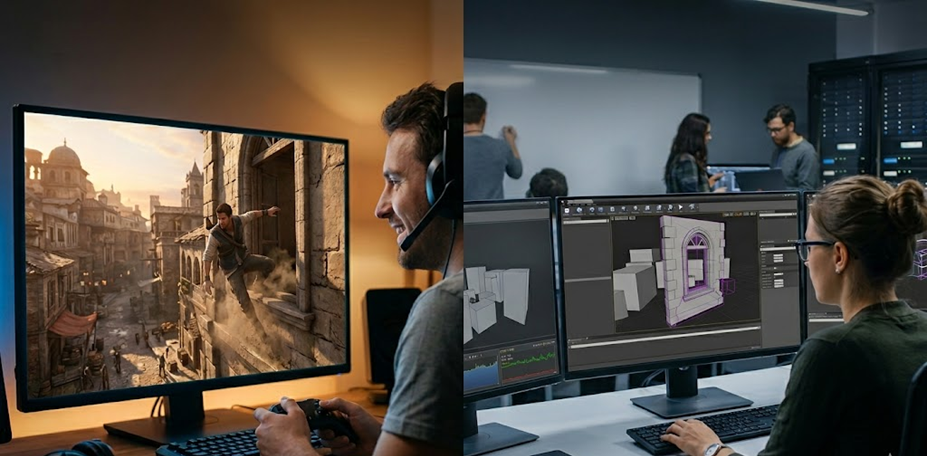
A player might notice a fast-loading city, a smooth camera, or a character climbing through a window without clipping through the wall. What they do not see is the internal tool that let designers place that window, test it, break it, rebuild it, and submit it without crashing the entire build. AAA studios spend heavily on pipelines, editors, asset systems, lighting tools, animation tools, and build infrastructure. It is not glamorous work, but if those systems are weak, every department slows down.
The expensive habit of changing direction
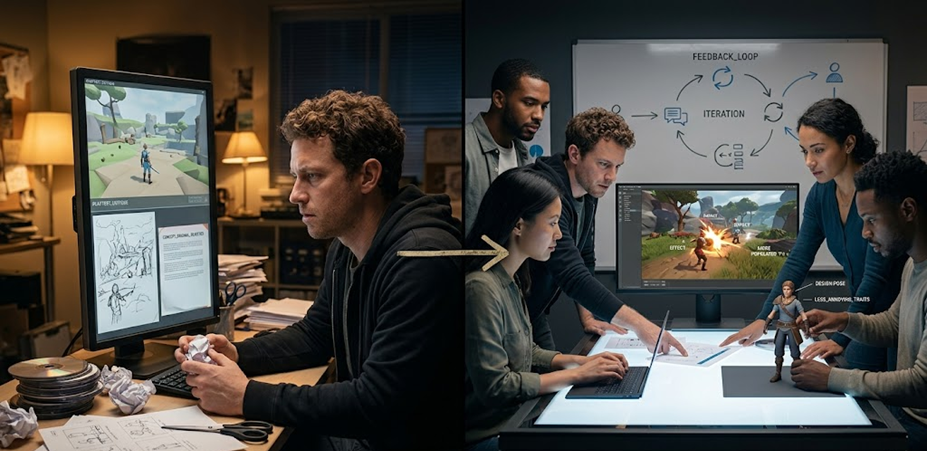
Sometimes the first version of a game is not wrong, it is just not good enough. A combat system feels too light. The open world is too empty. A companion character works on paper but irritates everyone in playtests. By then, months of work may already be attached to the old idea. Cutting it hurts, keeping it may hurt more, and the budget rarely shows how much money was spent arriving at the decision.
The scenes that cost more than they look
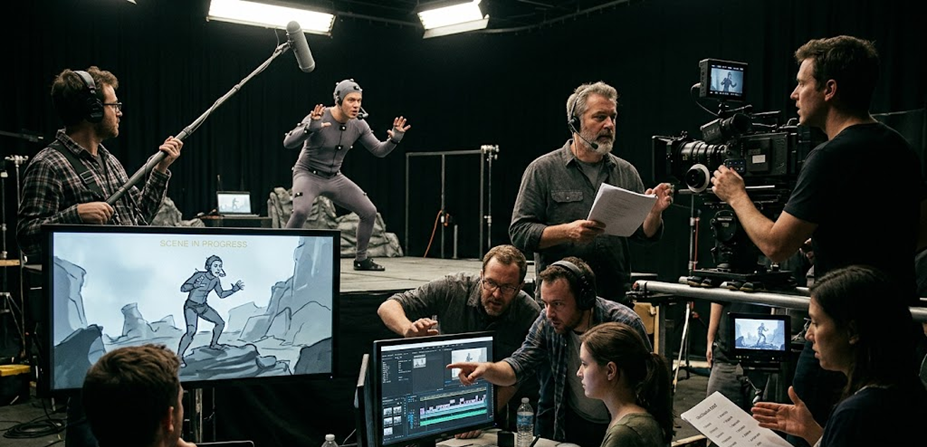
A two-minute cinematic can carry a surprising amount of production weight. Actors, performance capture crews, directors, animators, editors, audio teams, cinematic designers, and localization staff may all touch the same scene before it ships. Then a quest changes, or a line no longer makes sense, or the scene needs to be shortened because pacing is off. The footage exists, but the usable version still has to be made.
Trending on realmoneygamer.com


Outsourcing is not a cheap shortcut
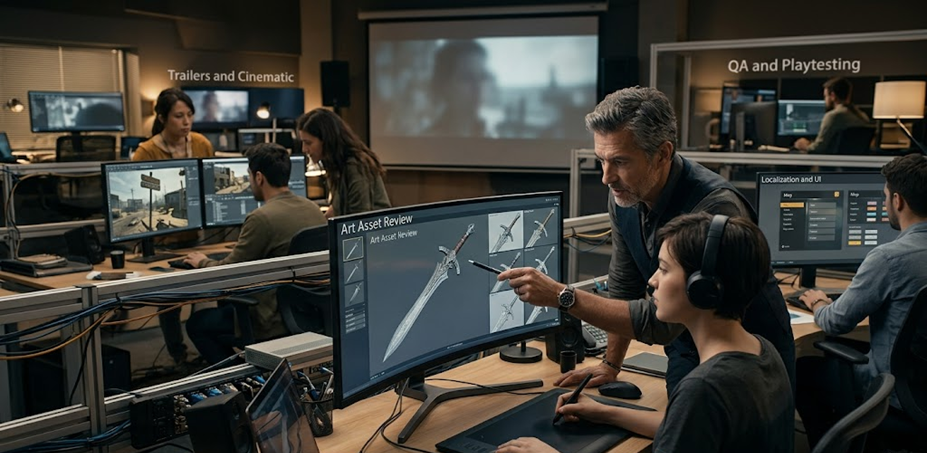
Many AAA games are built with help from external studios. That might include art assets, animation cleanup, trailers, QA, localization, UI support, or entire co-development sections. Outsourcing can save a schedule, but it also creates work. Someone has to write briefs, answer questions, review deliveries, fix mismatched files, and make sure a sword, street sign, or menu screen does not feel like it came from another game.
Testing the boring things that can break launch
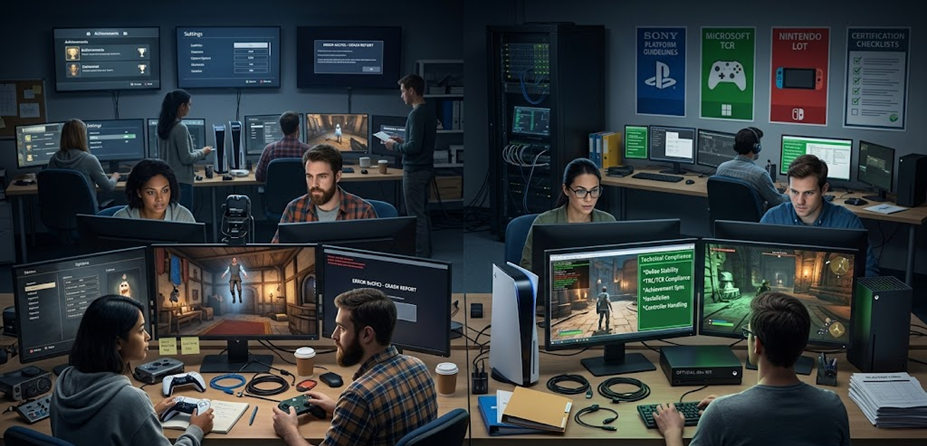
QA is not only about finding the funny bug that makes a character float across a room. Testers also hit save files, menus, crashes, controller disconnects, subtitles, achievements, online sessions, install behavior, and obscure platform requirements. Console certification adds another layer, because a game has to satisfy rules from Sony, Microsoft, Nintendo, or whichever storefront it is using. Failing late can mean another submission cycle, another patch, and another production panic.
Translation that becomes production work
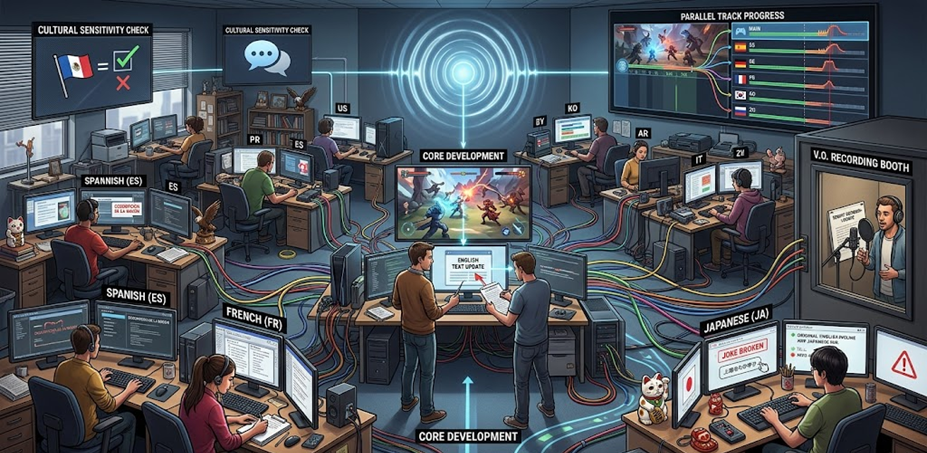
Localization is easy to underestimate from the outside. A game is not just translated once and shipped. Dialogue changes, item names change, jokes break, text overflows in menus, voice actors need scripts, and regional teams may flag cultural or legal issues. One late rewrite in English can ripple across every supported language. By the end, localization is less like a final pass and more like a parallel production track.
Marketing that starts before the game is stable
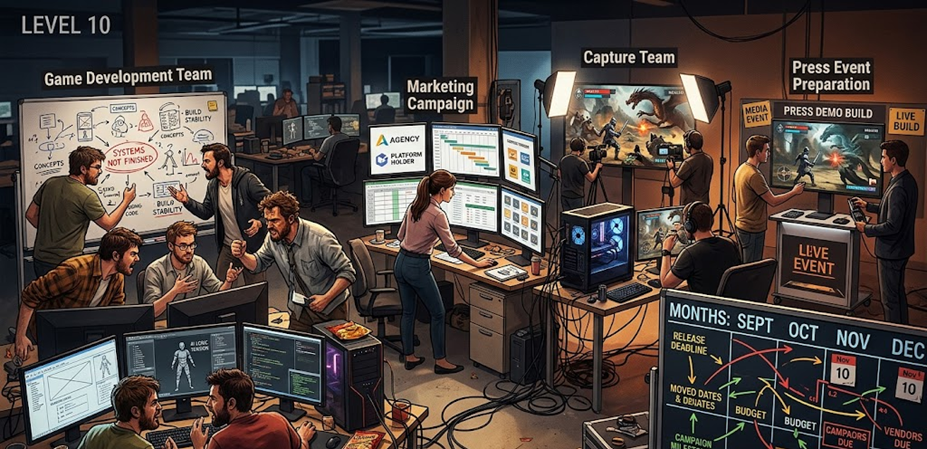
The first trailer may arrive while the team is still arguing about systems that are not finished. Marketing has its own budget, people, vendors, deadlines, and risks. Capture teams need good-looking builds, agencies need assets, platform holders need materials, and press events often require a version of the game that behaves better than the internal one. If the launch date moves, the campaign moves too, and moving a campaign is rarely clean.
The delay nobody wants but everyone may need
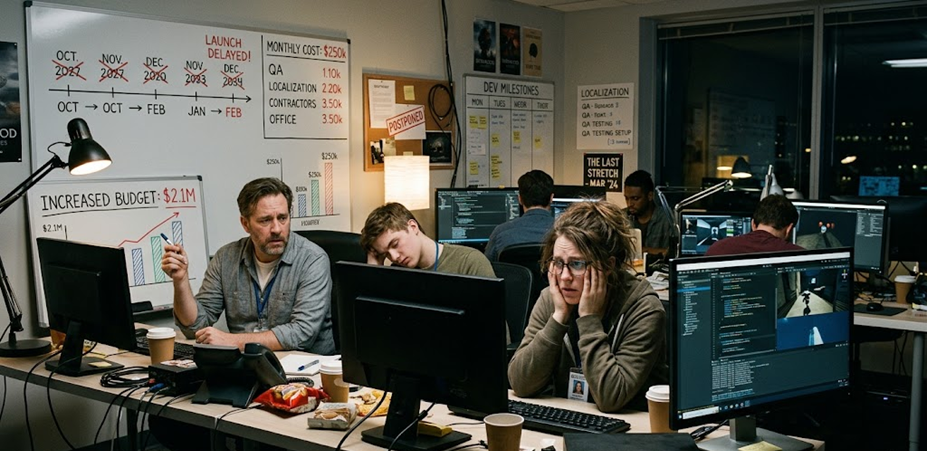
A delay can save a game from launching in bad shape. It can also burn through money quickly. Every extra month means staff, contractors, QA, localization updates, office costs, vendor schedules, and marketing adjustments. The public sees a new date on a trailer. The studio sees another stretch of production with the meter still running.
The launch after the launch
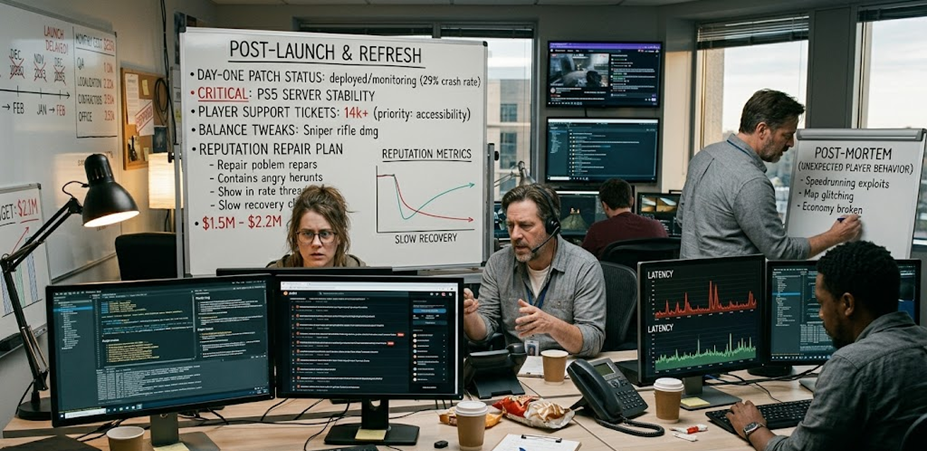
Release day is not the end of the bill. Modern AAA games often need day-one patches, crash fixes, balance updates, server monitoring, customer support, accessibility improvements, and community management. If the launch goes badly, the cost can grow into reputation repair, not just technical support. Some of that work may already be planned, but plenty of it comes from watching players do things the team did not expect.
AAA development is expensive because the visible game is only the clean version of a much rougher process. The discarded builds, failed ideas, vendor passes, compliance checks, and rewritten scenes are part of the product too, even if they never appear in a trailer. Studios rarely spell all of that out. Not because every cost is scandalous, but because the real path from pitch to launch is usually too messy to fit into one neat budget number.
Continue Reading: 11 Indie Studios That Outperformed AAA Publishers in Revenue Without a Big Budget