
Global launches look clean from the outside, but most successful games have already lived a smaller, messier life somewhere else first. Before a publisher spends heavily on worldwide marketing, servers, influencers, app store placement, or console certification, it often tests the game in selected countries where the stakes are lower and the feedback is sharper. These trial runs can be public, private, quiet, loud, technical, commercial, or a little bit of everything. The point is rarely just to see whether people like the game, it is to learn what breaks, what confuses players, and what makes them come back.
Soft Launching in Smaller Mobile Markets
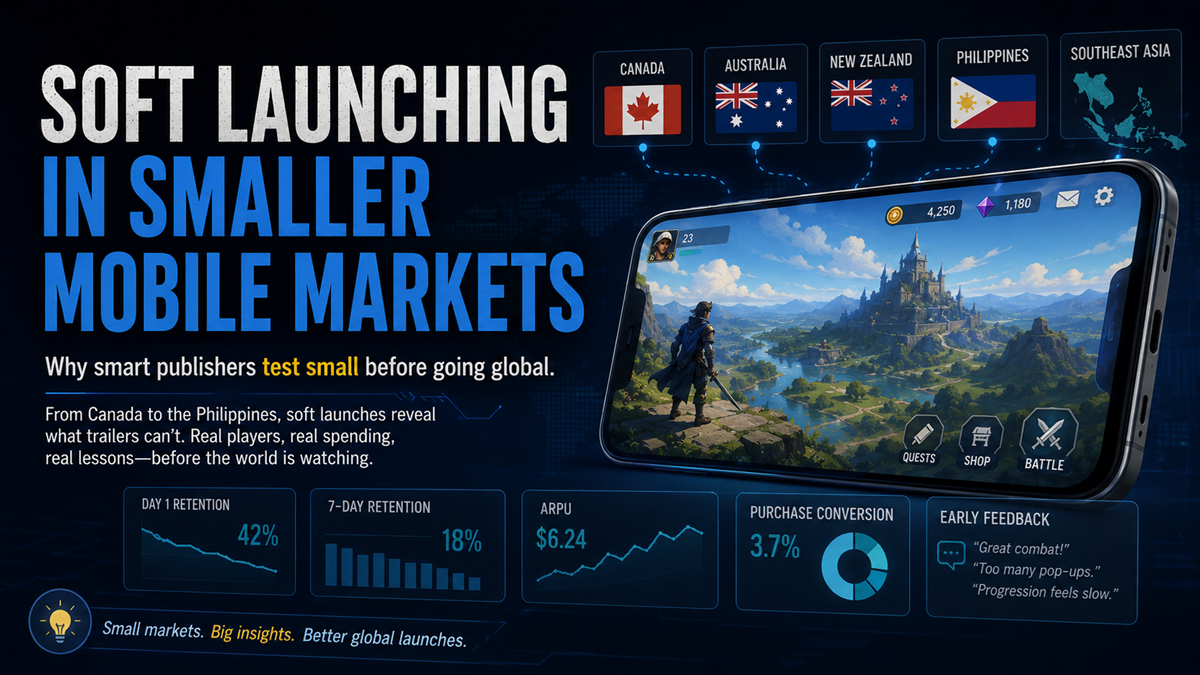
The classic mobile playbook is still the soft launch. A publisher releases the game in a few countries, often places such as Canada, Australia, New Zealand, the Philippines, or parts of Southeast Asia, then watches the numbers before deciding whether the game is ready for the world. These markets are useful because they can offer English-speaking players, varied devices, and enough spending behavior to reveal whether the game’s economy works. For a free-to-play title, that matters a lot. A game can look polished in a trailer and still fall apart when real players start skipping tutorials, refusing starter packs, or churning after three sessions.
Running Closed Regional Betas
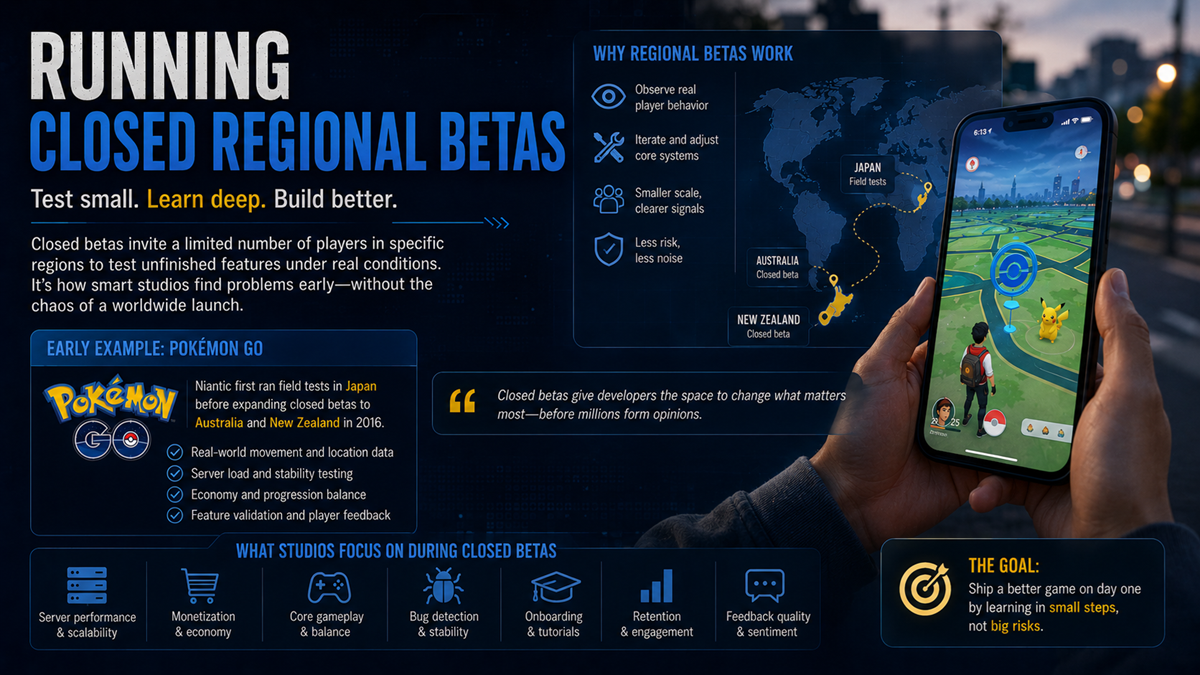
Closed betas are more controlled, and sometimes more revealing. Instead of opening the doors to everyone, companies invite a limited group of players in a specific region and ask them to play under unfinished conditions. Pokémon GO, for example, ran early field tests in Japan before expanding testing to places such as Australia and New Zealand in 2016. That kind of approach lets a studio observe behavior without the noise of a full launch. It also gives developers room to change basic systems without having to explain every adjustment to millions of impatient players.
Testing Server Load Before the Crowd Arrives
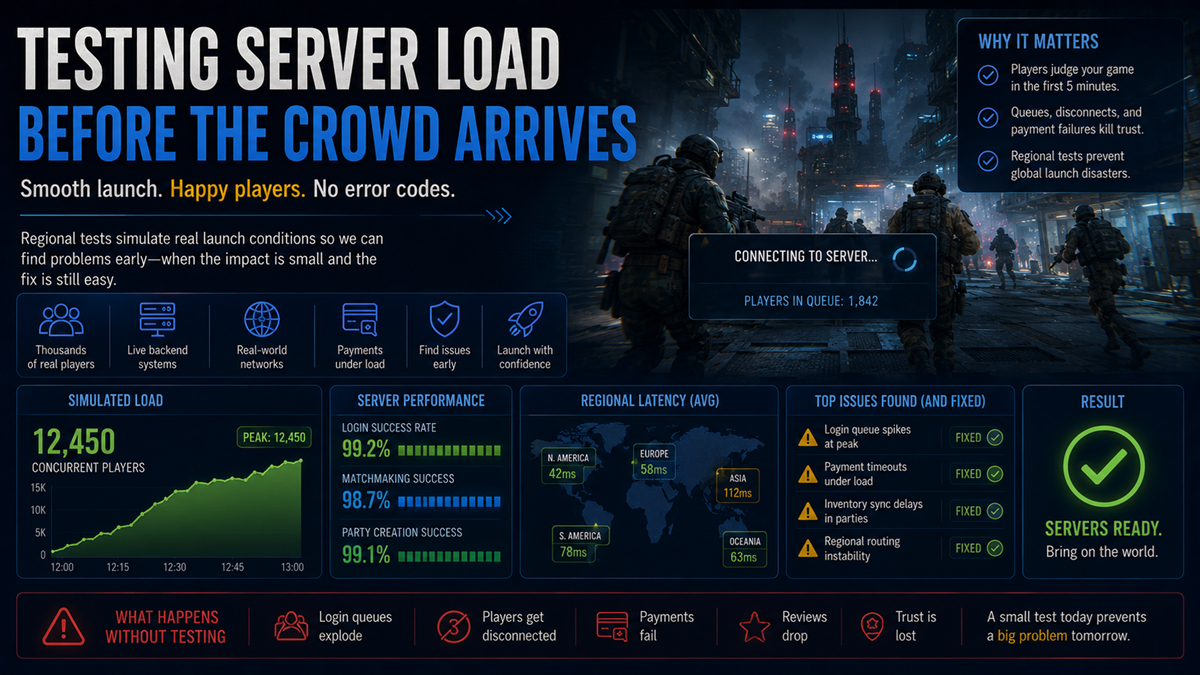
A game can survive mixed reviews more easily than it can survive players being unable to log in. Regional tests help companies see what happens when thousands of people hit matchmaking, account creation, cloud saves, inventory systems, and payment tools at the same time. This is especially important for shooters, MMORPGs, battle royale games, and anything with live events. A small territory can expose login queues, unstable ping, broken regional routing, or backend systems that looked fine in internal tests. No studio wants its first global headline to be about an error code.
Choosing Markets That Match the Genre

Not every test market is chosen because it is small. Sometimes a company wants players who already understand the genre. Riot Games’ League of Legends: Wild Rift entered regional open beta in Asian markets including Indonesia, Japan, Malaysia, the Philippines, Singapore, South Korea, and Thailand in October 2020. That made sense. Mobile MOBAs already had strong habits and expectations across parts of Asia, so those players could quickly expose whether Wild Rift felt natural on touchscreens, whether matches were the right length, and whether the controls held up under competitive pressure.
Checking Whether the Controls Feel Right

Some tests are less about content and more about the body language of play. When a PC or console game moves to mobile, the question is not only whether the same mechanics are present, but whether they feel comfortable under a thumb. Blizzard’s Hearthstone had already worked on PC and Mac before its iPad rollout began in Australia, Canada, and New Zealand in 2014. That limited release gave the company a way to test how the card game’s interface behaved on a touchscreen before opening the mobile version more widely. It sounds simple, but bad input can make a good game feel cheap.
Trending on realmoneygamer.com


Measuring Early Retention
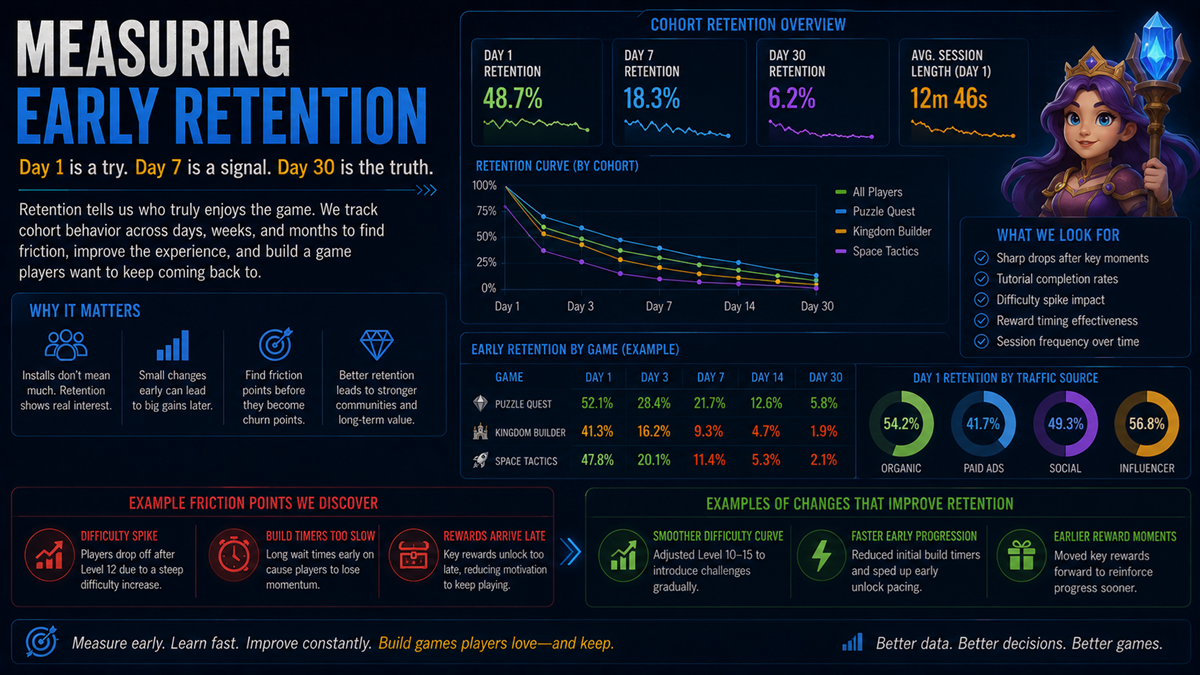
A market test can be brutally honest by day three. Players may install a game because the art looks good, but retention shows whether they actually want to keep playing. Companies watch how many users return after the first day, the first week, and the first month, then compare that behavior across tutorials, difficulty curves, reward timing, and session length. A puzzle game might discover that players quit after a sudden spike in difficulty. A strategy game might learn that its first building timers are too slow. The fix is not always glamorous, but it can decide whether the game scales.
Adjusting Monetization Without Making It Too Loud
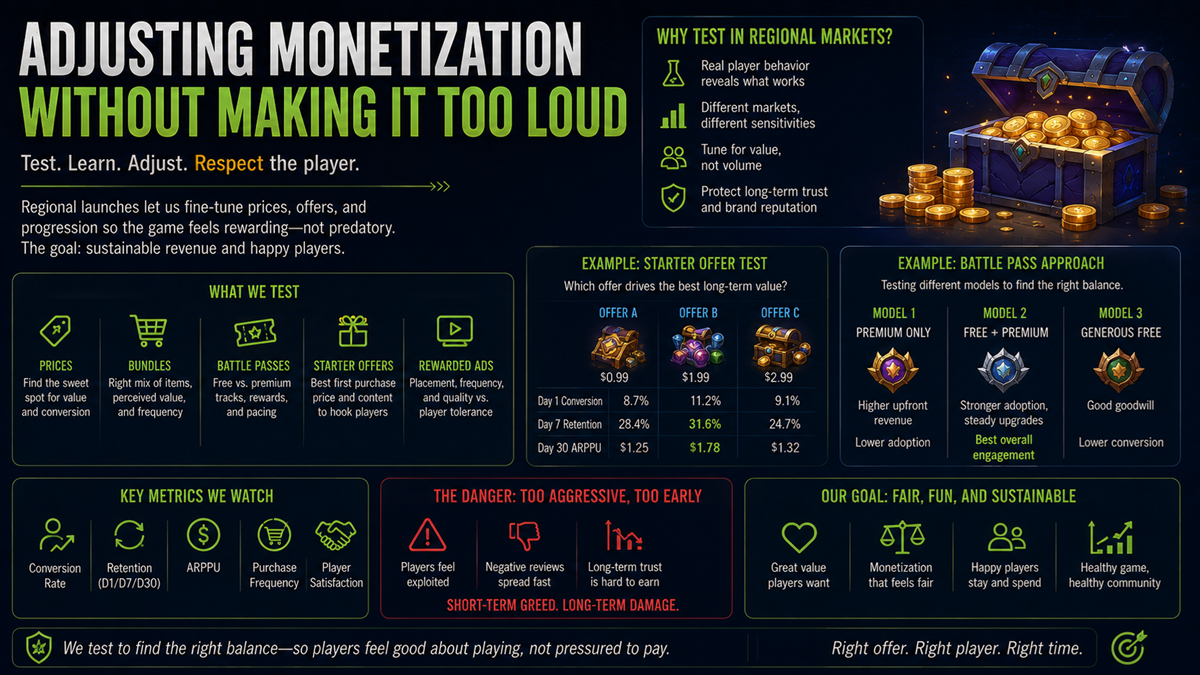
Publishers rarely like to admit how much testing goes into prices, bundles, battle passes, starter offers, and rewarded ads. Still, regional launches are where many of those systems get tuned. A studio can test whether players respond better to a cheap first purchase, a cosmetic-only shop, a season pass, or a more generous free track. The danger is obvious. Push too hard in a test market and the game starts to feel cynical before it has even launched globally.
Finding Localization Problems That Spreadsheets Miss
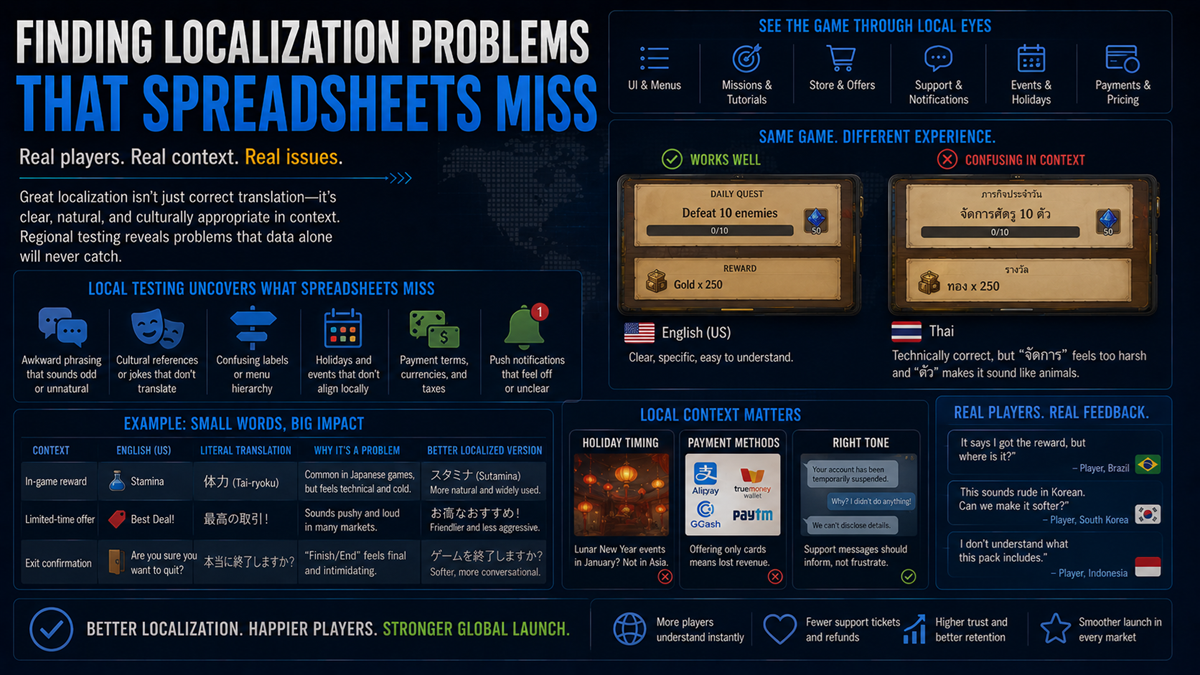
Localization is not just translation. A game can have correct words and still sound awkward, miss a cultural reference, use confusing UI labels, or mishandle local holidays and payment terms. Testing in a specific country gives companies a chance to see whether players understand menus, missions, store pages, customer support messages, and push notifications in context. This is where tiny problems become visible. A reward description that feels clear in English might be vague in another language, and a joke that works in one region might land flat somewhere else.
Watching Paid User Acquisition on a Smaller Budget
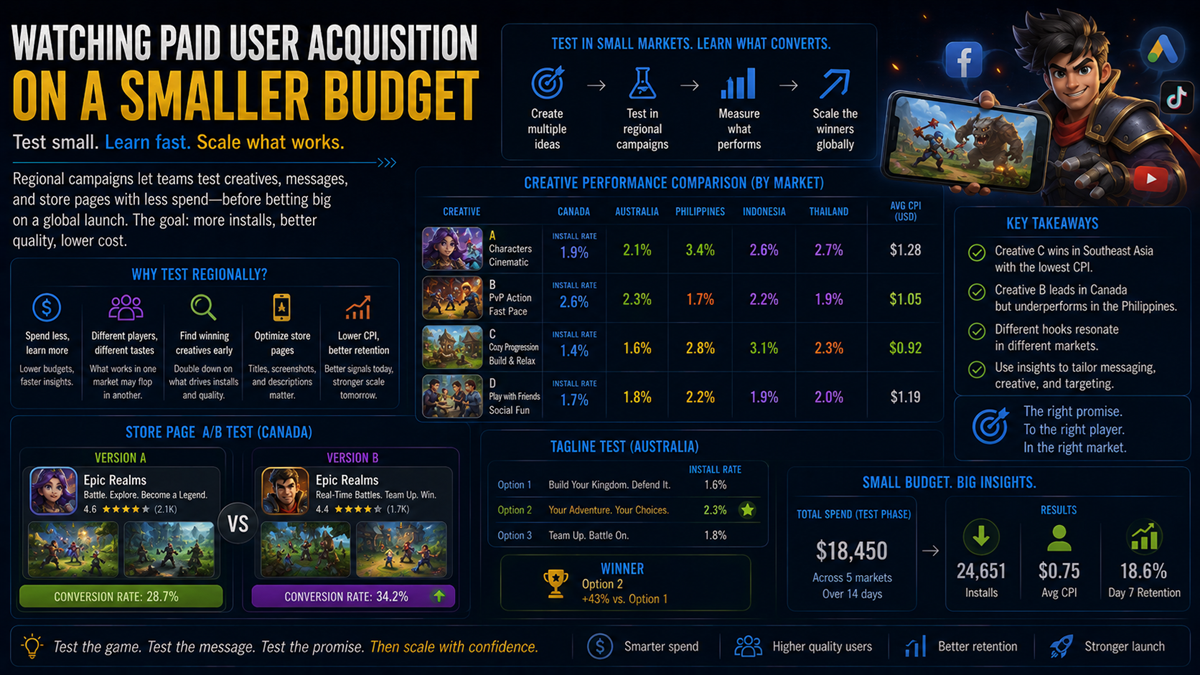
Before a publisher buys global ads, it usually wants to know which trailers, screenshots, taglines, and app store pages actually convince people to install. Regional campaigns let marketing teams spend less while testing creative ideas. One market might respond to characters, another to competitive gameplay, another to cozy progression or social features. The game itself is being tested, but so is the promise around the game. Sometimes the lesson is uncomfortable: the trailer that the team loves is not the one that players click.
Studying Community Reaction in a Contained Space
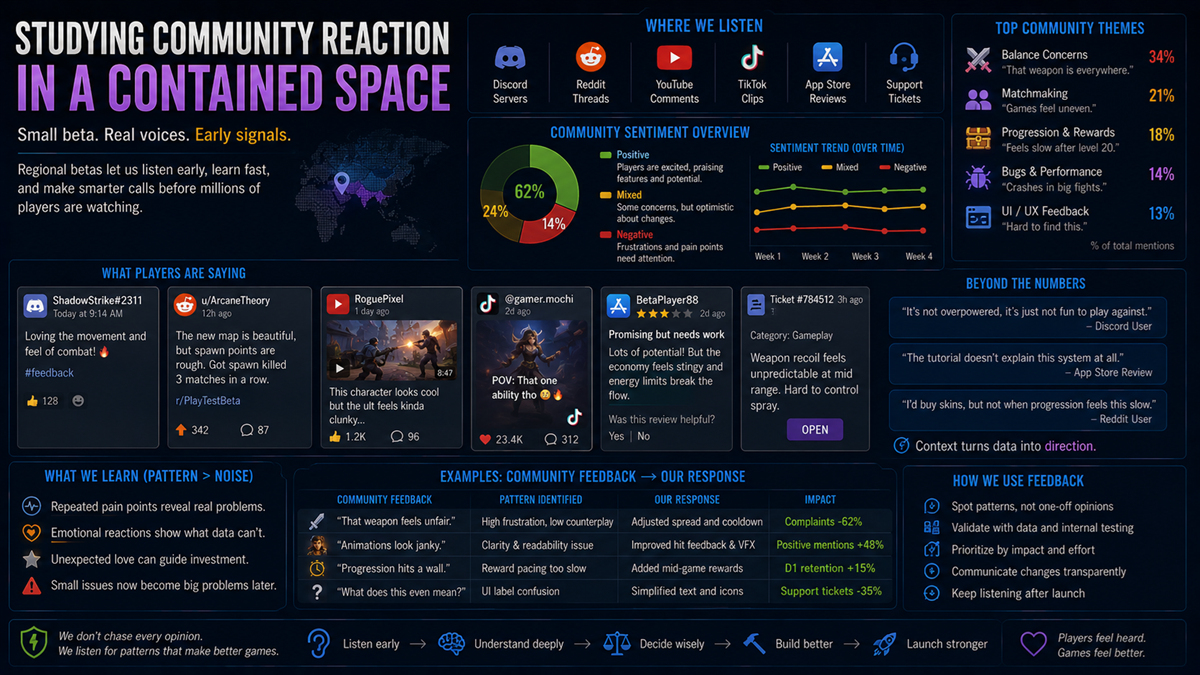
A regional beta can act like an early warning system. Players post clips, complain about balance, praise unexpected features, and create the first small wave of community language around the game. Companies watch Discord servers, Reddit threads, app store reviews, YouTube comments, TikTok clips, and support tickets to understand what the data does not fully explain. A weapon might be statistically balanced and still feel unfair. A character might be unpopular not because of power level, but because their animations read poorly. The best teams do not treat this feedback as a vote on every design choice, but they pay attention to patterns.
Checking Platform Rules and Store Performance
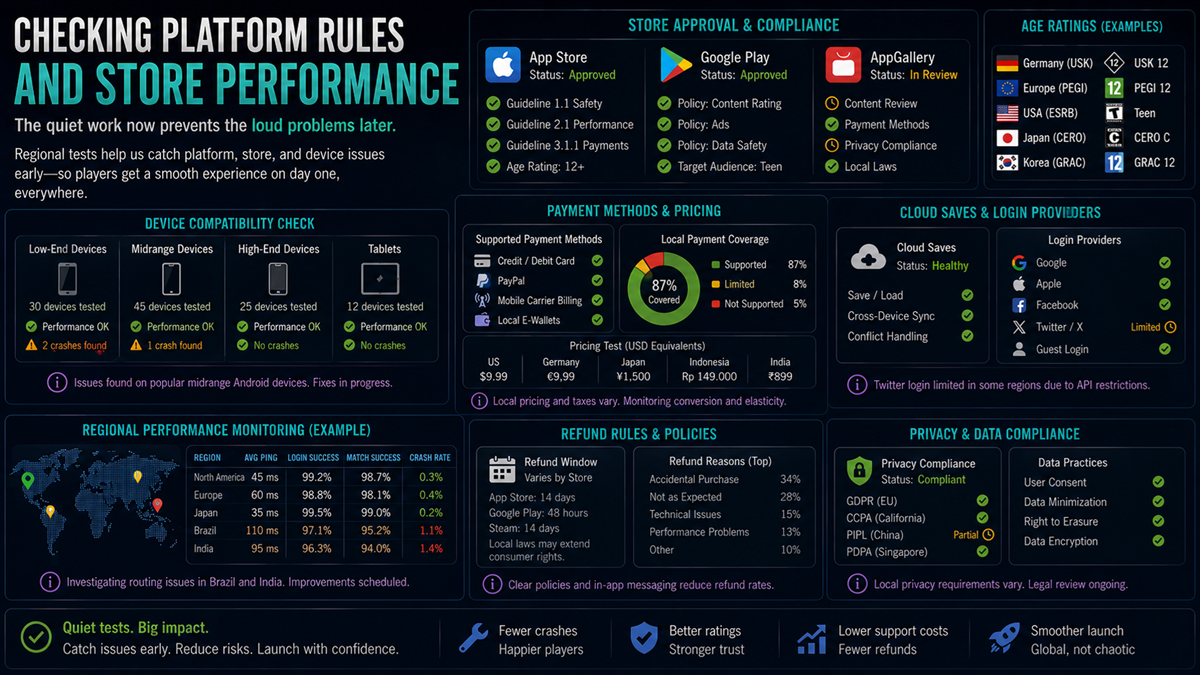
There is a less glamorous side to market testing, and it matters. App store approvals, age ratings, device compatibility, cloud saves, login providers, regional payment methods, refund rules, and privacy requirements can all behave differently across markets. A limited release gives companies time to catch issues before they become global customer support headaches. This is one reason market tests can look quiet from the outside. Sometimes the most important discovery is not that players love a feature, but that a specific Android build crashes on a popular midrange phone.
Using the Test to Decide Whether to Launch at All
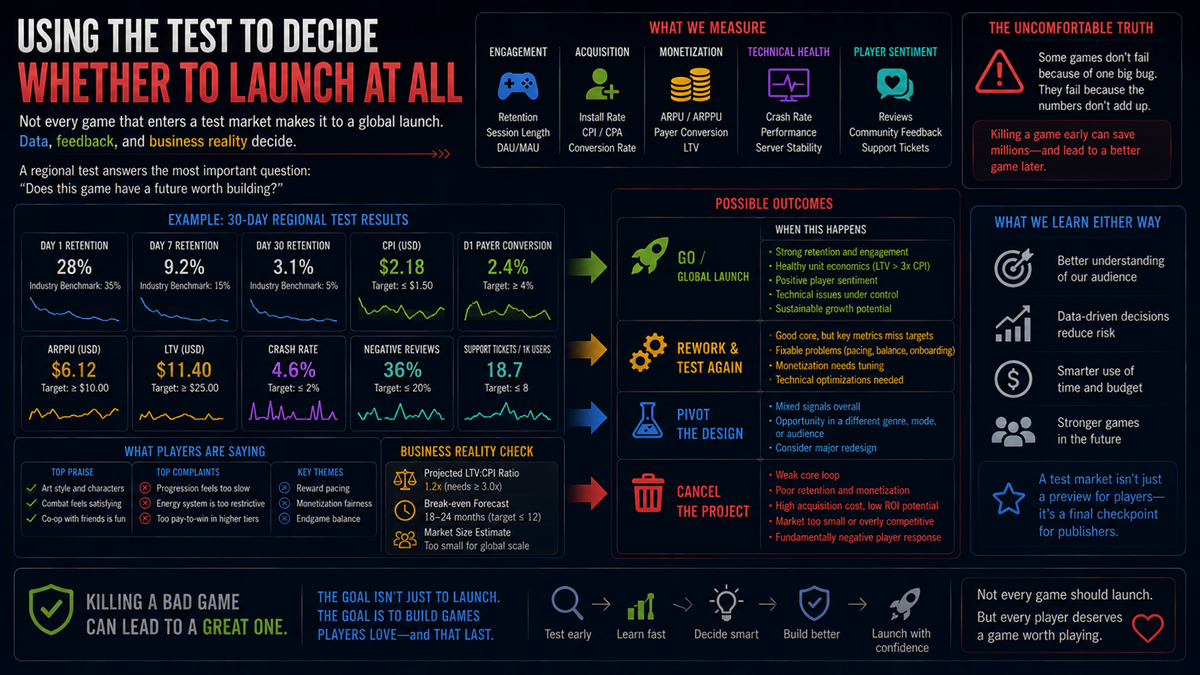
The uncomfortable truth is that some games never make it past this stage. A soft launch or regional beta can show that the core loop is weak, the acquisition cost is too high, the economy does not support the business model, or the audience is smaller than expected. In those cases, canceling or reworking the game may be smarter than forcing a global launch just because the project has already consumed time and money. For players, a test market can feel like a preview. For publishers, it can be a final checkpoint.
Market testing has become part of the normal life cycle of modern games, especially in mobile and live-service development. It is not always visible, and it is not always flattering, but it gives companies a chance to make practical decisions before the whole world is watching. A polished global release often starts with a rougher version in a smaller place.