
Prize money in esports can look clean in a headline, but the tax bill behind it rarely is. A player might win the same tournament as a teammate and still walk away with a very different amount. Some countries treat the money like professional income, others focus on where the event was held, and a few make the organizer withhold tax before the player even sees the payout. That is where esports starts to look less like a global free-for-all and more like a stack of local rules colliding with an international scene.
The United States Often Starts With Withholding

The U.S. is not subtle when a nonresident wins prize money on American soil. In many cases, the organizer may withhold 30% from payments to foreign players unless tax treaty paperwork changes the rate. For U.S. players, the prize is still taxable, but it usually gets folded into a broader income picture, especially if the player is already earning from a team contract, streaming, sponsorships, or coaching. The awkward part is that the same trophy can produce two very different bank transfers, simply because one player lives in the U.S. and another does not.
The UK Cares Whether This Is Really Your Job

In the UK, a one-off win and a professional esports career are not treated the same way. HMRC tends to look at whether someone is actually carrying on a trade, which means regular competition, planning, expenses, prize income, and the general shape of a business. A player who enters one local tournament for fun is in a different position from someone flying to events, signing sponsor deals, and treating competition as work. For serious UK-based players, prize money can end up looking much more like taxable self-employment income than a lucky bonus.
Japan Can Be Pretty Direct With Foreign Winners
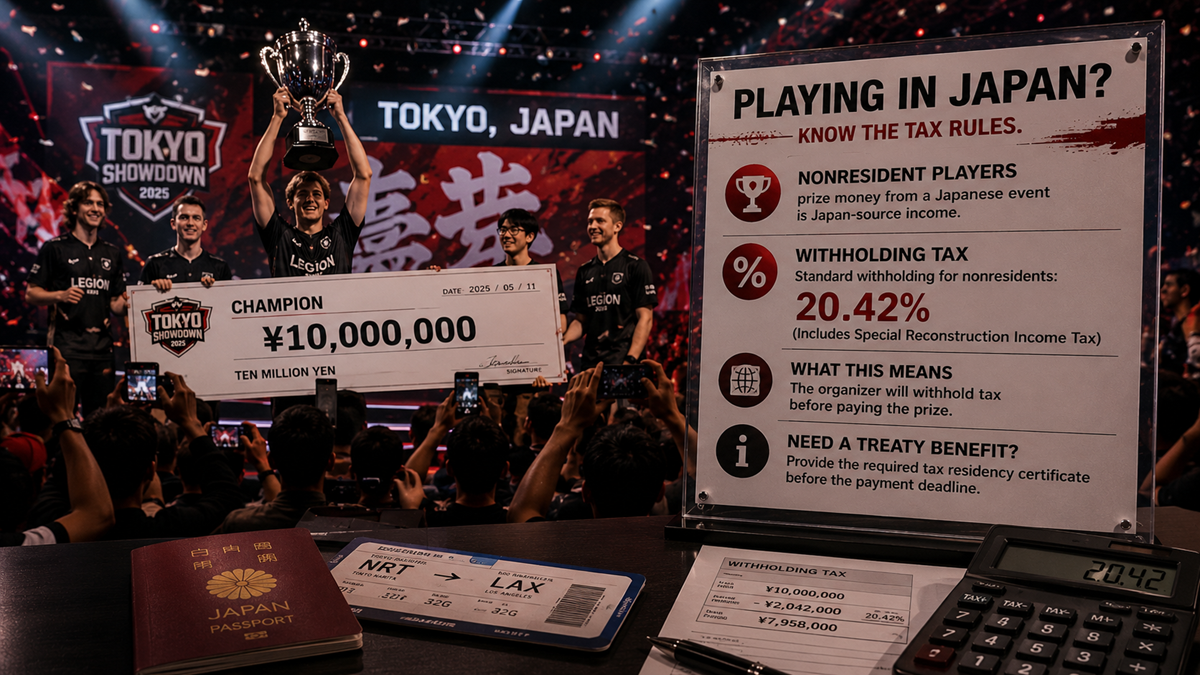
Japan’s rules can feel rigid to players who are just visiting for an event. Nonresidents earning Japan-source income may face withholding, often at 20.42% when the special reconstruction income tax is included. That does not leave much room for the romantic idea of a clean prize payout. If the tournament is in Japan and the income is sourced there, the tax issue can arrive before the celebration has really finished.
Germany Makes Organizers Part of the Tax Story
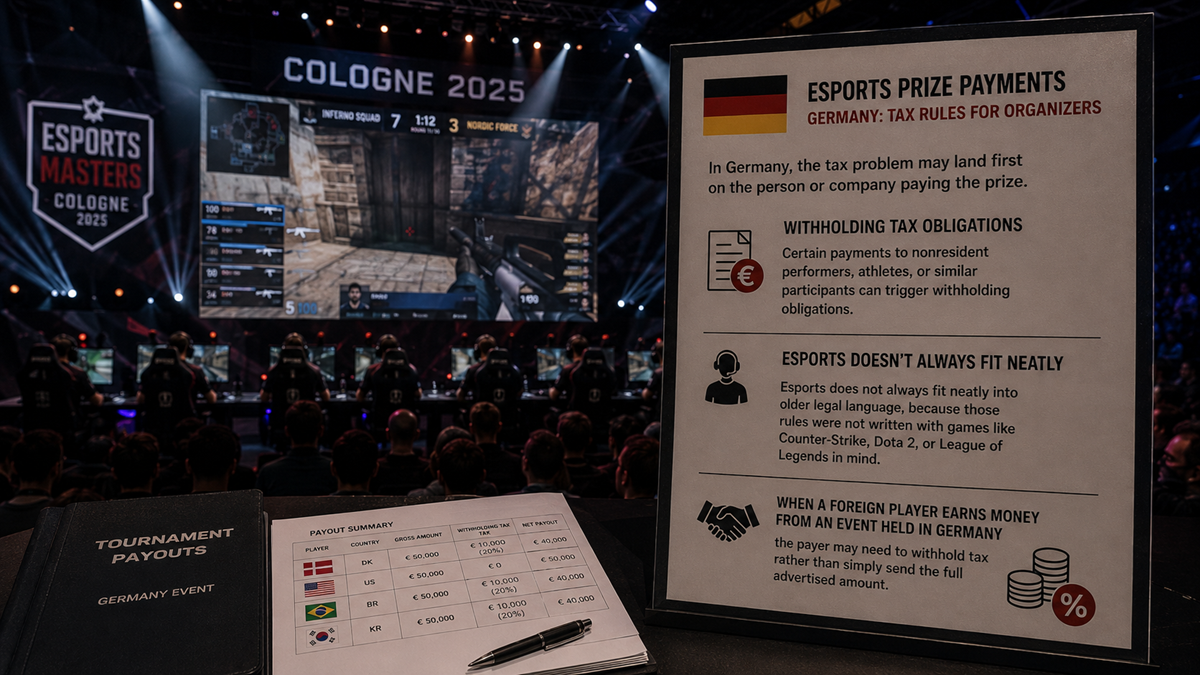
In Germany, the tax problem may land first on the person or company paying the prize. Certain payments to nonresident performers, athletes, or similar participants can trigger withholding obligations. Esports does not always fit neatly into older legal language, because those rules were not written with Counter-Strike, Dota 2, or League of Legends in mind. Still, when a foreign player earns money from an event held in Germany, the payer may need to withhold tax rather than simply send the full advertised amount.
Canada Looks at Where the Performance Happened
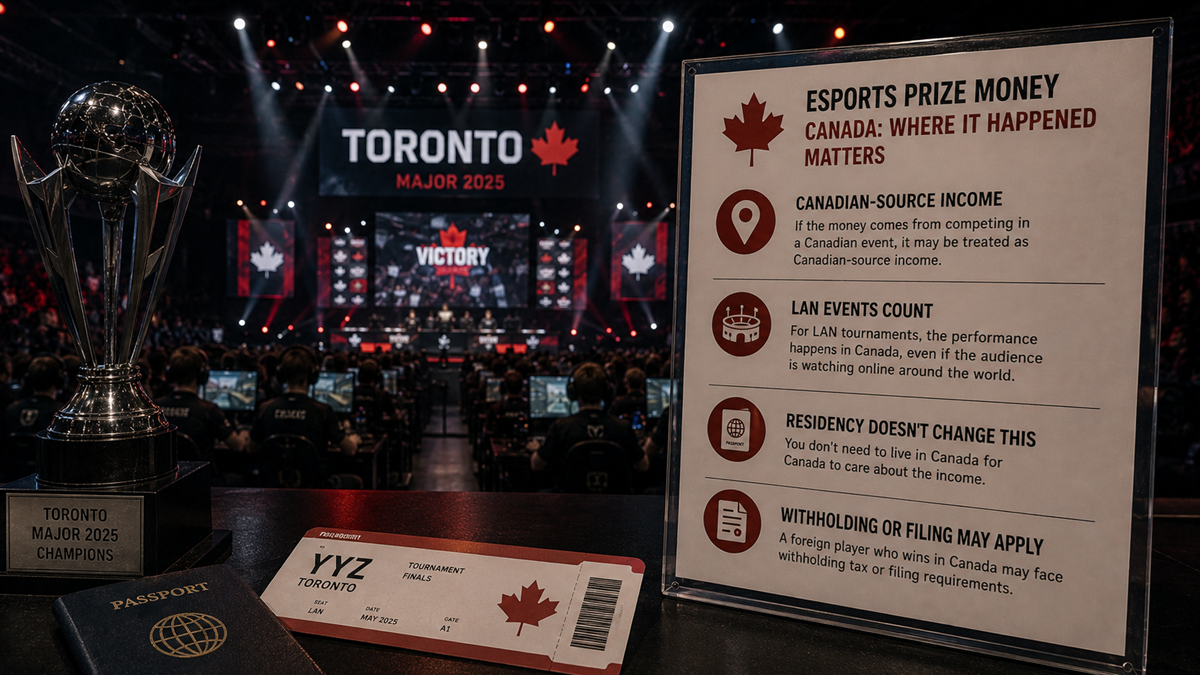
A player does not need to live in Canada for Canada to care. If the money comes from competing in a Canadian event, the country may treat it as Canadian-source income. That matters for LAN tournaments, where the performance is physically taking place in a venue, even if the game is watched globally online. A player from Europe or Asia could win in Toronto and still have Canadian withholding or filing questions to deal with afterward.
Trending on realmoneygamer.com


Australia Treats Serious Players Like Professionals
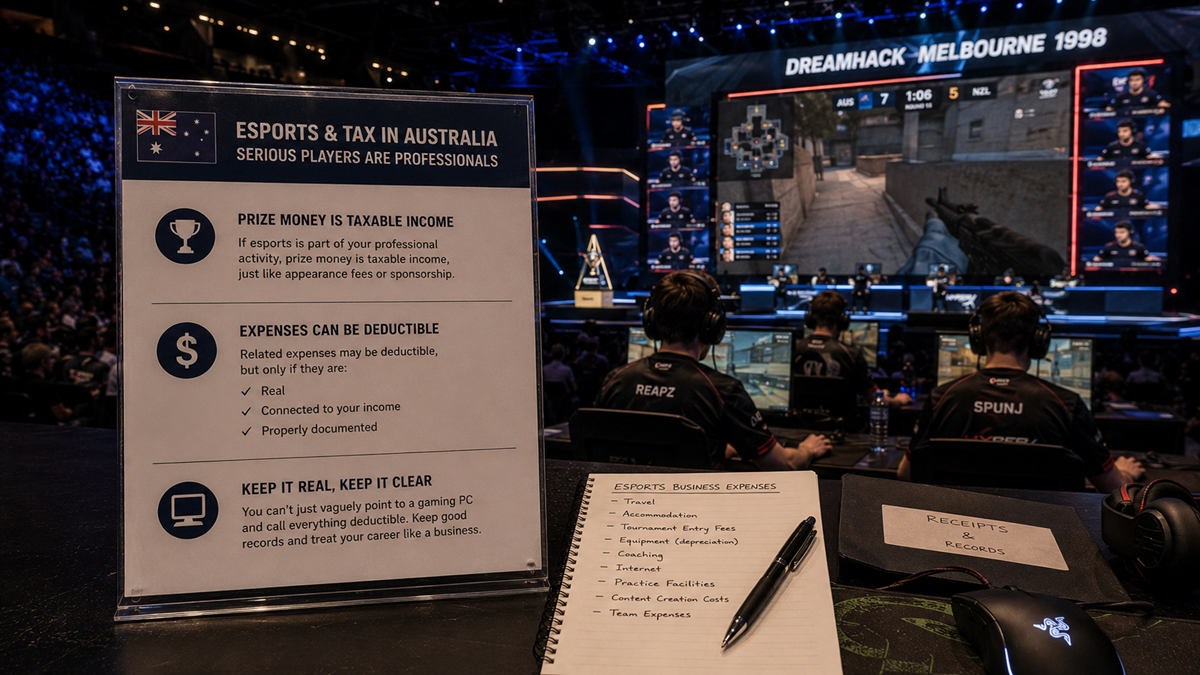
Australia tends to be practical about this. If esports is genuinely part of a player’s professional activity, prize money can be taxable income, much like appearance fees or sponsorship money. That also means expenses may become relevant, but only if they are real, connected to the income, and properly documented. A player cannot just vaguely point to a gaming PC and call everything deductible.
Singapore Can Be More Favorable, Depending on the Source
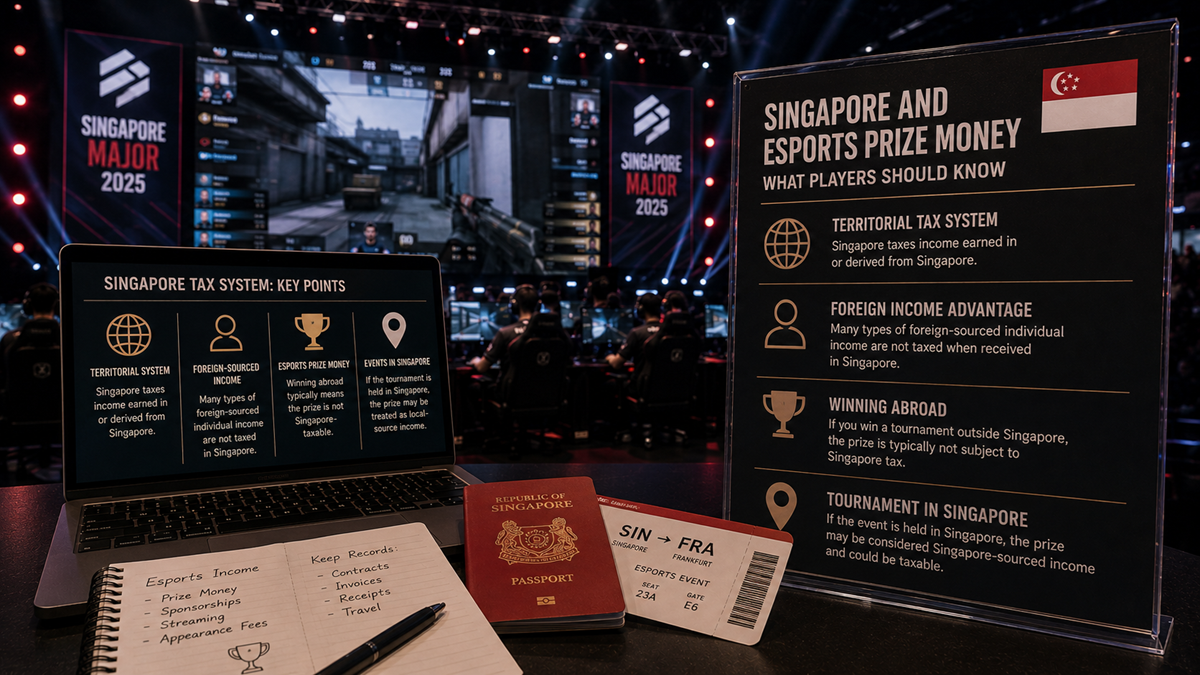
Singapore’s system can feel very different from countries that tax residents on worldwide income by default. In broad terms, it focuses on income earned in or derived from Singapore, while many types of foreign-sourced individual income are not taxed when received there. That can make a big difference for a Singapore-based player winning abroad. But if the tournament is actually held in Singapore, the conversation changes, because the prize may be tied to local-source income.
South Korea Has Its Own Withholding Questions
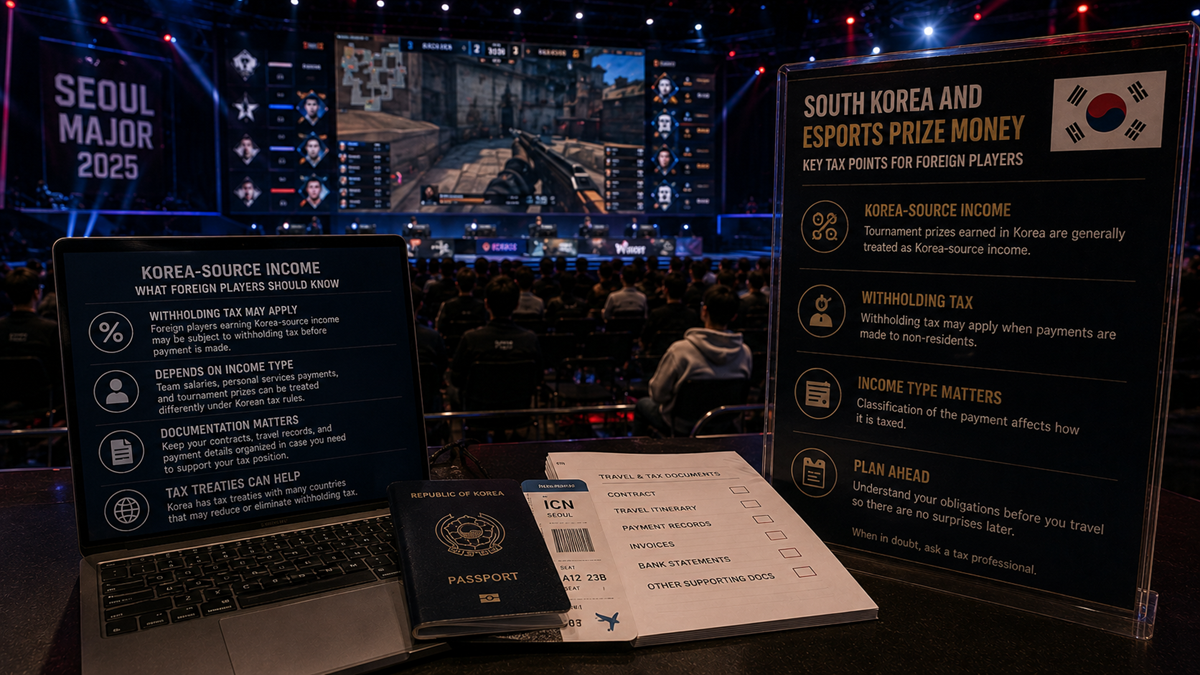
South Korea is one of esports’ home territories, so this is not a side issue. Foreign players competing there may run into withholding on Korea-source income, depending on how the payment is classified. A team salary, a personal services payment, and a tournament prize can create different tax questions. For a player flying into Seoul, the paperwork can matter almost as much as the match schedule.
France Often Focuses on the Event Location
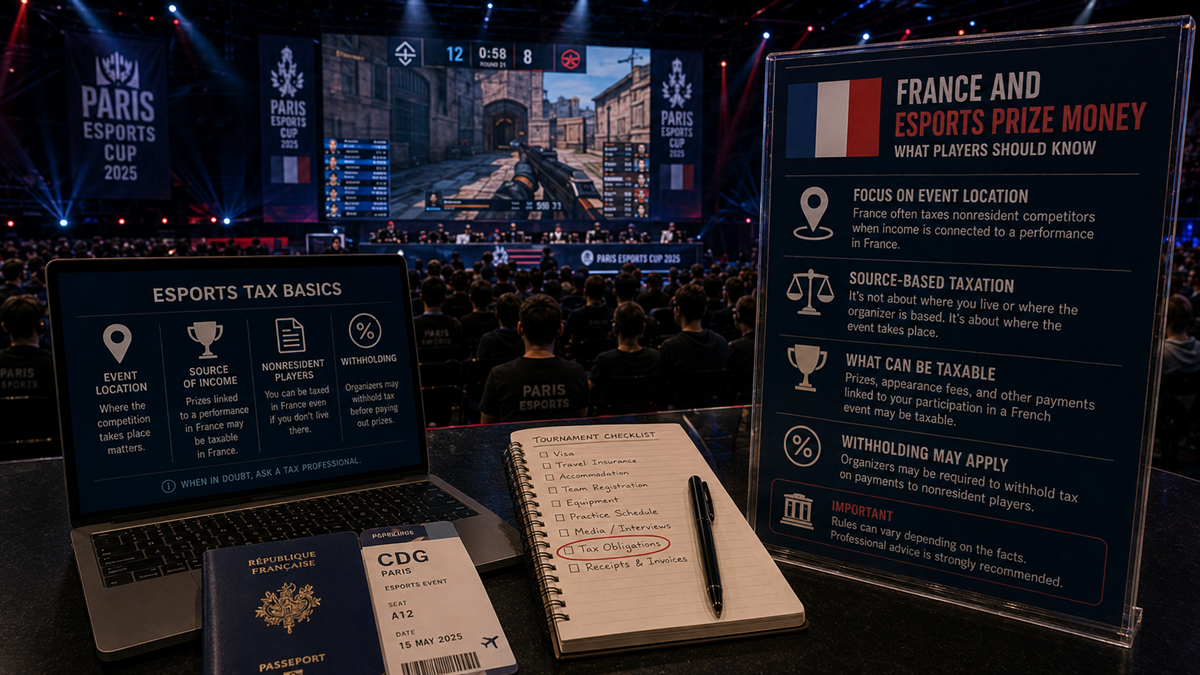
France can tax nonresident competitors when the income is connected to a performance in France. That is the key idea. It is not only about where the player lives or where the tournament organizer is based. If the match is played in Paris and the prize is tied to that appearance, French source-based rules may come into play. For esports players, that can be confusing because the audience is global, but the tax authority may still care most about the physical venue.
The UAE Can Look Simple, Until Another Country Gets Involved

A UAE-based player may not owe personal income tax in the UAE on prize money, since the country does not levy personal income tax in the usual way. That sounds clean, and sometimes it is. The complication is that the tournament country may still withhold tax, or another country may still treat the player as tax resident under its own rules. Moving to Dubai does not automatically erase every tax issue attached to an international esports calendar.
Brazil Can Tax the Payment Before It Leaves

Brazil is another place where source matters. Money paid from Brazil to a nonresident can be subject to withholding, depending on the type of income and how the payment is structured. For esports, classification becomes the messy part. Is the money a prize, a fee for services, part of a team arrangement, or something connected to sponsorship? Those labels are not just accounting language, they can change the tax result.
Fans usually see the gross prize pool, not the tax math. Players see the difference. One winner may deal with U.S. withholding, another may report worldwide income at home, another may claim foreign tax credits, and another may owe little or nothing domestically but still lose money at source. Esports is global enough for players to compete almost anywhere, but taxes remain stubbornly local. That gap is why the number in the announcement is often only the first version of the payout.