
Video game awards usually have quiet afterlives. They sit in studio lobbies, get packed into storage after an office move, or stay with the person who accepted them onstage. Every so often, though, one slips into public view through an auction, an estate sale, or a collector listing. That is when these objects start to feel less like ceremonial props and more like loose pieces of industry history.
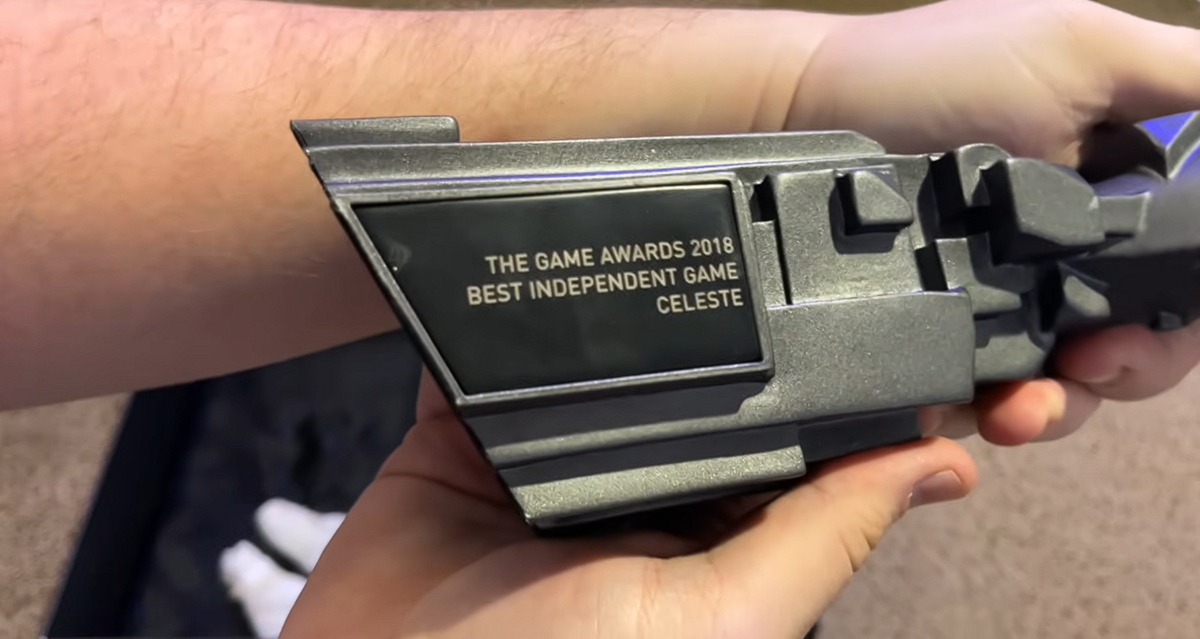
The Game Awards Trophy for Celeste
PrestigeIsKey
The Celeste trophy is the kind of story collectors love because it should not have happened, yet somehow did. After Celeste won Best Independent Game at The Game Awards 2018, the physical award apparently never reached Extremely OK Games. Years later, YouTuber PrestigeIsKey spotted what looked like the real trophy on eBay, bought it for $375, and contacted the team so it could be returned. The object itself was not especially old, but the circumstances made it stranger than many older pieces of memorabilia. A modern award, from a very public show, had drifted into the secondary market almost by accident.
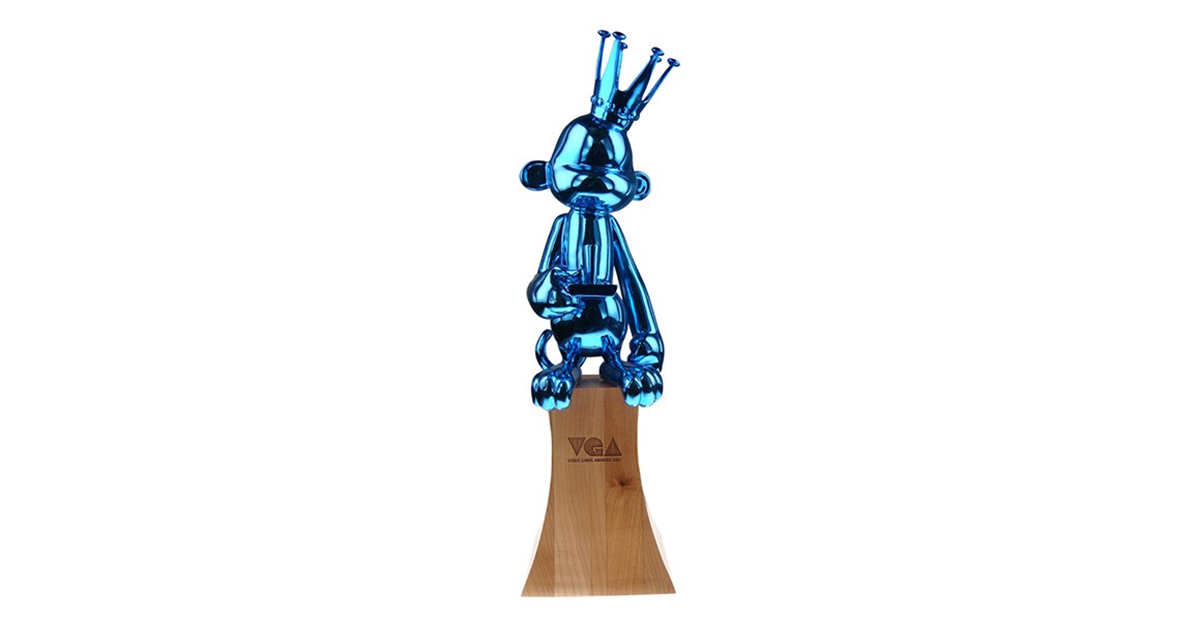
Spike Video Game Awards Monkey Trophies
Society Awards
The Spike Video Game Awards had a very specific kind of mid-2000s confidence. The trophies matched that mood, a blue chrome monkey holding a controller, standing on a wood base, more television prop than museum piece. They were given out during the Spike VGA years, before The Game Awards replaced that style of broadcast with something more polished and industry-facing. These trophies do appear from time to time in collector circles, usually with the appeal depending heavily on the year, category, and recipient. Some people want them because they are tied to a major game. Others want them because they look so unlike the cleaner awards that came later.
Tony Hawk’s Project 8 Spike VGA Award

Julien’s Auctions
Tony Hawk’s 2006 Spike Video Game Award for Tony Hawk’s Project 8 is a good example of gaming award hardware crossing into a different memorabilia market. It was not just a game trophy, it was also a Tony Hawk object, which meant skateboarding collectors had a reason to care about it too. Julien’s Auctions listed it as part of The 900 Collection, alongside items from Hawk’s career. That matters because the Tony Hawk games were not a side note to his fame. For a lot of players, they were the main way skateboarding entered the living room.
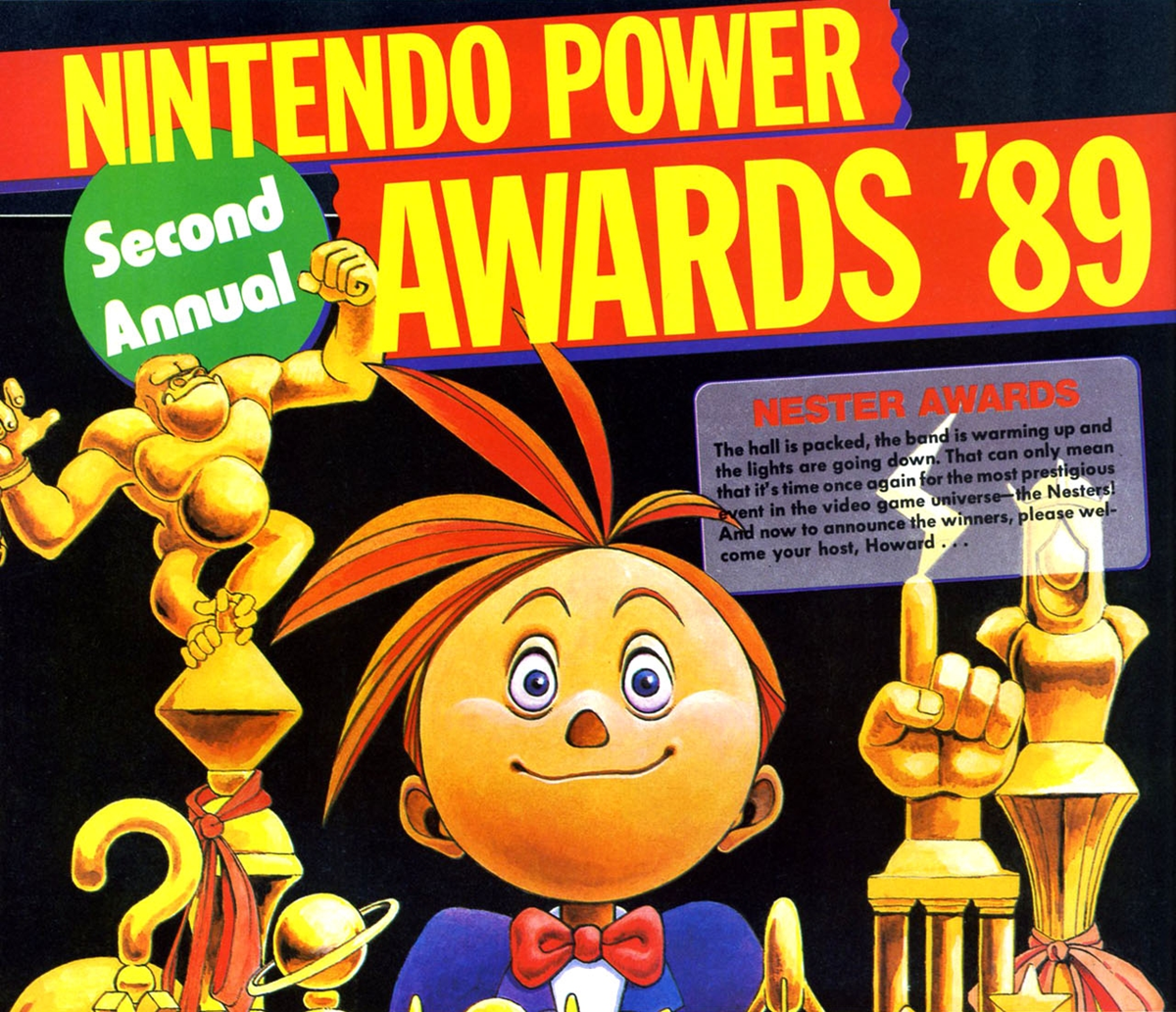
Nintendo Power’s Nester-Style Awards
Nintendo Fandom
There is something wonderfully awkward about early Nintendo Power award hardware. From 1989 into the early 1990s, the magazine’s reader awards used Nester, the comic character who served as one of Nintendo Power’s in-house mascots. That already dates the object better than almost any plaque could. A trophy from that era does not feel like a neutral industry prize. It feels like it came from a time when magazines shaped taste, mail-in votes mattered, and Nintendo’s public voice was playful in a way that would be hard to recreate now. If one surfaces, provenance becomes everything, because these were not ordinary retail objects and replicas or lookalikes can muddy the water.
GamesMaster Golden Joystick Prizes

Time Extension
The GamesMaster Golden Joystick prizes sit in a slightly different lane, but collectors often treat them with the same curiosity. They came out of British television rather than a developer awards show, and some were won by contestants instead of studios. That does not make them less interesting. In some ways, it makes them more revealing. They belong to a period when games were still being filtered through TV challenges, magazine culture, and regional celebrity rather than global livestreams.
Trending on realmoneygamer.com
BAFTA Games Award Masks

BAFTA
A BAFTA games mask carries a more formal kind of prestige. It does not have the playful weirdness of a Spike monkey or a Nintendo Power character trophy. It looks like an award that expects to be taken seriously. That seriousness is part of the appeal when a games-related BAFTA ever appears outside private hands. These awards are usually kept by developers, actors, composers, studios, or publishers, so public auction sightings are not common. When one does show up, the buyer is not just chasing game memorabilia. They are chasing a crossover object, something that connects games to the wider entertainment awards world.
D.I.C.E. Awards Hardware

Games Hub
The D.I.C.E. Awards are valued partly because they come from within the industry. They are not just popularity prizes, and they do not carry the same fan-vote energy as some older magazine awards. The Academy of Interactive Arts & Sciences presents them as peer recognition, which gives the physical award a different tone. A D.I.C.E. trophy tied to a major game can say a lot with very little text on the base. The category matters. The year matters. The studio name matters. Without that context, it is just an elegant object, but with it, the award becomes a compact record of what developers respected at that moment.
Game Developers Choice Awards Trophies
Game File
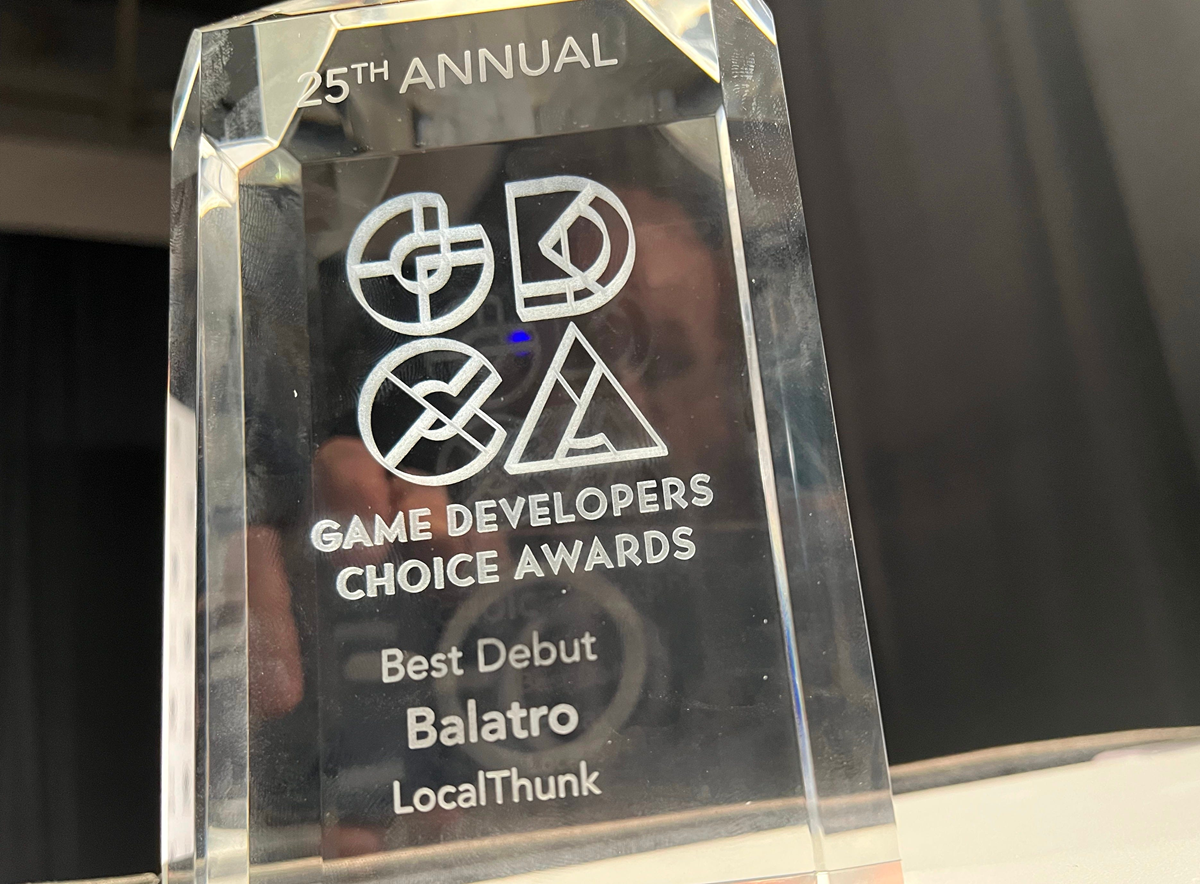
Game Developers Choice Awards hardware tends to feel closer to the people who actually made the games. That is not always true in a literal sense, awards can pass through publishers, executives, PR teams, and studio offices, but the event itself is rooted in GDC culture. These pieces are not usually the flashiest trophies in the room. Their appeal is quieter. A GDCA trophy tied to an influential independent game, a technical achievement, or a studio that later closed can feel almost like an archive item that escaped before anyone thought to catalogue it.
Independent Games Festival Awards
Pedro Camacho
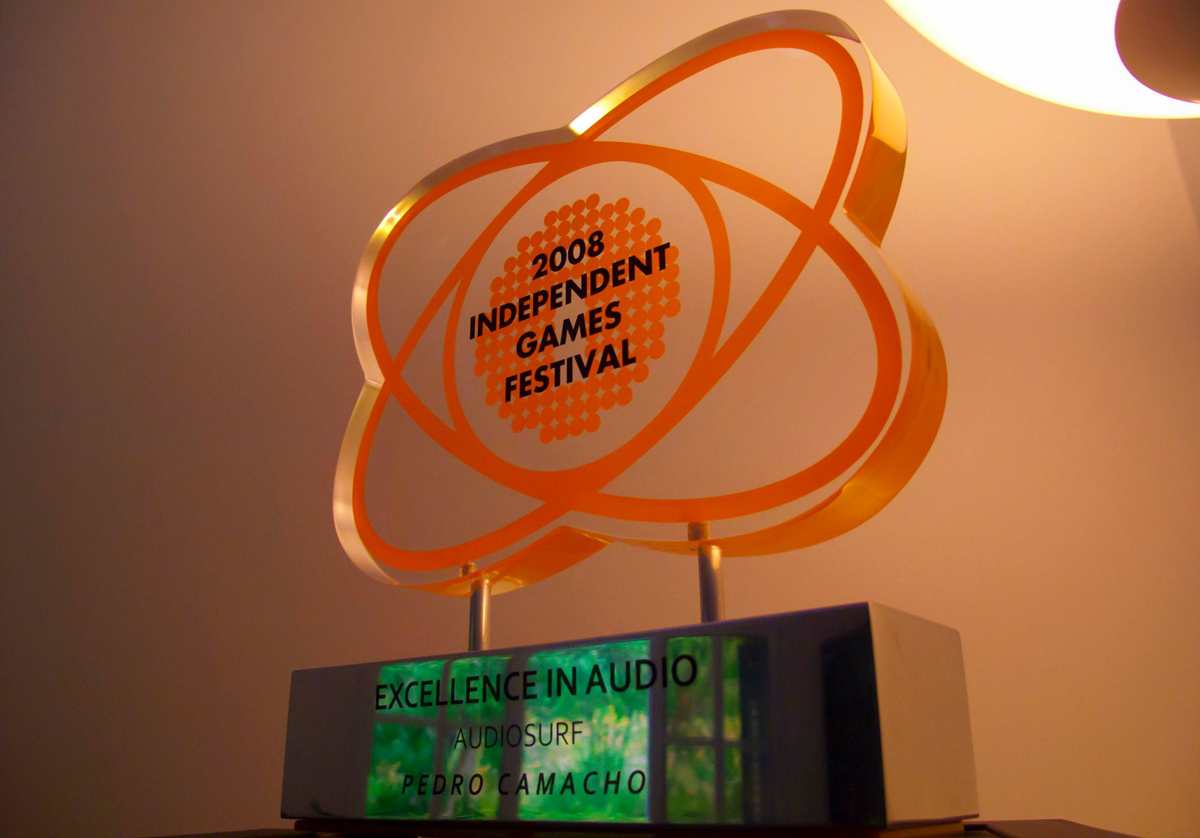
IGF awards have a different texture. They are tied to prototypes, small teams, experimental work, and games that sometimes became much larger only after the award was given. That makes them especially interesting when they surface later. A trophy connected to an early IGF winner can feel less like a final career honor and more like evidence of a first public signal. Someone noticed the game before the audience fully arrived. In collector terms, that kind of timing matters.
PlayStation Awards and Sales Plaques

r/gamecollecting
Sales plaques are easy to overlook because they are not always “awards” in the dramatic sense. They usually mark commercial performance, a million-seller milestone, a platform achievement, or a publisher presentation. Still, for developers, those plaques could be just as meaningful as a critic-voted trophy. They also show a different side of the business. A framed disc or PlayStation sales award tells you a game moved units, helped a platform, or mattered enough internally for someone to manufacture a physical reminder of it. When these pieces appear at auction, they often appeal to collectors who care about the machinery around a hit, not just the finished game.
Game Critics and E3 Award Plaques
Game Critics Awards
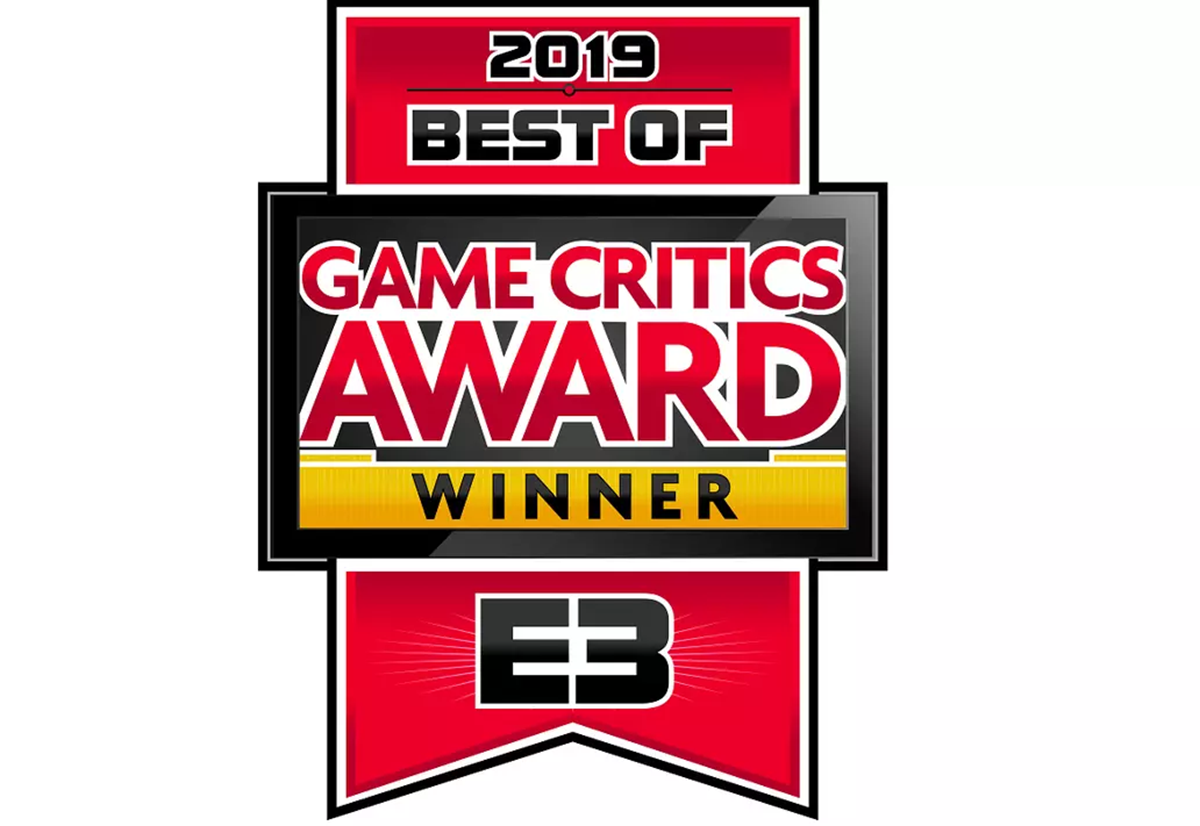
E3 plaques have picked up a slightly ghostly quality now that E3 itself is gone. Best of Show, Best Console Game, Best Original Game, these awards once captured the temperature of the press room before a game was finished and released. That makes them different from end-of-year trophies. They preserve anticipation. Sometimes they look brilliant in hindsight, sometimes they look like a record of hype that did not survive contact with the final product. Either way, a real E3-era plaque is a piece of the old preview economy, when a strong demo behind closed doors could shape months of conversation.
These trophies and plaques were not made for the same kind of collecting as boxed games or prototype cartridges. Many were meant to sit quietly in offices, and some probably ended up in storage without much ceremony. When they surface in public auctions, their value depends less on shine and more on the paper trail around them. The object is only half the story.
Continue Reading: 10 Games That Came With Physical Extras Now Worth More Than the Game Itself