In esports, preparation is no longer just scrimming until midnight and hoping instincts hold up on stage. Coaches and analysts now dig through match histories, heatmaps, economy patterns, draft tendencies, utility usage, rotation timing, and pressure stats before a series even begins. The goal is not to turn players into spreadsheets, because the best teams still win through timing, confidence, and communication. But good data can show where an opponent is predictable, where they are uncomfortable, and where a match can quietly tilt before anyone notices.
Spotting patterns in how opponents start games

Some teams tell you who they are in the first few minutes. In League of Legends, that might mean an early jungle path toward bot lane. In Counter-Strike or Valorant, it can be a repeated pistol-round setup, a fast mid contest, or a habit of giving up one side of the map while stacking another. Coaches look across several matches because one early rush might be a one-off, but four similar openings in a row start to look like a tendency. If an opponent usually overloads one lane, one bombsite, or one side of the map early, the staff can build a counter before the players are forced to solve it live.
Finding the weak link under pressure
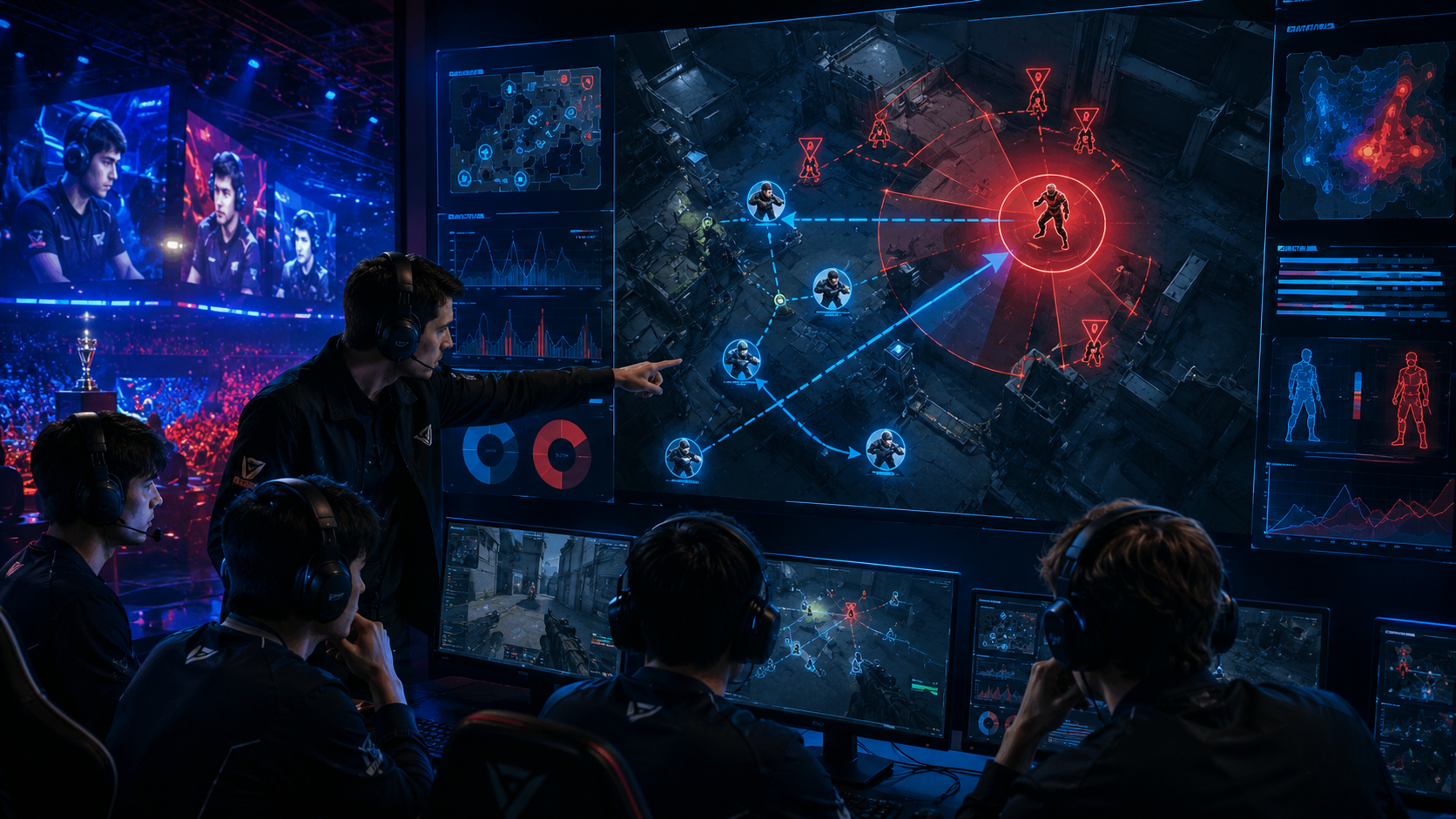
Every roster has someone who looks steady until the round gets messy. Analysts watch for missed trades, late rotations, poor utility under pressure, bad deaths after first contact, or a player whose decision-making drops when opponents collapse on their position. It is rarely as simple as “this player is bad.” More often, the weakness is conditional, maybe a support player struggles when isolated, or a duelist overextends after winning first blood. Coaches use that information to create repeatable pressure, not random aggression.
Understanding shot quality, not just shot volume

In shooters, a team can take plenty of fights and still generate very little. Coaches separate raw duel count from the quality of those duels, looking at crosshair placement, trade spacing, utility support, angle advantage, health before contact, and whether the fight happened on the team’s terms. A player finishing with many attempts but few clean opportunities may not be the problem. The problem might be the setup around them, or the opponent’s habit of offering “free” space that leads into low-value fights.
Preparing for set plays and utility-heavy rounds
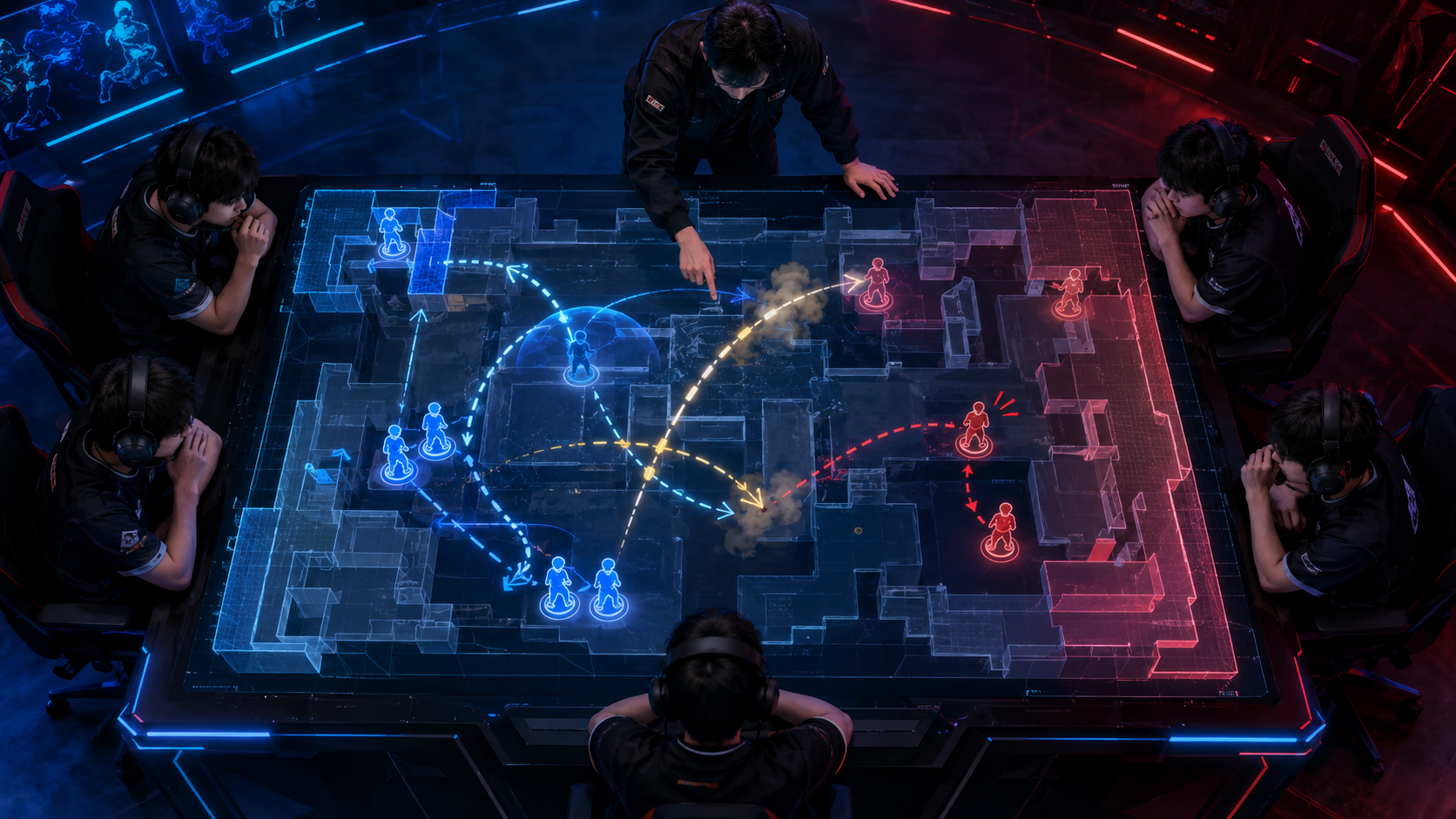
Set plays in esports can be as rehearsed as any dead-ball routine in traditional sports. A Valorant team may have a layered execute with smokes, flashes, recon tools, and late lurks. A CS2 side might repeat a grenade stack that forces defenders out of a key position. Coaches chart these patterns because teams often disguise them slightly while keeping the same timing underneath. Over enough maps, the habits show up, who throws first, who waits, who clears space, and who is trusted to make the final entry.
Measuring tempo and rhythm

Some opponents want every round to feel fast. Others are happier draining the clock, holding cooldowns, farming information, and forcing defenders to guess late. Coaches track pace through round length, early contact frequency, reset timing, rotation speed, and how often a team pauses after losing a player. That helps decide whether to interrupt the rhythm, slow the lobby down, contest early space, or refuse to chase a team that wants chaos.
Trending on realmoneygamer.com

Tracking where attacks actually begin
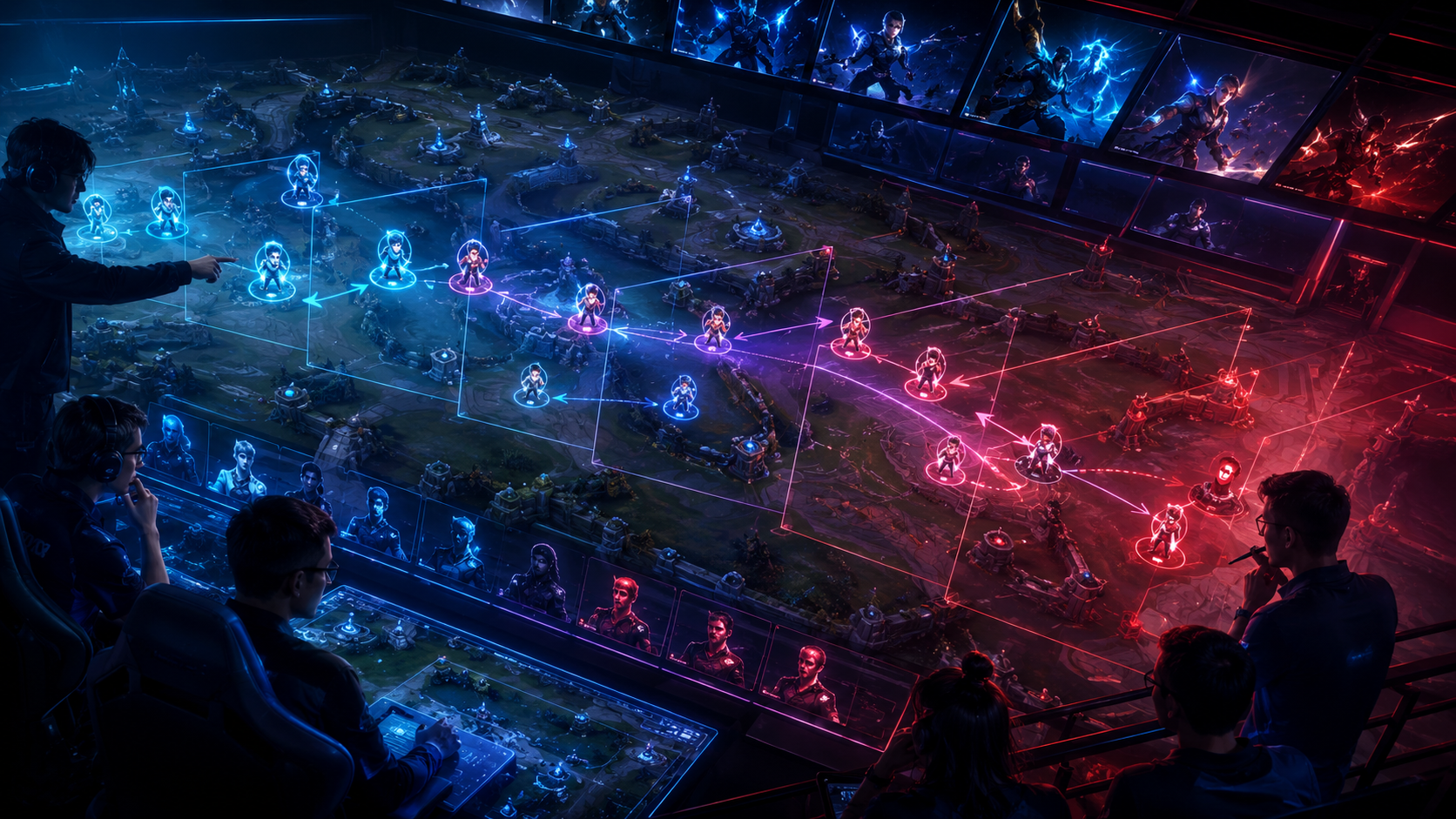
The highlight usually starts at the kill, the objective steal, or the final execute. The real danger often starts earlier. Analysts trace the sequence back to the first piece of map control, the ward that stayed alive, the drone that cleared a corner, the lurker who held rotation, or the mistake that gave the opponent a clean timing window. This is especially important against teams that do not look explosive until they suddenly are. Coaches then prepare safer routes, stronger default positions, and clearer rules for who stays connected when the team is applying pressure elsewhere.
Studying player matchups in uncomfortable detail

A matchup is not just one player being better than another. It can be agent pool versus agent pool, champion comfort, weapon preference, lane pressure, clutch tendencies, or how often a player wins first contact when supported by utility. One mid laner may survive difficult lanes well but struggle to convert priority into roams. One rifler may be excellent holding angles but far less effective when forced to retake space. Coaches use those details to decide where to invest resources and where to leave players alone.
Anticipating substitutions, swaps, and draft shifts
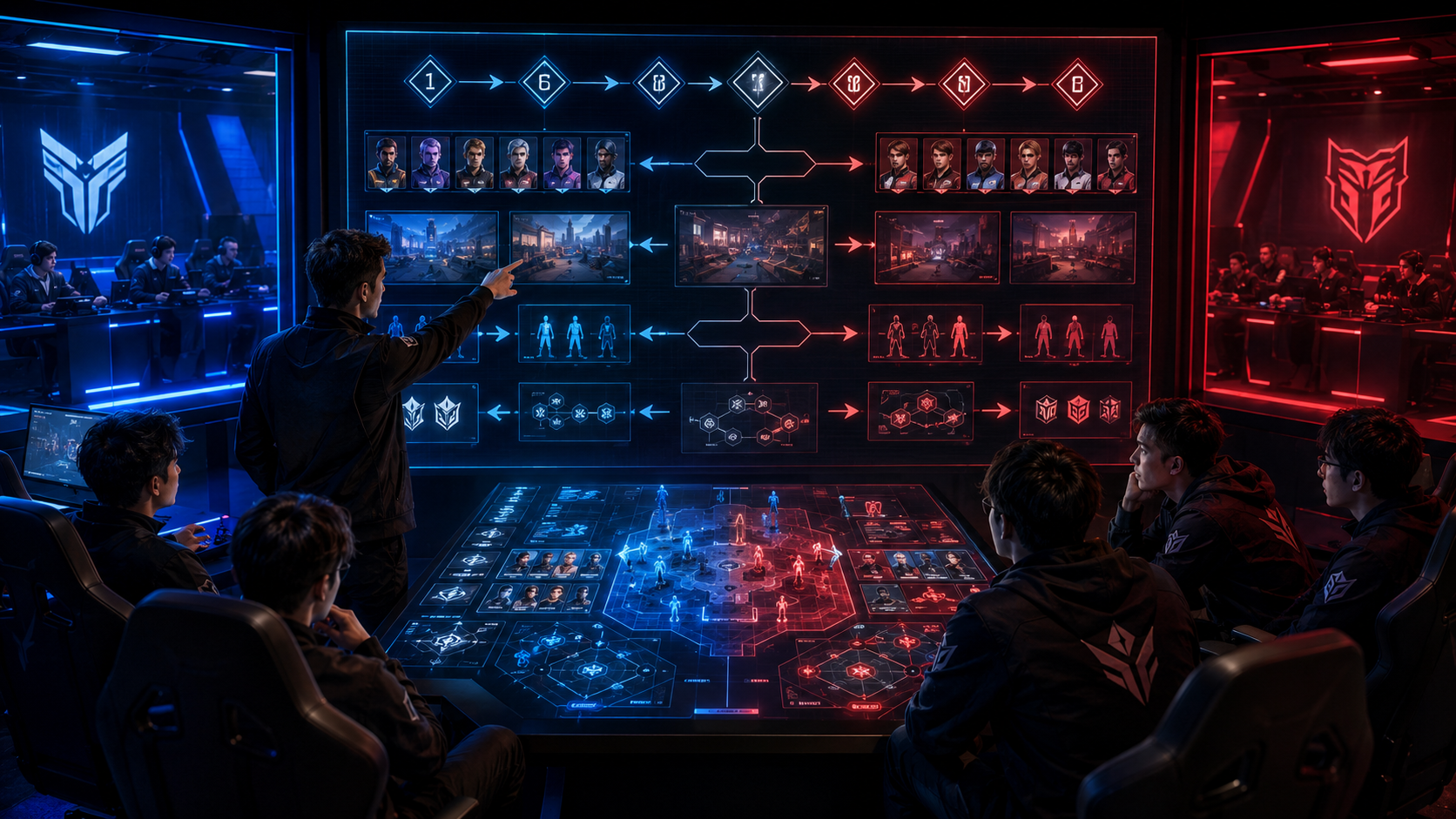
Esports teams can change the shape of a match without making it obvious at first. A roster may bring in a specialist, swap roles, change side selection priorities, or suddenly draft a composition they saved for playoffs. Coaches study when those changes usually appear and what problems they are meant to solve. If a team often shifts toward safer scaling after losing Game 1, or switches to a more aggressive map pick when under pressure, preparation cannot stop at the opener.
Building practice around opponent tendencies

The useful data does not stay in a report. It becomes practice. If an opponent loves late B hits, the team rehearses retake spacing and utility conservation. If they invade early in jungle, scrims can include specific level-one responses. If their economy breaks after forced buys, players practice the patience needed not to gift them a comeback round. The point is to make the counter feel familiar before the match begins.
Separating noise from something real
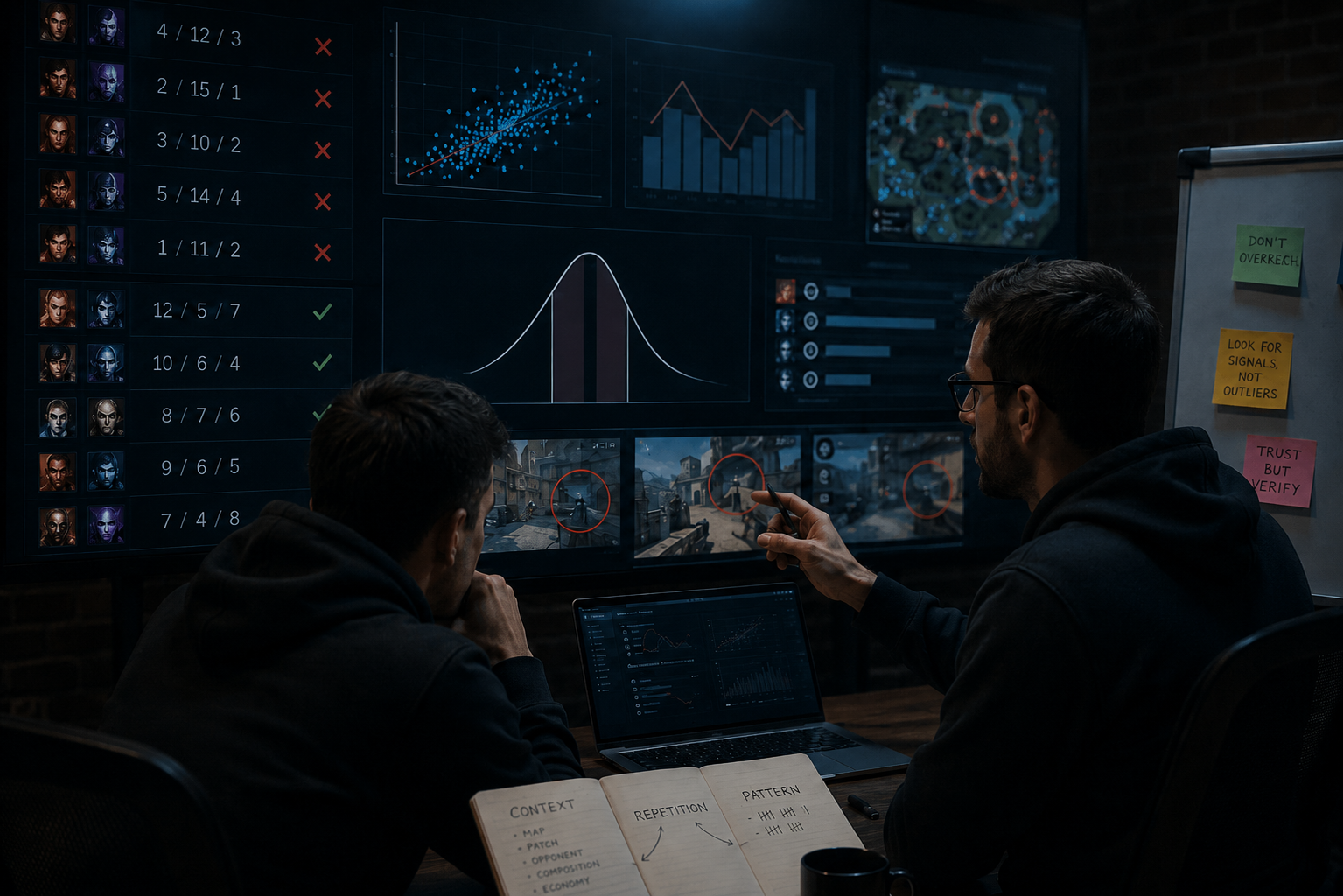
Esports data can lie if coaches treat every number like a verdict. A player losing five opening duels on one map might have had bad spawns, poor utility support, or simply faced a better read that day. A draft pick with a low win rate may still be central to a team’s best strategy. Good analysts look for repetition, context, and sample size before pushing a conclusion into the game plan. The best staffs know when to trust the number and when to leave it alone.
Giving players information they can actually use
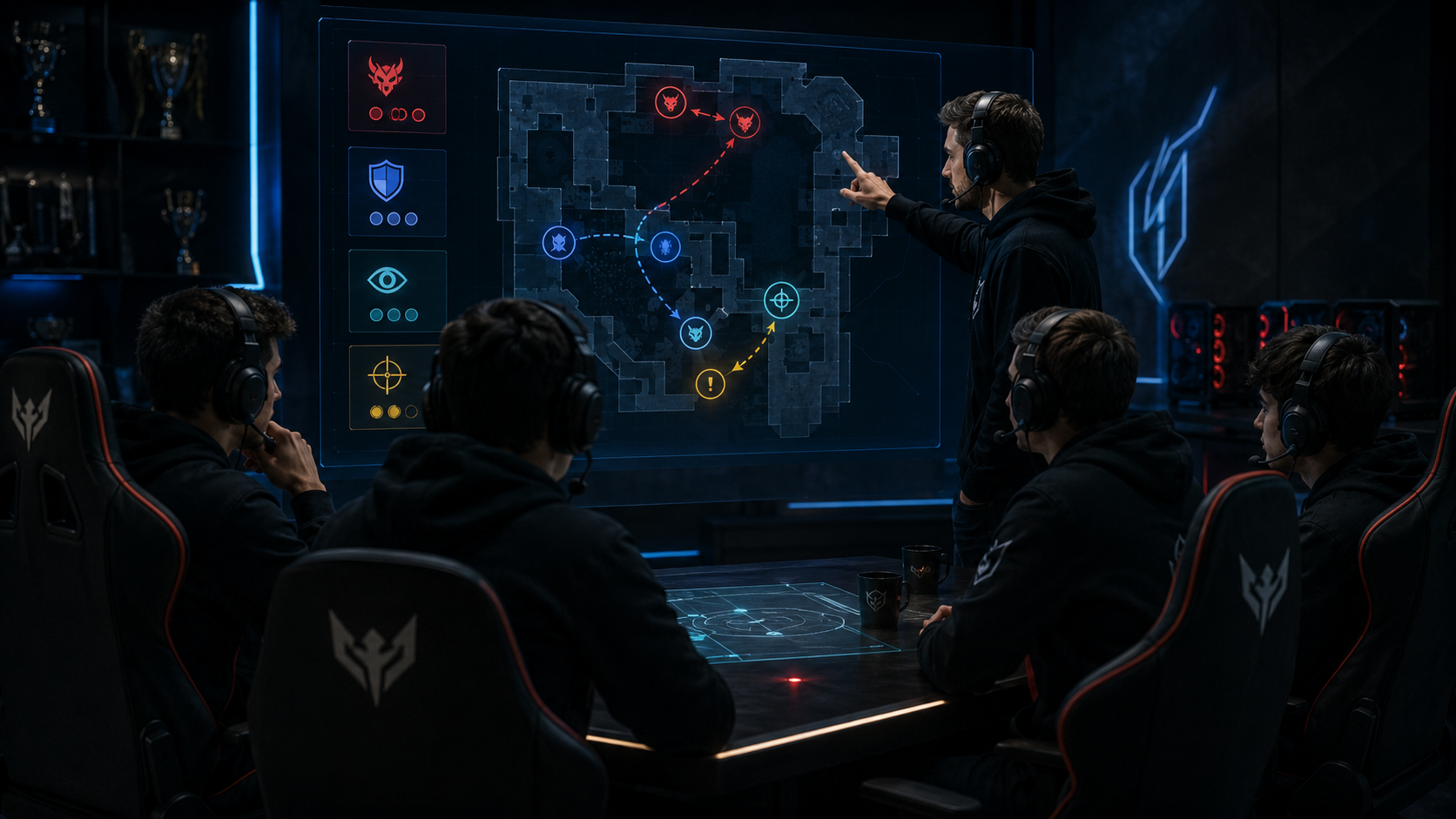
Players do not need a full database before walking on stage. They need a few clean cues. Expect the early invade. Save the flash for the second contact. Do not overrotate off the fake. Punish the lurker after thirty seconds. Coaches filter the analytics into simple match reminders because under pressure, clarity matters more than volume.
Data has become part of the language of esports preparation, but it works best when it stays close to the game. The numbers help coaches see habits, test assumptions, and prepare players for moments that might otherwise feel improvised. Still, the match always has its own mood once it begins. A good team uses the data as a map, not as a script.
Continue Reading: 12 Ways Esports Teams Scout and Recruit Players From Amateur and Semi-Pro Leagues