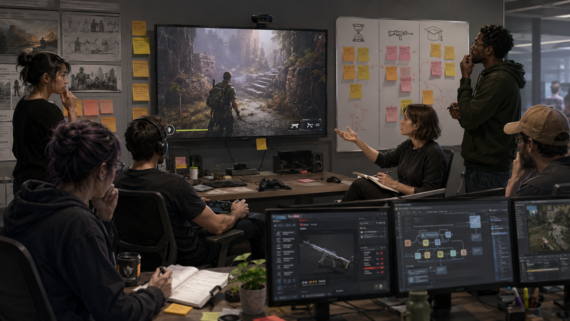
A finished video game can look deceptively effortless from the outside. Players see the trailer, the store page, the launch date, maybe a few previews, and then the game appears. Behind that clean public timeline is a much messier production road, full of revisions, arguments, prototypes, delays, tests, and last-minute fixes. Before a game reaches its official release, it usually passes through several stages that shape what it is, and sometimes what it is forced to stop being.
The Initial Concept
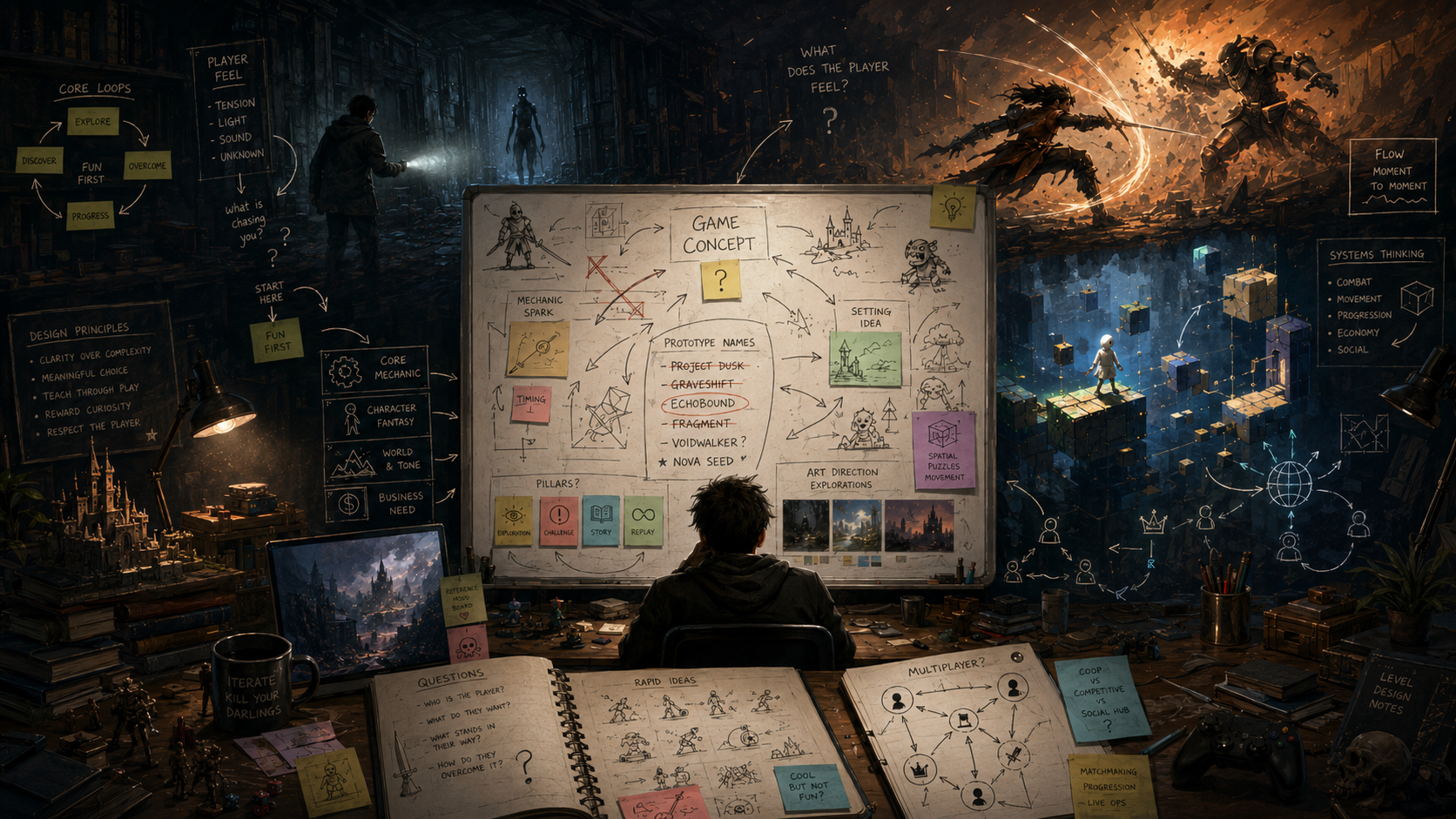
Every game begins as a loose idea, even if the studio later talks about it as if it arrived fully formed. It might start with a mechanic, a character, a setting, a business need, or a simple question like, “What would this feel like if the player had to survive with limited information?” At this point, very little is sacred. A horror game might briefly be an action game, a platformer might begin as a puzzle prototype, and a multiplayer title might spend weeks as a whiteboard full of arrows and bad names.
Pre-Production
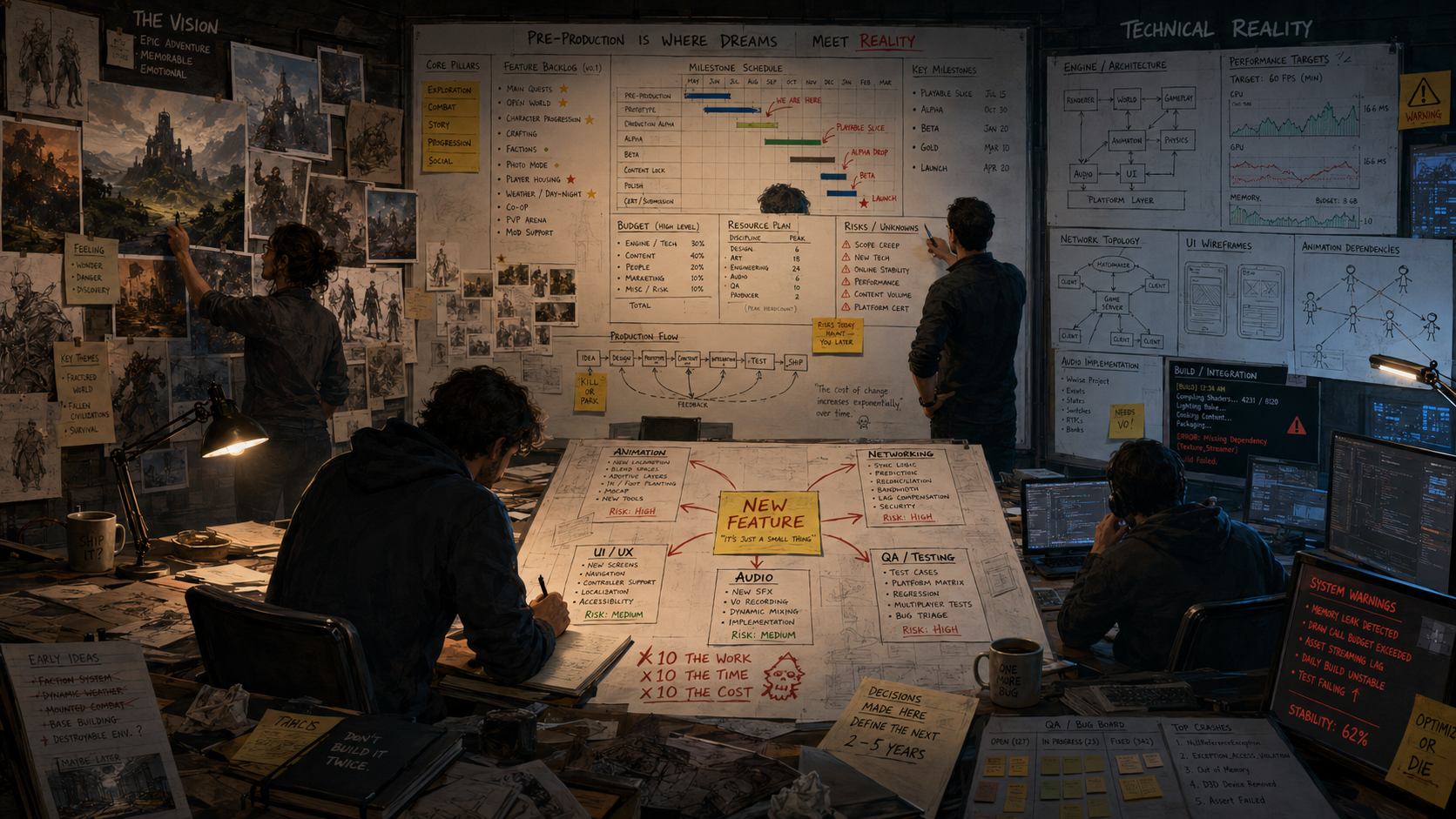
Pre-production is where the fantasy starts meeting schedules, budgets, and technical limits. Designers write early documents, artists search for the visual direction, producers map out timelines, and engineers figure out whether the game can actually run the way everyone imagines. This stage is often less glamorous than fans expect, but it matters because bad decisions here can haunt a project for years. A feature that seems harmless in a pitch can become a production sinkhole once animation, networking, audio, UI, and QA all have to support it.
Prototyping
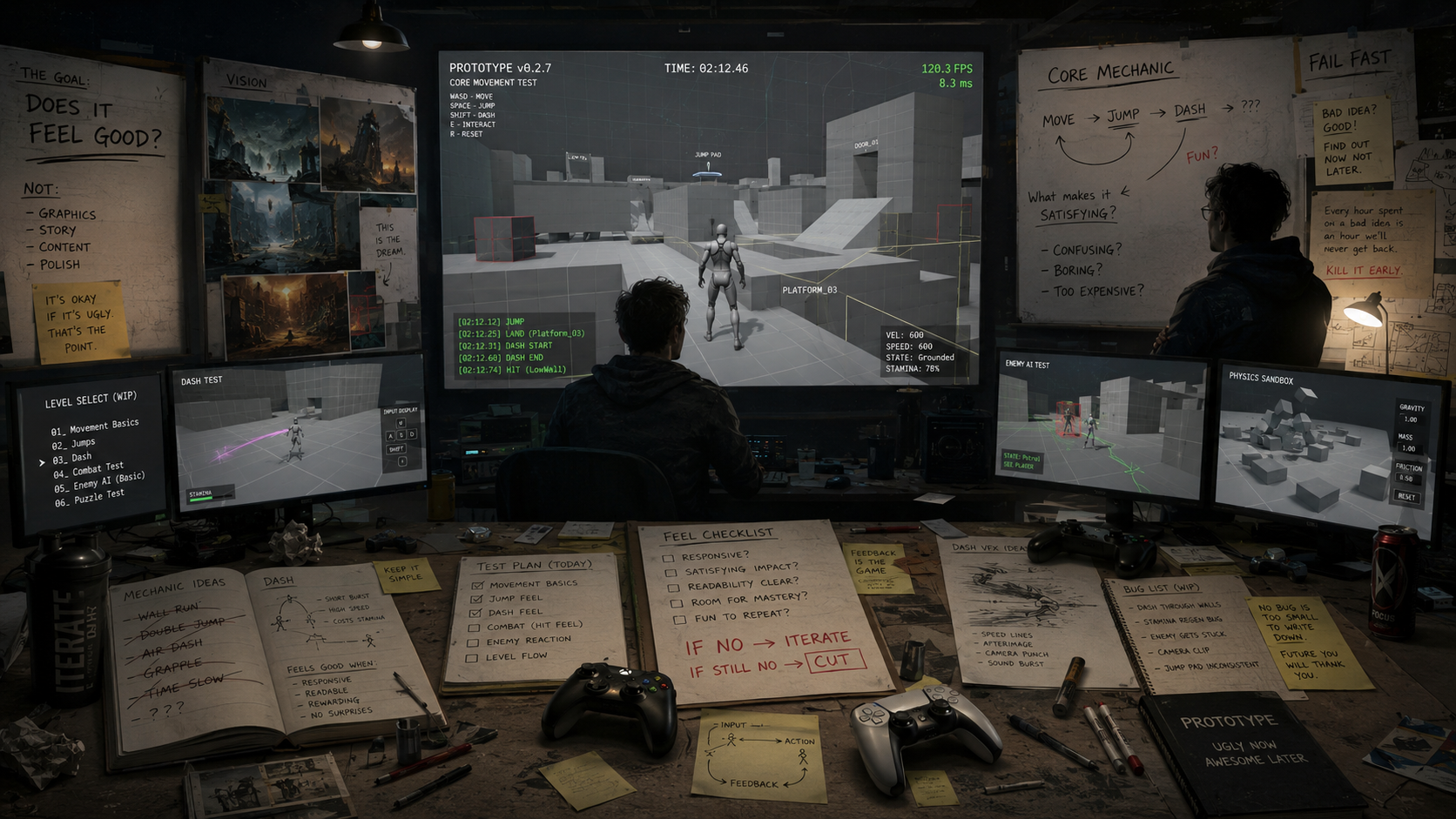
A prototype is not supposed to look pretty. In many studios, it is gray boxes, placeholder characters, stolen sound effects from internal libraries, and menus that barely work. The point is simple, does the central idea feel good when someone actually plays it? Sometimes the answer is no, and that is useful too. Many games avoid disaster because a rough prototype proves early that a mechanic is confusing, boring, or too expensive to build properly.
Vertical Slice
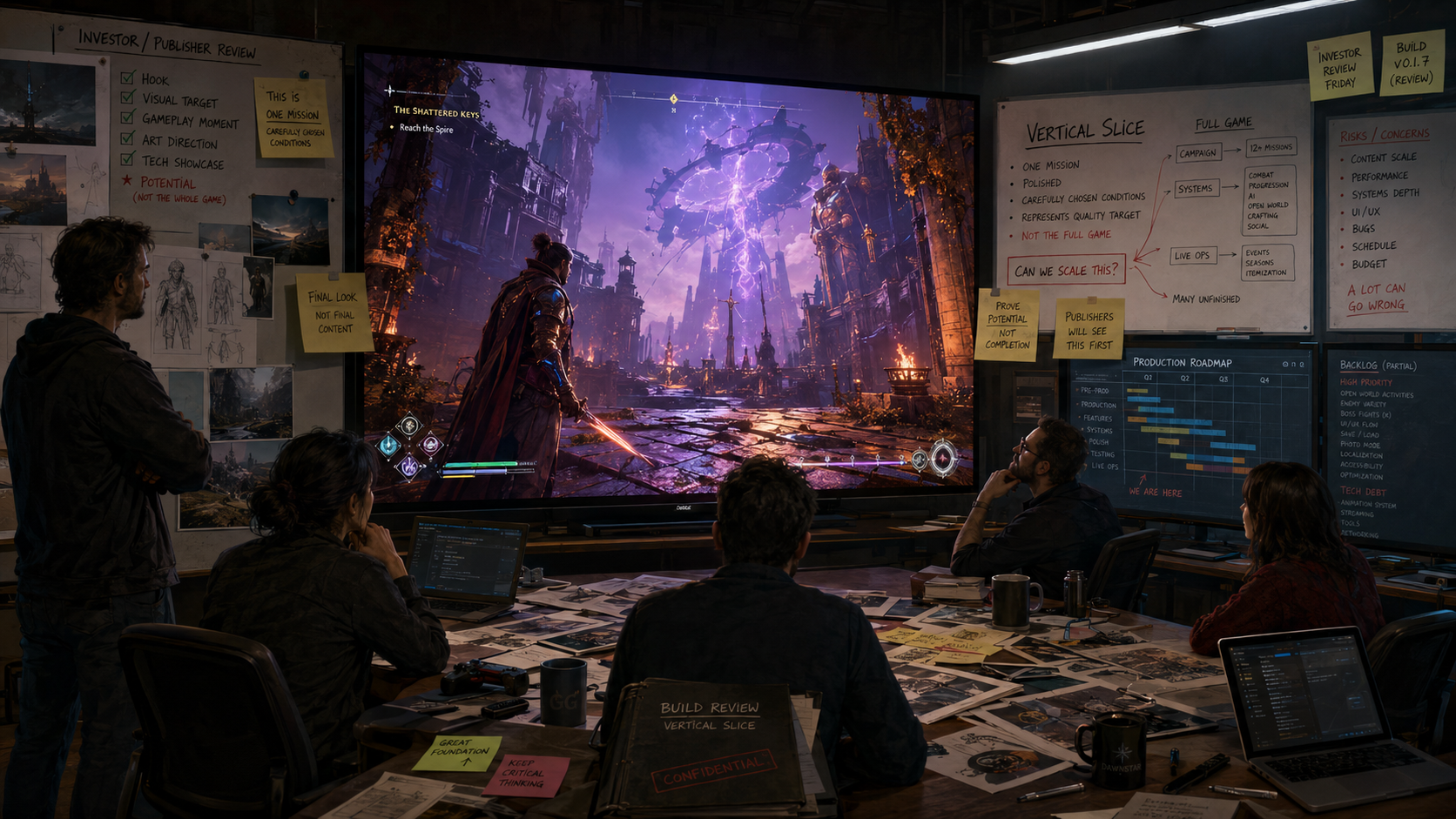
The vertical slice is where a game tries to look like itself for the first time. It is usually a small section, maybe one mission, one level, or one match, built to represent the final quality target. Publishers, investors, studio heads, and sometimes internal teams use it to judge whether the project has a real shape. It can also be a little deceptive, since a polished slice does not mean the whole game is close to done. It means the team has shown what the game could be, under carefully chosen conditions.
Full Production
This is the long middle of development, the part that eats calendars. Levels are built, systems are connected, characters are animated, dialogue is recorded, quests are implemented, combat is tuned, menus are redesigned, and tools break at inconvenient moments. Different departments move at different speeds, which means one team may be waiting on another while also being behind on its own tasks. The public usually hears very little during this stretch unless the studio is unusually open, but it is where most of the game is actually made.
Trending on realmoneygamer.com

Internal Playtesting
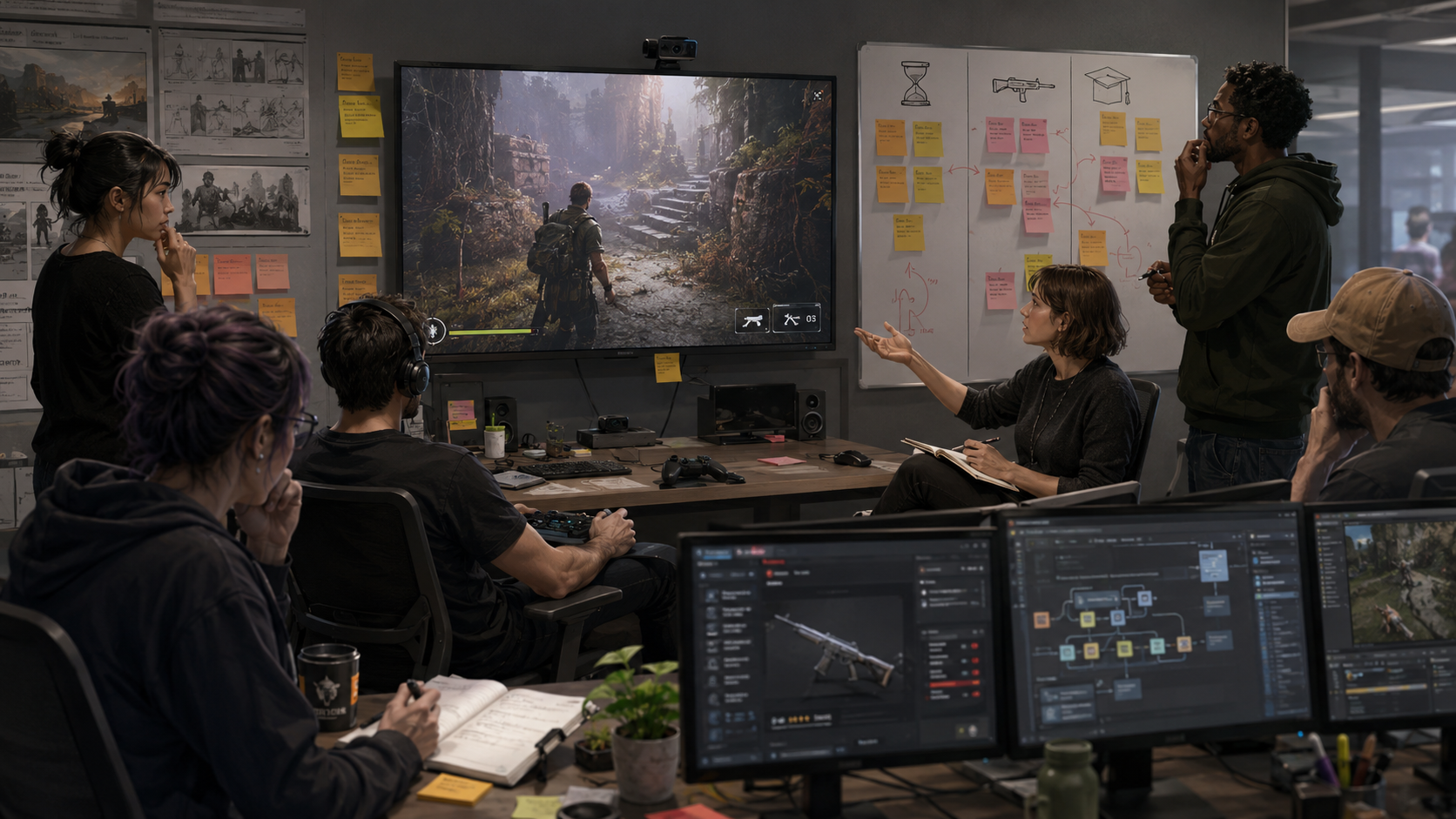
At some point, people inside the studio have to play the game honestly, not just test the bit they personally built. Internal playtests can be uncomfortable because they reveal problems everyone was too busy to notice. A mission may be too long, a weapon may be pointless, a tutorial may explain everything except the thing players actually misunderstand. The best teams treat this feedback as part of development rather than a personal attack, though that is easier to say than to practice.
Alpha
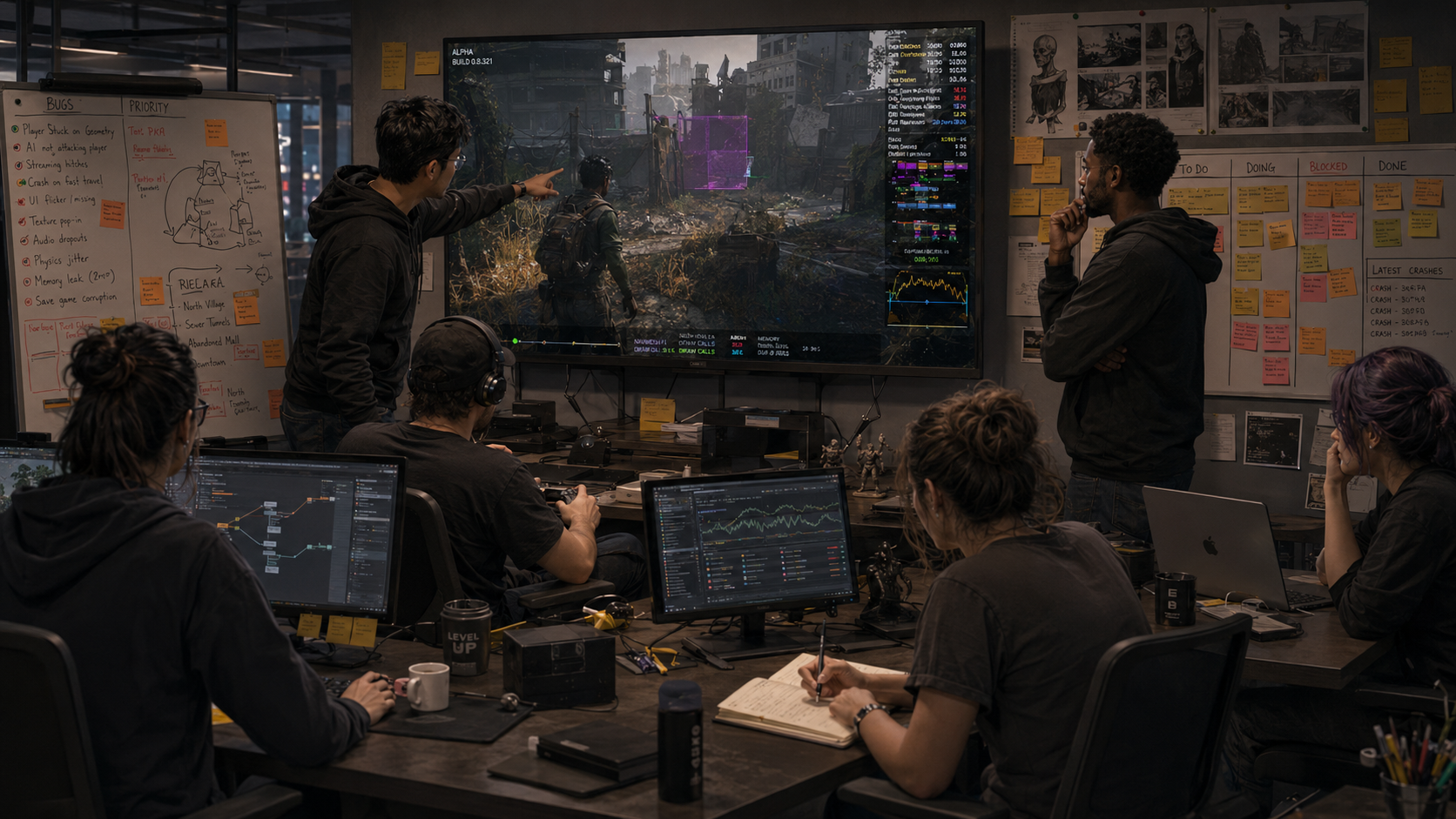
Alpha usually means the game is feature-complete, or close enough that the major pieces are in place. That does not mean it is smooth, balanced, or ready for the public. It may still crash often, run poorly, contain unfinished art, and have entire sections that feel stitched together. The important shift is that the team is no longer asking, “What else should this game become?” as much as, “How do we make the version we have actually work?”
Beta
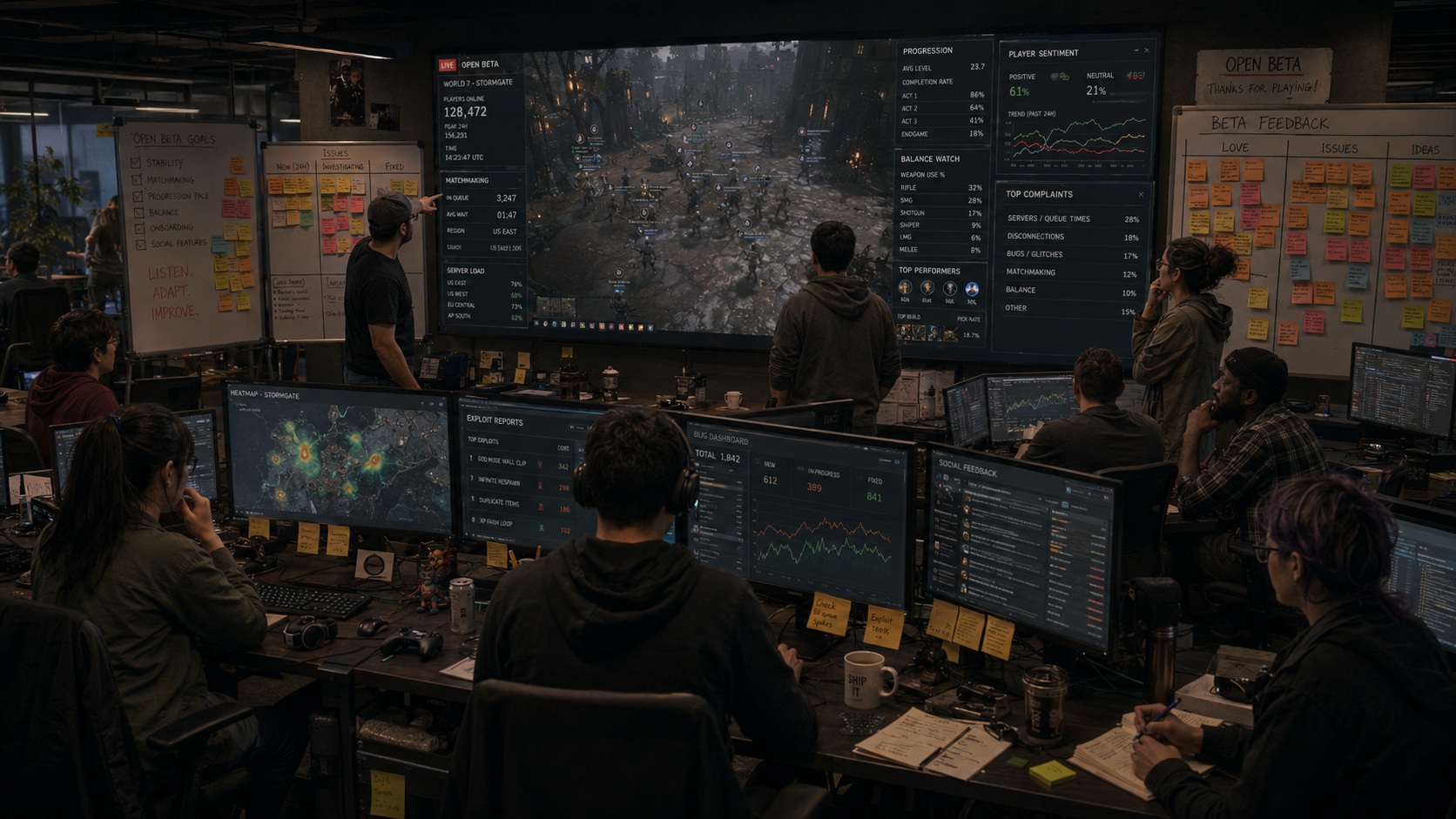
Beta is when outside players may start getting involved, depending on the game and the studio’s strategy. For online games, this stage can be especially important because servers, matchmaking, progression systems, and live balance behave differently once real players arrive in large numbers. A closed beta might be small and controlled, while an open beta can feel almost like a soft launch. Developers watch where players get stuck, what they exploit, what they ignore, and what they complain about loudly enough to become impossible to dismiss.
Certification and Platform Approval
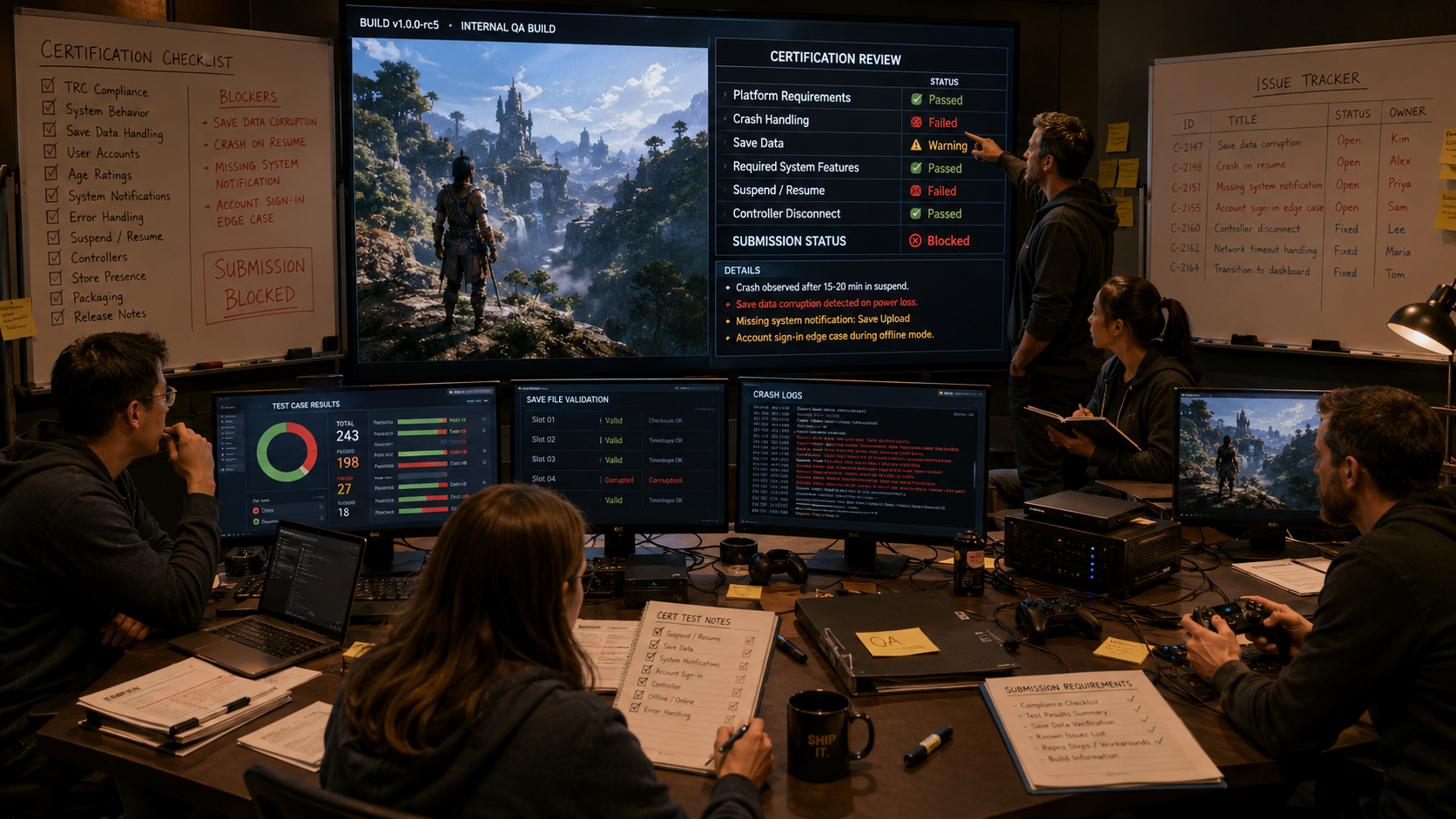
Console games, and many PC releases tied to storefront requirements, have to pass checks before they can launch. This stage is not about whether the story is good or the combat is fun. It is about whether the game follows platform rules, handles crashes properly, supports required system features, manages save data correctly, and does not break in ways that create bigger problems for players or platform holders. Certification failures can delay a release even when the game seems finished to everyone outside the process.
Gold Master and Day-One Patch
“Going gold” used to sound more final than it often is now. It means the release build has been approved for manufacturing or distribution, but modern games frequently keep changing right up to launch through a day-one patch. That patch might fix bugs, improve performance, adjust balance, or add content that missed the locked build. It is not always a sign of chaos, though sometimes it is. More often, it reflects the strange reality of contemporary game development, the official release is a deadline, but the work rarely stops there.
A game’s release date can make development look like a straight line, when it is usually closer to a long series of corrections. Some stages overlap, some get repeated, and some are rushed because money or marketing has already made the calendar less flexible. By the time players press start, they are seeing the result of thousands of choices they will never know about. That hidden process is part of why even a flawed game can feel like a small miracle when it finally works.
Continue Reading: 10 Game-Breaking Glitches That Were Kept as Official Features