Esports contracts have always carried a little weirdness around the edges. They borrow from traditional sports, entertainment law, influencer management, and sometimes from whatever emergency template a team happened to be using that year.
That mix has produced clauses that sound almost fake until they show up in lawsuits, league investigations, or public contract disputes. The strange part is not always that they existed, but that players often signed them before the industry had caught up with its own money
The FaZe Contract That Treated a Fortnite Star Like a Whole Business
r/fortnitecompetitive
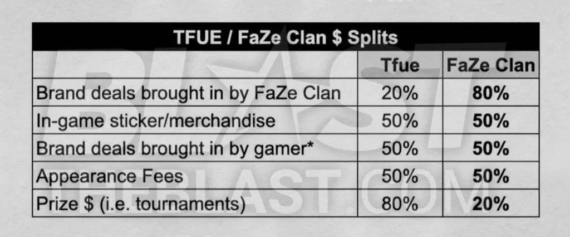
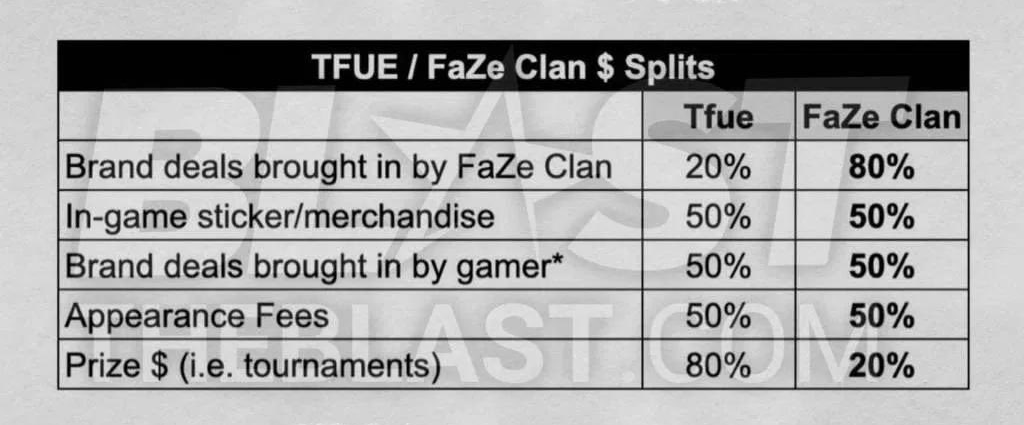
When Turner “Tfue” Tenney sued FaZe Clan in 2019, the strangest parts of the fight were not really about tournament winnings. They were about whether an esports organization could reach into nearly every commercial corner of a player’s life. Reports said the contract allowed FaZe to take up to 80% of certain brand deals it brought to him, claim a cut of creator-code income, and restrict outside sponsorships that were not approved by the organization. FaZe argued it had not actually collected those amounts, but the language itself became the story. For a Fortnite player whose value came from streams, sponsor reads, social reach, and fan-driven purchases as much as competition, the deal showed how easily a team contract could start looking like a creator-management contract with a jersey attached.
The Kanavi Contract That Made a Loan Feel Like a Trap

dexerto.com
Seo “Kanavi” Jin-hyeok’s Griffin contract scandal was one of the ugliest public examples of how much power an esports team could try to hold over a young player. Reports around the Riot Korea and KeSPA investigation said Griffin’s deal included a clause where time spent loaned to JD Gaming would not reduce the term of his Griffin contract, meaning the player could be competing elsewhere while the original agreement effectively stayed alive. Other reported terms were even harsher, including termination language tied to hospitalization or being unreachable, a one-year restriction after termination, and heavy financial penalties for losing contact with the team. The whole situation became bigger than a roster dispute because it suggested the contract was not just managing Kanavi’s services, it was limiting his ability to move, recover, negotiate, and work.
The Anti-Fnatic Clause in Perkz’s Cloud9 Buyout
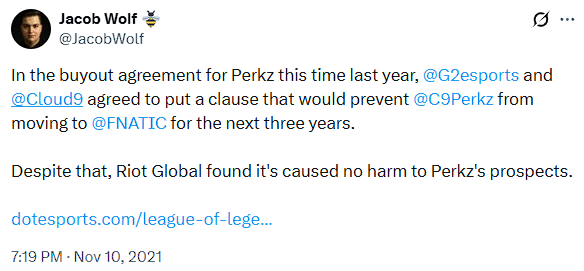
Luka “Perkz” Perković did not personally sign away his future to Fnatic, which is what made this clause feel so strange. In the 2020 buyout agreement between G2 Esports and Cloud9, a reported restriction prevented Cloud9 from selling him to Fnatic for three years, through the end of the 2023 season. Riot investigated after Fnatic complained, and later reporting said no competitive harm was found, but Riot also moved to block similar clauses in the future. It was a weirdly specific anti-rival clause, less about what Perkz could do on the server and more about where a former team did not want him to land.
The One-Month Buyout Hidden Inside “Long-Term” Deals
Before the Overwatch League tried to standardize player contracts, some esports deals gave players a long term on paper and very little security in practice. Jake “JAKE” Lyon told Wired that earlier contracts could contain a clause allowing a team to buy a player out for one month’s salary, even if the agreement supposedly ran for two years. That kind of language sounds small until you realize what it does. A player thinks he has stability, then finds out the team has a cheap emergency exit built into the document.
The Benefits Clause That Felt Strange Because It Was Normal
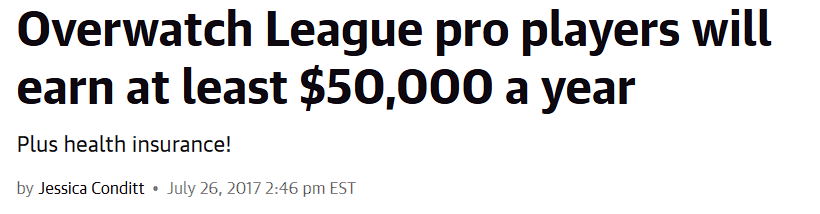
One of the more unusual Overwatch League contract rules was unusual for the opposite reason, it looked like a real job. Blizzard required teams in the league’s first season to provide at least a $50,000 salary, health insurance, housing during the season, practice spaces, and a retirement savings plan. In a traditional sports context, none of that would sound shocking. In esports, where plenty of players had come up through unstable salaries, shared apartments, and handshake arrangements, legally required benefits felt almost radical.
Trending on realmoneygamer.com


The SumaiL Inactive-Roster Deal
esportslegal.com
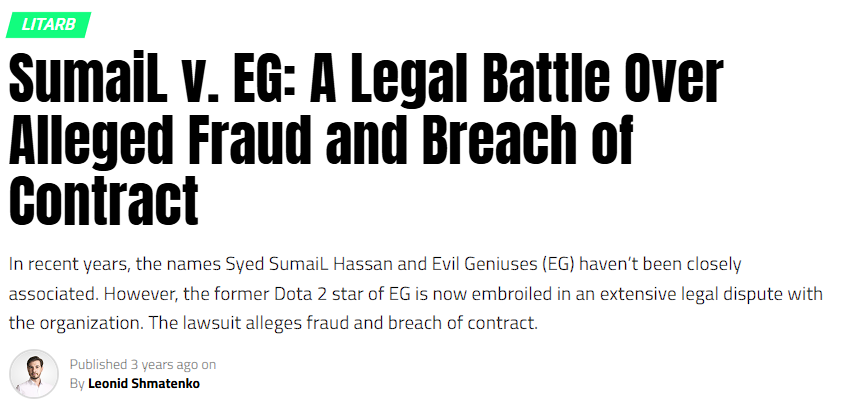
Syed “SumaiL” Hassan’s dispute with Evil Geniuses had several layers, but one reported detail stood out for anyone who follows player mobility. After EG moved him to the inactive roster in 2019, the revised contract reportedly cut his monthly salary from $20,000 to $2,000, removed some obligations such as streaming, but still restricted his ability to compete full-time for another team. Later, EG allegedly proposed a mutual release that would remove a $125,000 buyout fee but affect his ownership stake. That combination, lower pay, limited competitive freedom, and pressure around equity, is the kind of contract structure that makes “inactive” sound less like a benching and more like a negotiating tool.
The Kori Contract That Let MYM Block His Next Team
esportsheaven.com
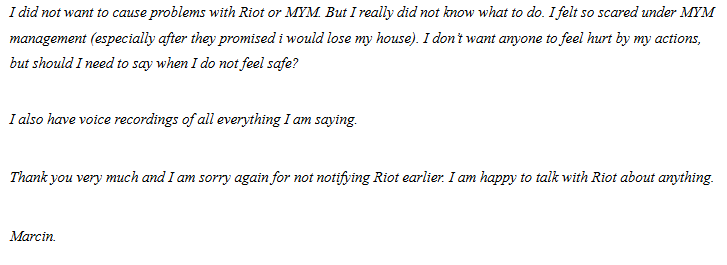
Marcin “Kori” Wolski’s dispute with MeetYourMakers became one of those early League of Legends stories that still feels hard to believe. After MYM acquired the Supa Hot Crew roster, Kori wanted out, partly because he was reportedly worried about earlier non-payment issues tied to SHC’s ownership and management. When he tried to join another team, MYM asserted that he had breached his contract, and Riot blocked him from playing for any other team worldwide while the deal was still active. That is the clause-level nightmare in plain terms, a player could be unhappy, unpaid or worried about payment, and still effectively stuck because the competitive system treated the contract as controlling his eligibility.
The Gaimin Gladiators Social-Media Deliverables Lawsuit

gosugamers.com
The phrase “social media obligations” sounds harmless until it appears inside a multimillion-dollar lawsuit. In 2025, Gaimin Gladiators sued Quinn “Quinn” Callahan, Erik “tOfu” Engel, Marcus “Ace” Hoelgaard, and Alimzhan “Watson” Islambekov for CA$7.5 million, alleging several contract breaches, including failure to complete required social-media deliverables. The case also involved claims around sponsor fallout after a public remark by Quinn, which shows how esports contracts can treat posts, conduct, and brand relationships as part of the same legal machine. It is not just “play Dota and show up to scrims” anymore, the paperwork can follow a player into content calendars, sponsor expectations, and livestream behavior.
The Rocket League Tweet That Triggered a €5,000 Penalty Fight
esportslegal.com
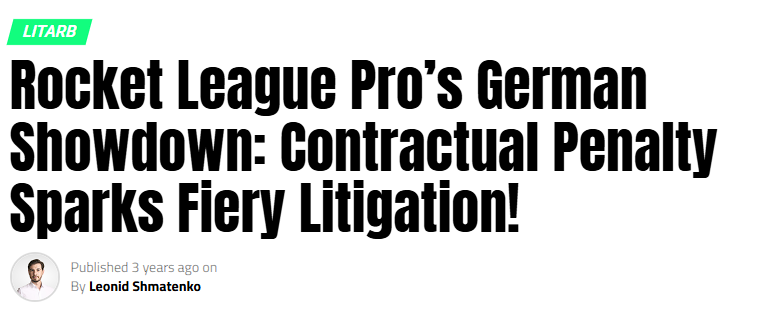
A German Rocket League dispute showed how a vague reputation clause can turn a tweet into a legal bill. The player had posted critically about smaller esports organizations without naming the team, but the organization viewed it as reputational damage and tried to enforce a contractual penalty clause with a €5,000 floor. The court ultimately sided with the player, with reporting noting that the clause was considered too ambiguous and that the organization also had to bear about €2,800 in legal costs. The strange part is not that teams care about public comments, it is that a broad “do not hurt our image” clause can become a courtroom fight over one indirect post.
The French Counter-Strike Contract That Wasn’t Really Freelance
esportslegal.com
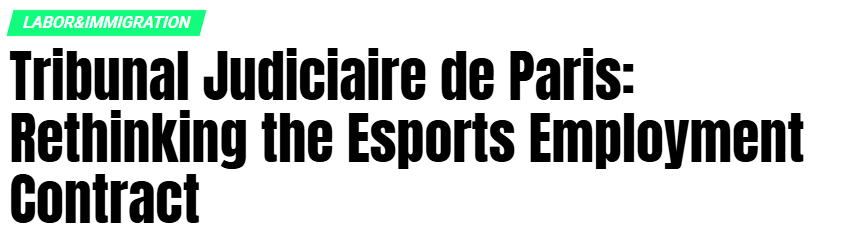
A French case involving a Counter-Strike player and an American esports club took aim at a different kind of contract trick, calling a player self-employed while treating him more like an employee. The agreement covered competition from 2016 to 2017 and was labeled as a self-employed worker contract, but the Paris Tribunal Judiciaire later reclassified the relationship as employment after looking at the actual working conditions. The details mattered, regular monthly payments, accommodation, travel arrangements, and club control over the player’s professional activity all pointed toward subordination rather than independent work. It is an unusual clause problem because the title of the contract said one thing, while the day-to-day relationship said another.
Esports contracts are less chaotic than they used to be, but they still carry the fingerprints of an industry that grew faster than its paperwork. The strangest clauses usually come from that collision between competition, content, sponsorships, travel, housing, and player control. Some were exposed through lawsuits or investigations, others through league rules and court decisions. Either way, the fine print in esports has often said more about the business than the match results ever could.
Continue Reading: 12 Esports Transfers That Redefined Player Market Value